The Zero-Waste Bar: A Sustainable Ingredient-Utilization System for Mixology
The Zero-Waste Bar: A Sustainable Ingredient-Utilization System for Mixology
Why "Zero Waste" Is a Professional Discipline, Not a Slogan
A conventional bar bleeds product: a lemon yields only its juice while peel and pulp go to the bin; an opened bottle of vermouth oxidizes and is poured away; surplus orange wheels cut for garnish are discarded. The zero-waste bar is not an environmental gesture but a production system that redefines "waste" as raw material. It solves three problems at once: it cuts cost, it adds layers of flavor, and it builds a differentiated story. Pioneering bars such as London's White Lyan have proven that discarded material, handled correctly, can become the source of a signature flavor. Mastering this system is the line between a bartender who can mix and one who can engineer flavor. Just as importantly, it forces the bar to keep a material ledger and standard procedures, and those management habits raise overall consistency on their own.
Whole-Fruit Citrus: From Peel to Pulp to Pomace
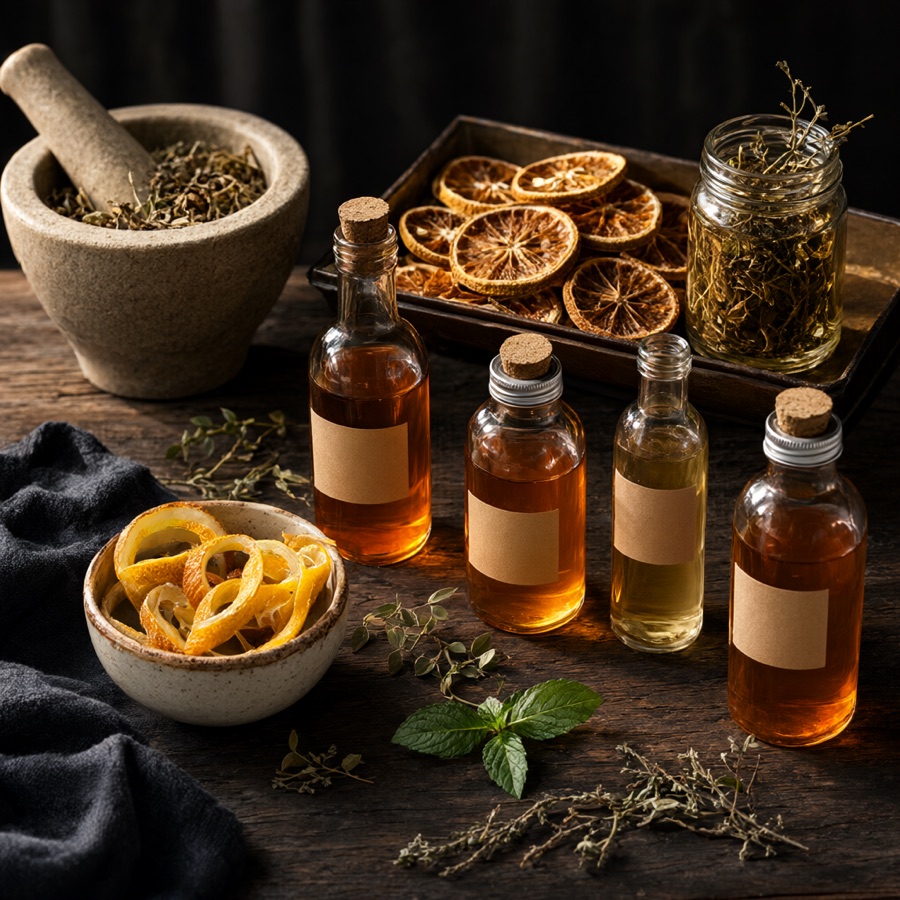
Citrus is the bar's largest source of loss, and whole-fruit utilization means harvesting it in layers. The colored outer peel (flavedo) is rich in essential oils and serves for expressed garnish, oleo-saccharum, or spirit infusions; the bitter white pith (albedo) should be kept out of syrups; the flesh and juice supply acidity; and the spent pomace after juicing still has a second life. On parameters: oleo-saccharum is made by massaging peel with an equal weight of fine sugar or letting them rest for 24-48 hours, yielding an intensely aromatic, near-zero-cost oil syrup; peel scraps can go straight into a high-proof neutral spirit for a 24-hour citrus tincture; and spent pomace simmered with water and sugar, then strained, gives a milder but fully usable second-press juice suited to punches and pre-batched bases. Treat lemons and limes differently: lemon peel oil is brighter and better for oleo-saccharum and garnish, while lime juice is sharper and its pomace suits shrubs better than second-press juice. The classic mistake is boiling the pith along with everything else, which turns the product bitter.
Second Extraction: Cascading Syrups, Vinegars and Infusions
The core of zero waste is cascading use: the same raw material is stepped down by flavor intensity. The first tier plays the lead, such as fresh juice and fresh garnish; the second tier supports, such as oleo-saccharum, tinctures and shrubs; the third tier sits in the background, such as bitters, vinegars and clarifications. The shrub (drinking vinegar) is the archetype: pomace or overripe fruit macerated cold with equal sugar and vinegar for several days, then strained, yields a balanced, shelf-stable sweet-sour base. Spent coffee grounds can be cold-extracted as a coffee-bitters base; spent tea leaves can be re-steeped into a low-tannin brew for highballs. On parameters, a shrub commonly uses a 1:1:1 weight ratio of sugar, fruit and vinegar, with finished acidity around pH 3.0-3.5 for preservation and microbial control. The rule of cascading is "step down intensity, never step down hygiene": each tier gets its own container, label and expiry, and batches are never commingled.
Clarification Byproducts: Redefining Whey and Pectin
Milk clarification and agar clarification generate large byproducts that are equally overlooked. The whey separated after milk clarification carries a soft dairy aroma and gentle acidity, usable in low-ABV long drinks or as a fermentation base; the curd, dried and milled, becomes a milk-forward garnish powder. The fruit gel left by pectin or agar clarification can be diced for textural accents, or melted and re-seasoned into jelly-like components. The handling principle is to portion and freeze while fresh, and to record flavor intensity so later recipes can dose by strength.
Circular Design for Garnish and Mise en Place
Garnish is the easiest place to waste. The zero-waste logic offers three choices: edible, soluble, or compostable. Edible garnishes such as dehydrated citrus wheels and herbs go straight into the glass; soluble garnishes such as sugar rims, salt rims and oleo-saccharum rinses dissolve into the drink; everything else should be compostable material. Dehydration is the key to preserving surplus citrus and herbs: dry at 60-70 C for 4-6 hours until crisp, then store sealed and dark for months; the concentrated flavor is in fact better suited to garnish and infusion bases. At the cutting station, portion to the day's forecast sales and route whole leftover fruit into tomorrow's utilization path, cutting garnish waste at the source.
Rollout Checklist and Common Pitfalls
Rollout can start with three moves: keep a waste log to identify the top three loss items; preset a utilization path for each high-frequency scrap, for example peel to oleo-saccharum, pomace to shrub, stems and leaves to tincture; and write second-tier ingredients into standard recipe cards with batch and expiry so they become stable production rather than improvisation. At team level, embed the utilization paths into opening and closing routines so zero waste becomes muscle memory rather than individual virtue. Three common pitfalls: first, sacrificing hygiene and flavor for the sake of zero waste - every reuse must start from food safety, and spoiled material is never reclaimed; second, over-complication, where turning every scrap into a new product only adds inventory and loss; third, ignoring cost accounting, where some recovery paths cost more in labor than buying fresh, and should be dropped without sentiment. The endpoint of zero waste is not the literal "zero" but ensuring that the value of every ingredient is fully extracted.
More tips


320 cocktail recipes, one tap away
Browse by base spirit, flavor and strength. Save your favorites.
Open MixMyth