The Complete Whiskey Guide: Bourbon, Rye and Scotch Behind the Bar
The Complete Whiskey Guide: Bourbon, Rye and Scotch Behind the Bar
Of the six base spirits, whiskey spans the widest stylistic range: the same shelf can hold vanilla-caramel sweetness and a head-on blast of peat smoke. Pick the wrong bottle and an Old Fashioned turns cloying, a highball gets swallowed by smoke. This guide covers classification, flavor origins and bar-ready selection logic.
The Big Three: Bourbon, Rye and Scotch
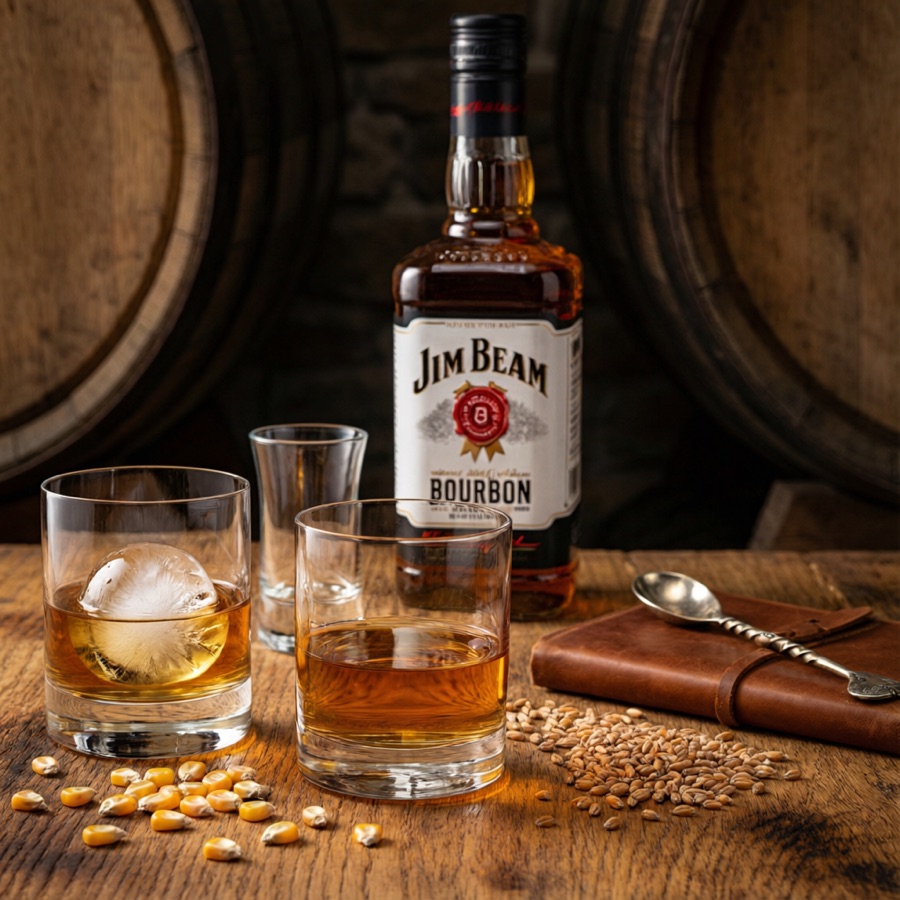
Bourbon is the face of American whiskey. By law the mash bill must be at least 51% corn, and it must age in new charred oak barrels. That high corn content delivers obvious sweetness — vanilla, caramel, coconut and baking spice — with a round, full body. It is the safe pick for an Old Fashioned or a Whiskey Sour, and usually the first bottle in a home bar.
Rye requires at least 51% rye grain and tastes almost opposite to bourbon: drier, spicier, with black pepper, herbs and bitter baking spice, finishing clean. It was the original base of the Sazerac and the Manhattan, and it gives sweeter formulas a backbone — a drink with edges.
Scotch splits into malt and grain branches; the workhorse behind the bar is blended Scotch: clean, gently malty, affordable, ideal for highballs and smoky twists. Islay single malts carry intense peat, iodine and sea spray — too assertive to stand in as a base, perfect in small accents.
Where Flavor Comes From: Grain, Barrel and Peat
Whiskey flavor is built in three layers. First, the mash bill: corn gives sweetness, rye gives spice, malted barley gives round maltiness and texture; the ratio sets the base color of the spirit. Second, barrel aging: new charred oak contributes vanilla, caramel and coconut lactones; sherry casks add dried fruit, nuts and dark syrup; the char layer also acts like activated carbon, smoothing harsh alcohols. Third, peat: burning peat used to dry malt releases phenols — campfire, antiseptic and seaweed notes — measured in ppm, from zero to over two hundred.
Understand these layers and you can read a bottle's role in a cocktail at a glance: sweet styles "round out", spicy styles "add structure", peated styles "add smoke". Check the grain type and region on the label before it earns a place on your bar.
Selection Logic: Old Fashioneds, Sours and Highballs
Stirred classics (Old Fashioned, Manhattan): reach for bourbon, or a rye with moderate rye content. Bourbon's sweetness stacks with sugar and bitters for the smoothest sip; swap in rye for a drier, cleaner finish — the traditional Manhattan is rye plus sweet vermouth. Avoid heavy peat here; smoke fights the herbal bitterness of the bitters.
Sours (Whiskey Sour, Gold Rush): the spirit must stand up to lemon. Bourbon's vanilla sweetness balances acidity directly, and honey variations like the Gold Rush depend on bourbon's roundness; a rye sour is drier and sharper, for those who like their drinks grown-up. If you add egg white, the silky foam amplifies rough edges, so favor smooth bottles.
Highballs: choose a clean blended Scotch or a light bourbon. Soda water magnifies roughness and off-notes; heavy cask or heavy peat turns clumsy. The Japanese highball tradition uses light blends for a rice-like clean finish — chilling and glassware often matter more than the label.
Reading the Label: Quick Style Tells
Behind the bar, the fastest way to read style is the label. "Straight Bourbon" means at least two years old with no added color or flavor; "Bottled in Bond" means one distillery, one distilling season, at least four years old and bottled at 100 proof — a promise of robust body; "Cask Strength" or "Barrel Proof" means no dilution, concentrated flavor and a hotter proof. On Scotch, "Single Malt" is malt from one distillery while "Blended" mixes malt and grain spirits; rye bottles usually say "Rye" or "Straight Rye" outright. Memorize these keywords and you can infer sweetness, spice and intensity before you ever taste.
Common Mistakes and Buying Advice
First, "more expensive means better for mixing". The subtlety of an aged single-cask single malt is erased by sugar, lemon and bubbles; pick clearly flavored, mid-priced bottles for mixing and keep the treasures for sipping. Second, treating peat as a universal smoke button: more than 15 ml of peated whiskey can wreck a drink — the correct moves are a rinse or a few drops floated on top. Third, ignoring proof: barrel-proof bourbon cuts through long drinks and heavy dilution; lighter 40% bottles suit short, stirred drinks.
Stock one bottle per style — sweet, spicy, smoky. A mainstream bourbon, a rye and a blended Scotch will cover ninety percent of whiskey recipes in any home bar.
More tips
274 cocktail recipes, one tap away
Browse by base spirit, flavor and strength. Save your favorites.
Open MixMyth