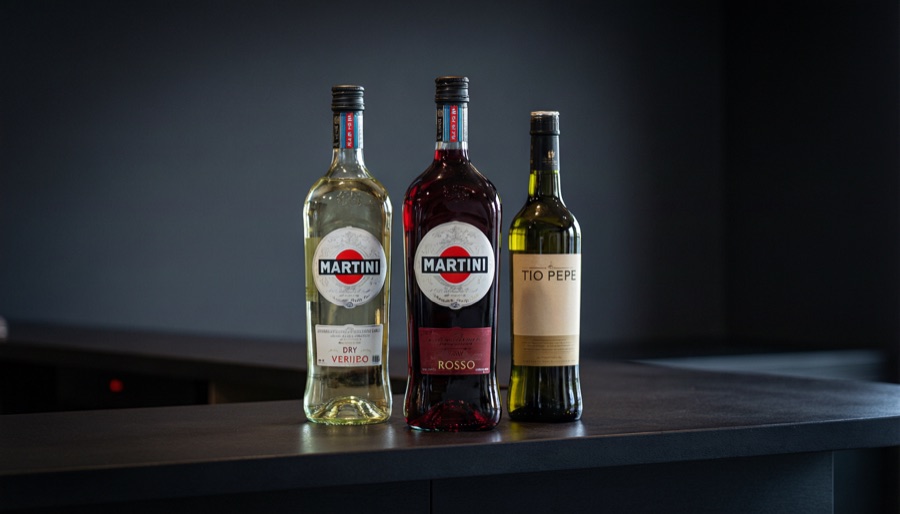
Vermouth Substitutes Explained: From Flavor Logic to Replacement Ratios
Why Vermouth Resists Substitution: Three Dimensions
Vermouth is a fortified wine aromatized with botanicals — a wine base steeped with wormwood, citrus peel, roots and seeds, raised to 15-18% ABV. In classic recipes it does not play a single role but a compound one across three dimensions: the acidity and fruit of wine, the structural support of fortified strength, and the herbal bridge of botanicals. In a Martini (/recipe/1/) it props up the gin's aromatics; in a Manhattan (/recipe/42/) it supplies sweetness, bitterness and spice at once. A substitute therefore has to align on all three dimensions; miss one and the swap visibly degrades the drink. This is exactly why cognac and brandy fail the test: they bring forty-proof heat without sugar or herbal bitterness, and swap them in and the drink turns harsh.
The Substitute Ladder for Dry Vermouth
First choice: dry sherry, specifically Fino and Manzanilla. Sherry belongs to the same fortified-wine family, and its nutty, saline, mineral character sits naturally in a Martini — replace 1:1, and you even gain a layer of savoriness. Second choice: Lillet Blanc or Cocchi Americano, aromatized wines leaning toward honey and citrus, ideal for fruit-forward Martinis and for the Vesper (/recipe/210/) — the original Vesper recipe actually called for a Lillet-style aperitif, so the "substitute" restores the original flavor. Third choice, emergencies only: a bone-dry white wine (Chablis, Sauvignon Blanc) at three-quarters of the vermouth amount. It lacks fortified body and cannot alone hold the structure of a stirred drink.
The Substitute Ladder for Sweet Vermouth
Sweet vermouth substitutes must supply both sweetness and spice. First choice: Oloroso sherry, whose oxidative nut-and-caramel notes pair beautifully with rye in a Manhattan — replace 1:1. Second: tawny port, which runs sweeter, so cut it to three-quarters of the amount; it suits sweeter Manhattans and Negroni (/recipe/108/) variations. Marsala Dolce can work in a pinch, but its fermented edge is pushy — reserve it for complex recipes where it can hide. One warning: PX (Pedro Ximénez) sherry is far too sweet and viscous; it drags a drink into dessert territory and should not be used.
Boundaries and Storage
Substitution is a contingency, not a practice. An opened bottle of vermouth keeps 6-8 weeks refrigerated, making its per-drink cost trivial — if Martinis or Manhattans are part of your regular rotation, buying the bottle is always cheaper than the compromise. And mind the storage: vermouth must be refrigerated after opening; two weeks at room temperature oxidizes it sour. Many "vermouth tastes bad" experiences are actually spoiled bottles. The test: if it smells of bruised apples or reads distinctly sour, replace it.
Source: MixMyth mixmyth.com
More tips

274 cocktail recipes, one tap away
Browse by base spirit, flavor and strength. Save your favorites.
Open MixMyth