Umami in Cocktails: The Fifth Taste and Savory Elements in the Glass
Umami in Cocktails: The Fifth Taste and Savory Elements in the Glass
Beyond sweet, sour, bitter and salty, the human tongue recognizes a fifth basic taste: umami. In 1908, Kikunae Ikeda isolated glutamate from kombu broth and gave this "nameless deliciousness" a chemical identity; in the 1980s, taste science formally recognized umami as an independent basic taste. In the century since, it has become the core language of the culinary world — dashi, aged cheese, tomato sauce and fermented seasonings are all built on its grammar. In cocktails, however, it remains the most underrated flavor dimension: most recipes discuss only the sweet-sour axis and ignore the bottom-note power that makes a drink feel substantial and long on the finish. Understanding umami means holding one more key to flavor depth.
The Chemistry of Umami: Glutamate and Synergy
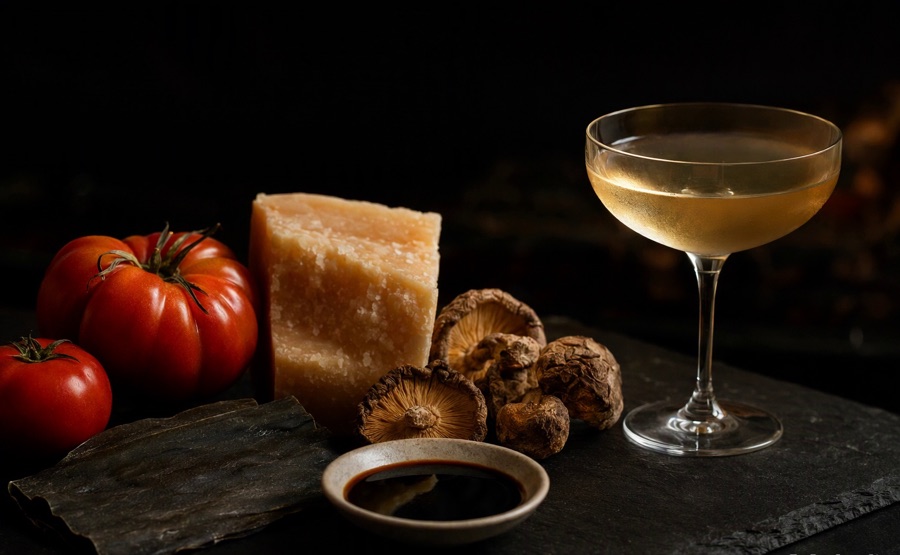
Umami is triggered chiefly by three classes of compounds: free glutamate, inosinate and guanylate. Glutamate is abundant in kombu, tomato, parmesan and soy sauce; inosinate concentrates in dried bonito and dried scallops; dried shiitake leads in guanylate. The decisive phenomenon is synergy: when glutamate arrives alongside inosinate or guanylate, perceived intensity is not additive but multiplied — which is exactly why Japanese dashi simmers kombu together with bonito. Applied to the bar, the conclusion is equally clear: a single umami source is limited; stacking two or more from different families is what truly anchors the bottom of a drink. A single drop of soy sauce often just reads "salty," while kombu water combined with shiitake stock delivers that round, full-bodied savor.
Natural Umami Sources Behind the Bar
Tomato juice is the classic carrier — a Bloody Mary stands on roughly 200 mg of free glutamate per 100 g — and clarified tomato delivers the same savor with far more transparency. Kombu and dried shiitake make cheap, stable cold infusions. The savor of parmesan, bacon and roasted mushrooms is fat-soluble, so fat-washing transfers it cleanly into vodka or white rum; concentrated fermented seasonings such as soy sauce, fish sauce and miso intervene by the drop. Then there are the invisible amplifiers: fino sherry, aged rum, barrel-aged bourbon and oxidative white wines already carry a nutty, brothy undertone, and swapping part of the base spirit for them deepens a drink without announcing itself.
Techniques and Key Parameters
Kombu syrup: soak 5 g of kombu in 1 L of room-temperature water, refrigerate for 8 hours and remove the kelp — never boil it, as heat releases slime and off aromas — then dissolve an equal weight of sugar into the strained kombu water for a 1:1 savory syrup that works in martini structures and highballs alike. Parmesan fat-wash: grate 100 g of parmesan into 300 ml of vodka, warm-infuse for 2 hours, freeze, scrape off the solidified fat and filter twice; the resulting spirit is an oily but clean base for savory sours. For dosing, treat unsalted umami concentrates (miso water, shiitake stock, diluted 1:3) exactly like a 20% saline solution: start at 2 drops, stir and taste after each addition. Umami sits far below the detection threshold of acidity; by the time you can clearly "taste the savor," you have usually gone too far.
Balance Logic and Boundaries
Umami thickens rather than brightens: it reinforces the mid-palate and the finish, rounding citrus acidity and alcoholic heat. But it clashes with delicate florals and high-volatility aromatics — elderflower, violet, white peach — and forced pairings flatten both parties. Savory cocktails belong in contexts built around tomato, olive, spice and fermentation; their home turf is aperitivo hour, brunch and food pairing. The test is simple: after two drops, is the drink more complete or muddier? The former means umami is working; the latter means the dosage has lost control and the drink should be rebalanced from scratch.
Common Misconceptions
First, umami is not saltiness: a saline solution approximates savor, but pure salt raises thresholds without adding layers — real umami requires glutamate-bearing ingredients. Second, more is not better: umami saturates, past which the drink turns thick and the crispness a cocktail depends on collapses. Third, not every drink wants umami — sparkling, floral and light low-ABV styles should usually abstain. Follow the three leads of tomato, fermentation and oak aging, and umami becomes an asset rather than a dangerous experiment.
More tips
356 cocktail recipes, one tap away
Browse by base spirit, flavor and strength. Save your favorites.
Open MixMyth