The Swizzle Family Deconstructed: Crushed Ice, the Boïs Lélé and Caribbean Cooling Mechanics
The Swizzle Family Deconstructed: Crushed Ice, the Boïs Lélé and Caribbean Cooling Mechanics
Origins: From Caribbean Plantations to the Modern Bar
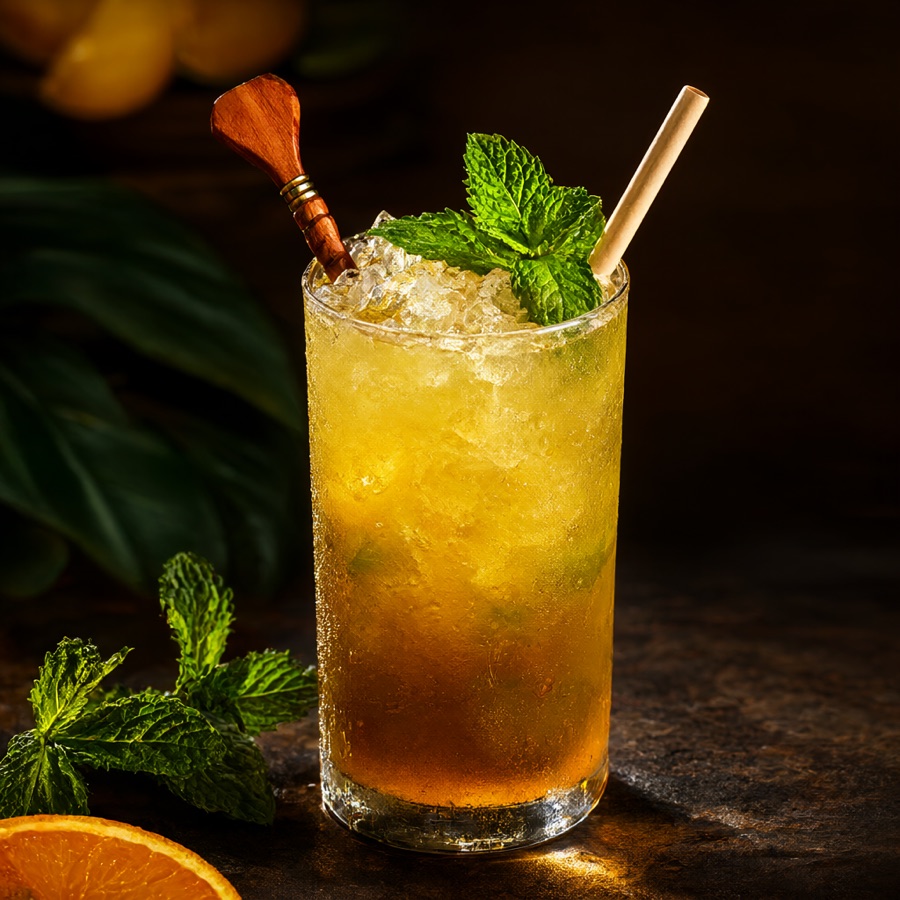
The swizzle takes its name from the boïs lélé, a wooden stick cut from a shrub native to Martinique whose end splits into radiating branches. On eighteenth-century Caribbean plantations, rum, water, sugar and bitters were poured into a metal or earthen vessel, the stick inserted and spun briskly between the palms, chilling the drink rapidly in crushed ice; that motion is the source of the word "swizzle" itself. The earliest written records come from the late-1700s West Indies, and Rum Swizzle remains the national drink of Bermuda and Barbados today. In the early twentieth century the style travelled with trade routes to America, holding a place in pre-Prohibition New York and San Francisco bars; from the 1920s the Tiki movement pushed it further — on the menus of Donn Beach and Trader Vic, drinks such as the Queen's Park Swizzle made crushed ice and the swizzle stick the visual signature of tropical style. Worth noting, the word "swizzle" in nineteenth-century Britain also denoted a warm mixture of water and spirit — a homonym of the Caribbean iced version rather than the same drink — so old menus should be read with care.
Cooling Mechanics: Why Crushed Ice and Rotation Are Non-Negotiable
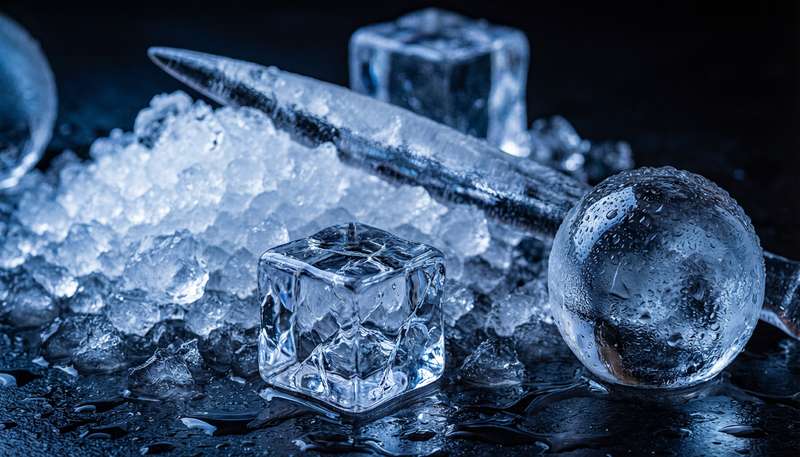
The heart of the swizzle is not the recipe but thermodynamics. Crushed ice offers far more surface area than cubes; multiplied contact plus the forced convection of the spinning stick drops the temperature to near freezing within twenty to thirty seconds while adding roughly twenty to twenty-five percent dilution. That water is not a side effect but part of the formula: swizzle builds run stronger than shaken drinks precisely to reserve room for meltwater. Rotation produces a second effect — an even frost on the glass wall, while the mounded ice "crown" insulates and slows further melting. Judge a swizzle by two signs: a white frost blooming on the glass, and a ring-shaped depression settling into the ice after the stick is withdrawn; these read more reliably than any spec sheet.
The Classic Structure: A Four-Corner Balance of Spirit, Acid, Sweet and Bitter
The family skeleton is remarkably consistent: 45-60 ml spirit, 15-30 ml citrus, 10-20 ml sweetener, a few dashes of bitters or spice wine, then crushed ice to the brim and a spin. Rum Swizzle is the simplest prototype — white rum, lime juice, syrup and bitters. The Queen's Park Swizzle adds a whole mint sprig lightly pressed for aroma and became the most widely circulated version — its name comes from the Queen's Park Hotel in Port of Spain, Trinidad, and its mint-and-lime pairing set the flavour image later generations hold of a swizzle; the Port of Spain Swizzle layers two bitters for spice; modern works such as Three Dots and a Dash sit in the Tiki lineage yet still cool by swizzle logic. Once the four-corner structure is understood, swapping the base (rum for gin or mezcal) or the acid (lime for lemon or grapefruit) preserves the family character, because the decisive variables remain the temperature and dilution curve delivered by crushed ice and rotation.
Tool Substitutes: Working Without a Boïs Lélé
A traditional boïs lélé is hard to source outside the Caribbean, but substitutes are mature. First choice: a metal or plastic swizzle stick with a turned handle, spun between the palms at near-original efficiency. Second: the handle of a bar spoon plunged vertically into the ice and circled fast — less even than palm-spinning but sufficient for chilling and dilution. Third: a short pulse-shake — shake the ingredients with crushed ice for three to five seconds, pour back and top with more ice; useful for high volume at the cost of a thinner frost. Whichever route, the ice must be full: pack half the glass, spin until frosted, then crown to the rim before adding mint and straws. Insufficient ice is the leading cause of failed home attempts; cube ice cracked to pea size works well — too fine and meltwater runs away, too coarse and chilling falls short.
Common Mistakes and Parameter Quick Reference
Mistake one: shaking the drink first and pouring it over crushed ice afterwards — reversed order leaves under-dilution and no frost. Mistake two: muddling mint to pulp — swizzle mint needs only a light press to release its oils; bruised leaves leak chlorophyll bitterness. Mistake three: topping with soda — carbonation escapes during spinning; the fullness of a swizzle comes from ice, not bubbles. Quick reference: crushed ice at 100-110% of glass volume including the crown; spin 20-30 seconds; serving temperature -2 to 0 °C; dilution 20-25%; straws trimmed to 2 cm above the rim; mint slapped awake and set beside the straws so the drinker's nose meets the aroma — the family's final ritual.
More tips
320 cocktail recipes, one tap away
Browse by base spirit, flavor and strength. Save your favorites.
Open MixMyth