The Complete Guide to Cocktail Shakers: Structure, Materials and Selection
The Complete Guide to Cocktail Shakers: Structure, Materials and Selection
The shaker is the most symbolic tool on the bar: the shake mixes, chills, dilutes and aerates a drink in a single motion, and it is the main source of texture in most short drinks. But not every shaker is equal - the sealing mechanism, the wall thickness and the internal volume decide how fast a drink chills, how much water it takes on, how fine its foam turns out, and whether your shake ends in a silky pour or a floor full of spilled cocktail. This guide walks through the three major schools in full.
1. The Cobbler Shaker: The Default Choice for Home Beginners
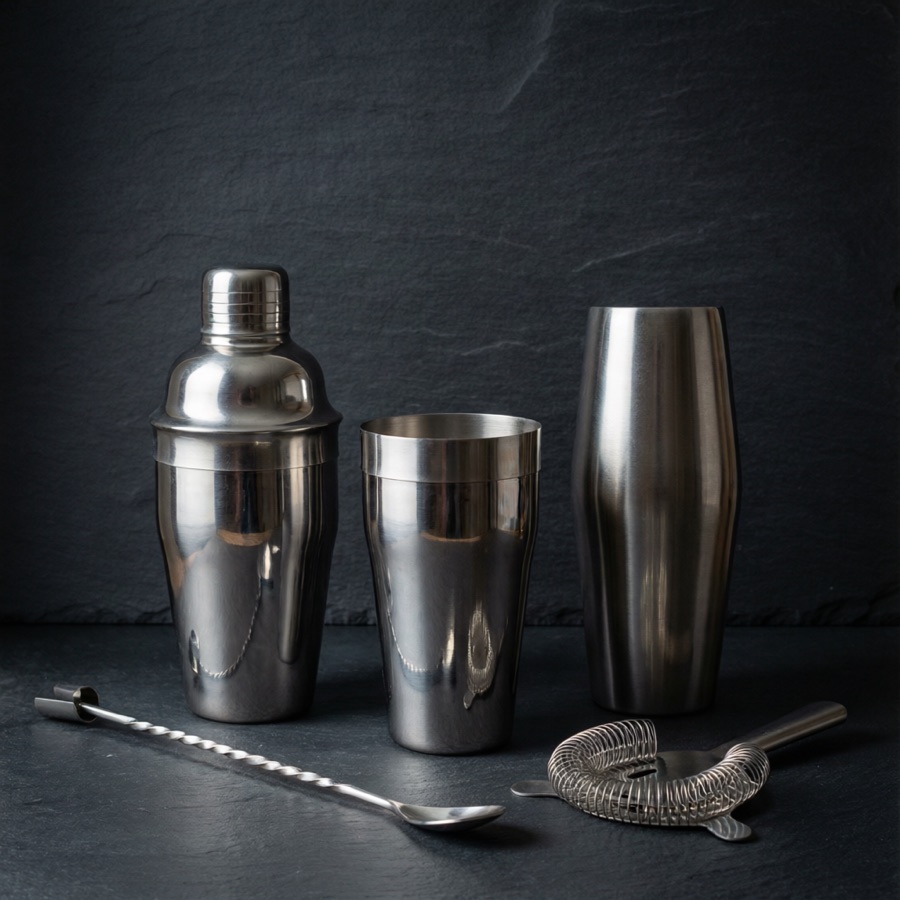
The three-piece cobbler shaker consists of a tin, a built-in strainer top and a cap. When the shake is done you simply remove the cap and pour - no separate strainer needed - which makes it the easiest option for small spaces and first-timers. Its weaknesses are equally clear: the two seams can weep under a hard shake; as the metal contracts in the cold, the top can seize onto the tin and refuse to twist open; and the small strainer holes clog easily with egg white or cream. The working rules: never fill past half the tin, and open the shaker immediately after shaking rather than letting it sit. If it seizes, grip the tin and tap the seam with the heel of your other hand, or run the seam under warm water for two or three seconds - never force it. When buying, look for a snug fit between top and tin with a satisfying click; thin stamped metal is where leaking and seizing happen most.
2. The Boston Shaker: The Standard for Speed and Professional Use
The Boston shaker is two cups - a large tin and a smaller tin or mixing glass - slapped together, with no strainer and no cap; the seal comes entirely from friction and a slight deformation of the rims. The advantages are direct: big capacity and plenty of ice mean fast, even chilling; the wide mouth makes adding and pouring effortless; and because you pour through a Hawthorne strainer, the strain is actually more controllable. The price is a learning curve: you seal the cups with a light press at a slight offset, and you break them apart by gripping one cup and tapping the side of the other - unfamiliar hands spill drinks. Professional bars are almost uniformly Boston. If you plan to practice shaking seriously, it is worth getting early; paired with one Hawthorne strainer it is a complete kit.
3. The French Shaker: Between the Two
The French shaker is a Boston variant: the two cups sit closer together with a slightly narrower mouth, giving a slimmer, more hand-filling shape that suits smaller hands or anyone who prefers finer control. It still requires an external strainer and seals on the same principle as the Boston. Many bartenders move from Boston to French for the lighter weight and the steadier feel in the hand. Note that some products dress a cobbler body with a French-style waist - when shopping, distinguish "French looks" from "French two-cup construction"; only the latter gives you Boston-style opening speed.
4. Materials, Wall Thickness and Capacity
The mainstream material is 304 stainless steel: corrosion-resistant, odorless and easy to care for. Titanium shakers are lighter and stiffer and cost a tier more - they suit high-volume, long-shift bartenders. Copper and gold finishes are plating or coating, decorative attributes that wear off with heavy shaking, and are best kept off your workhorse tin. Wall thickness matters more than people think: a thin tin dents on impact, feels flimsy, and chills so fast that it is hard to judge the shake's progress; a very thick, heavy one taxes the wrist and degrades your motion over time. A mirror-polished interior cleans easily and holds no odor; matte coatings look good but scratch. On capacity, a 350-400 ml cobbler suits single short drinks; a 500-700 ml Boston tin pairs with the smaller cup or a mixing glass, and for double batches or ice-heavy long drinks the big tin's advantage is obvious.
5. Selection Logic, Common Mistakes and Care
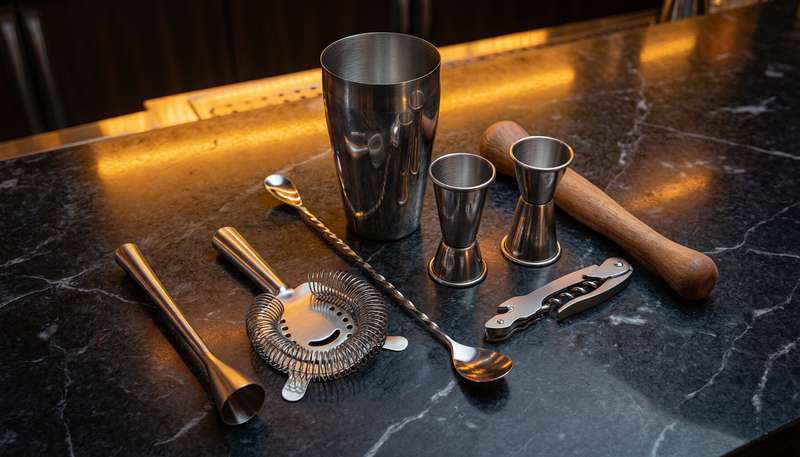
Buy for your situation: a home beginner should start with one well-made cobbler - a solid choice costs little - and upgrade to a Boston tin plus Hawthorne strainer once the habit is confirmed; the two are not in conflict, and the cobbler stays handy for single drinks. Mistake one: heavier and thicker means more professional - your wrist pays the bill, and comfort beats specs. Mistake two: a glass mixing cup is more professional - glass is heavier, slippery when wet and shatters when dropped, which is why working bars avoid it. Mistake three: buying a shaker means you are set - the shaker is only the shaking tool; a jigger, a strainer and a bar spoon are the minimum complete kit. Mistake four: hard-shaking egg-white drinks straight over ice - egg white builds pressure and can pop the cap off; dry shake without ice first, then shake with ice, or use a Boston shaker with your palm pressing the rim. For care: hand-wash in warm water and dry immediately after use, keep plated shakers out of the dishwasher, and soak the interior in baking-soda water now and then to keep it odor-free and bright. Choosing the right shaker is only the start - the rhythm of your shake, the state of your ice and the timing of the pour are the true dividing line in short-drink texture.
More tips

274 cocktail recipes, one tap away
Browse by base spirit, flavor and strength. Save your favorites.
Open MixMyth