The Complete Rum Guide: Flavor Styles from White to Agricole and How to Use Them in Cocktails
The Complete Guide to Rum
Rum is the largest and also the most stylistically divided family of cane spirits. From Cuba to Jamaica, from Martinique to Guyana, nearly every island has evolved its own rum personality. The same raw material, grown in the same islands, can become a crystal-clear, crisp white rum or an ester-heavy, pot-still thunderclap of a dark rum. Understanding rum is not about memorizing brands; start from the raw material route, the distillation choices and the aging decisions, and the whole flavor map unfolds.
The Raw-Material Divide: Cane Juice vs. Molasses
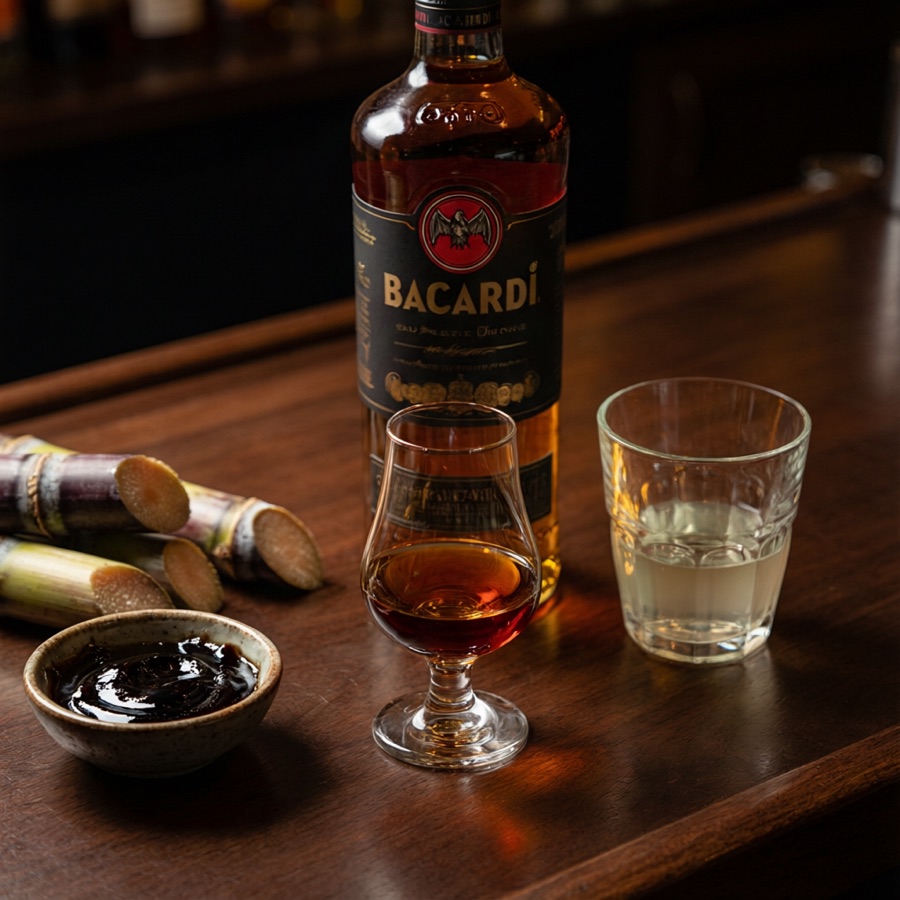
The first split in rum flavor comes from the raw material. Freshly pressed sugarcane juice can be fermented and distilled directly; the result is rhum agricole, produced mainly on French Caribbean islands such as Martinique. It carries intense grassy, cane and wet-earth notes, with a sharp texture and a distinct sense of terroir. The mainstream route uses molasses — the by-product left after sugar crystallization. Molasses-based rums account for more than ninety percent of world production; they are rounder in body, with natural notes of caramel, dried fruit and spice. Neither route is superior: one pursues raw freshness, the other deep sweetness. Worth noting: Martinique's agricole even holds a French AOC designation — the only cane-spirit category protected by appellation law anywhere in the world.
Color Is Not a Grade: White, Gold and Black
Color is the most common misunderstanding when buying rum. White rum is usually unaged or briefly aged and filtered clear; its clean profile is built to showcase fresh ingredients like lime, mint and coconut — the Daiquiri, the Mojito and the Piña Colada all stand on its shoulders. Gold and dark rums take on caramel, vanilla and oak from barrel aging and bring the complexity that stirred drinks and heavyweight tropical recipes need, which is exactly why the Mai Tai calls for aged rum. Note that some dark rums owe their color to added caramel, so read the back label. There is also a special overproof category (commonly 57% ABV and above), mostly used in tiki drinks for aroma and flaming presentations — a few drops poured over the foam and lit just before serving, releasing a warm caramelized scent — rarely for sipping.
Three Style Schools: Light, Funky and Heavy
Beyond raw material and color, professional tasters sort rum into three schools by ester content and body. The light school, dominated by column distillation, is clean and easy-drinking and by far the most versatile in mixing. The funky school covers Jamaican high-ester rum and the Demerara character of Guyana — unforgettable on the first sip, yet the hardest to handle behind the bar; its intensity comes from extended fermentation, where wild yeasts, dunder from previous distillations and even open muck pits let esters build up to several times the usual level. The heavy school, led by pot stills, is oily, full and long-finishing. In practice: use the light school as your safe base, treat the funky school as a seasoning at 7.5-15 ml per drink to light the whole cup up, and reserve the heavy school for sipping or for anchoring classic tiki formulas like the Zombie.
Reading Rum Through Three Classics
Deconstructing three classics is the fastest shortcut into rum styles. The Daiquiri is white rum's litmus test: clean cane character, lime acidity and sugar sweetness standing in a three-point balance — swap in aged rum and the picture turns muddy at once. The Mai Tai is the best argument for aged rum's backbone, where orgeat's almond meets barrel caramel; a white-rum version drinks thin as paper. The Dark 'n' Stormy reveals black rum's spicy weight: only molasses-rich dark rum can stand up to ginger beer's burn, while white rum merely floats on top. Fix these three coordinates in memory, and any new recipe instantly finds its stylistic position — and tells you whether the bottle in your hand will do.
A Buying Path and Common Mistakes
First bottle: a clean column-still white rum unlocks the Daiquiri, the Mojito and the Piña Colada immediately. Second bottle: a barrel-aged gold rum, the backbone of Old Fashioned riffs, the Mai Tai and aged Daiquiris. If you fall for the raw perfume of cane, add a Martinique agricole — nothing else in the spirits world smells like it. Three common mistakes: one, darker does not mean older, since caramel coloring can fake age; two, Spiced Rum is a flavored spirit preparation rather than rum proper, and classic recipes tend to break around it; three, when substituting rums, swap within the same school first — before crossing schools, decide whether you are chasing cleanliness or funk.
Hold the three axes of raw material, aging and ester content, and rum labels stop being a secret code. Rum is like jazz: the score is simple, but there are a hundred ways to play it — which is exactly what makes it fascinating.
More tips
274 cocktail recipes, one tap away
Browse by base spirit, flavor and strength. Save your favorites.
Open MixMyth