The Punch Family Deconstructed: From the Five-Element Formula to the Modern Punch Bowl
The Punch Family Deconstructed: From the Five-Element Formula to the Modern Punch Bowl
What Punch Is: A System Three Centuries Older Than the "Cocktail"
For nearly two hundred years before "cocktail" appeared in print, punch was the social drink of the global trade era. It was born on the ships and at the ports of the 17th-century English East India Company: sailors and merchants far from home taverns mixed big shareable bowls from local Indian materials — arrack (a spirit distilled from coconut flower and cane molasses), lime, sugar, and spice. The word itself is widely traced to the Hindi "panch" (five), pointing to the original five-element structure: spirit, sugar, citrus, tea or water, and spice. Punch is thus the ancestor of every Western mixed drink: single-serve slings, sours, and later cocktails are, in essence, a bowl of punch scaled down to one glass.
The key to understanding the punch family is to treat it as a formula rather than a fixed recipe. Each element carries a clear structural role: the spirit provides backbone and strength; citrus delivers brightness and cuts richness; sugar balances acid and alcohol while filling out body; tea or water dilutes and extends volume; spice supplies the aromatic signature. Any missing or unbalanced element is magnified when scaled up to a full bowl — which is why punch demands more precision in proportioning than a single drink.
The Modern Reading of the Five Elements: One-Two-Three-Four
Translated into the language of the modern home bar, the most practical skeleton is the rhyme distilled by drinks historian David Wondrich: one of sour, two of sweet, three of strong, four of weak. This 19th-century mnemonic gives volume ratios — the sweet part must be converted for syrup concentration (two parts "sweet" roughly equals one part standard syrup). For an eight-serving bowl (about 1.2 liters): 120ml lemon juice, 120-150ml syrup, 360ml spirit, 480ml tea or iced water, finished to taste with nutmeg, clove, or cinnamon.
Contemporary practice revises this skeleton in two ways. First, tighter acid-sugar balance: modern palates run lighter than the 19th century's, so start near a 1:1 to 1:1.25 juice-to-syrup ratio and adjust after tasting. Second, reconsidering the dilution source: the old method topped up with room-temperature water, while the modern approach relies on the 20-30% dilution from slow-melting block ice in the bowl — fuller aroma, colder serving — but a bowl will inevitably fade after an hour at the table, so for service longer than an hour, split the difference: half from ice, half pre-diluted with cold tea.
Service Flow: Punch Is Process Design, Not Mix-and-Serve
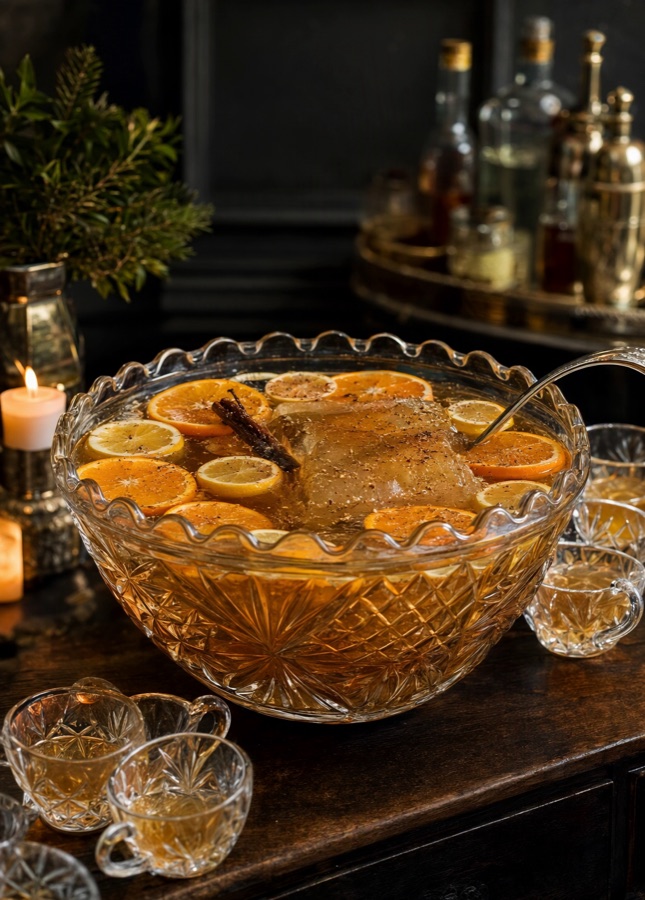
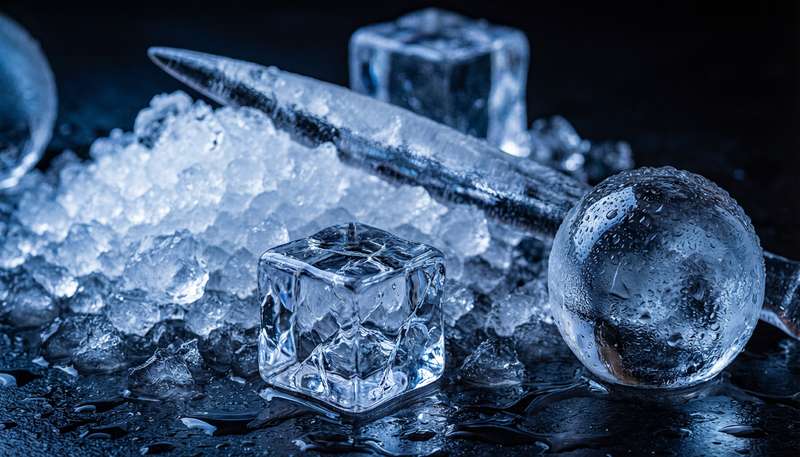
Punch differs from single drinks most in the time dimension: a bowl spans two to four hours from mixing to the last ladle, so it is fundamentally a service-flow design problem. Professional practice runs in three stages. Stage one is pre-batching: spirit, syrup, and juice are combined and chilled hours ahead — citrus juice pressed early and left in contact with the spirit does not spoil; short resting actually rounds the flavors, the exact point where punch logic diverges from the squeeze-and-shake logic of single drinks. Stage two is service dilution: add large block ice (avoid crushed ice — more surface area, faster melt, faster dilution) plus tea or sparkling components. Stage three is maintenance through service: refresh ice, stir, and taste every hour — a bowl's flavor is a curve over its service life, and a competent host manages that curve.
Spice timing matters too. Nutmeg and clove flavors dissolve in alcohol but poorly in water, so they go into the pre-batch; decorative cinnamon sticks and orange wheels are added only at serving. Dairy-and-egg punches (eggnog being the classic case) are the exception: they must be made fresh, or held strictly chilled and finished within 24 hours, and whole-egg recipes demand far more from dairy sourcing and hygiene than ordinary punch.
Family Tree: Four Main Branches
The family split into distinct branches as it traveled. English arrack punch stays closest to the source: Ceylon arrack with demerara, lemon, and a sparkling structure — heavy, spice-forward — exemplified by the Fish House Punch of Philadelphia (rum, brandy, and peach brandy with lemon and sugar, famous for being "strong enough to be mixed a day ahead and left to soften"). Caribbean rum punch was the colonial-mainstream form; the Barbadian national five-element punch (rum, lime, sugar, nutmeg, water) is its cleanest template. Hot punch (the toddy line) replaces ice with hot water, where spice and sugar volatility rises — the same logic as German Glühwein and Nordic Glögg at winter gatherings. Champagne punch swaps the "weak" element for sparkling wine, poured at the last moment to preserve the bubbles.
Across the tree, punch is defined not by ingredients but by structure: a multi-serving, diluted, acid-sugar-balanced social drink. Meet that structure and the base can be gin, vermouth, or even a non-alcoholic tea — it is still punch.
Home Parameters and Common Pitfalls
For a first bowl, start with six servings (about 900ml): 240ml spirit (a rounded aged rum or bourbon), 80ml lemon juice, 90ml syrup, 240ml cold black tea, and freshly grated nutmeg. Remember four actions: chill the juice-spirit-syrup mix four hours ahead; add 500g or more of block ice and cold tea at serving; place orange wheels and spice garnish last; stir and refresh ice hourly through service.
Three pitfalls recur. Imbalanced proportions: beginners over-pour sugar and juice — punch is engineered for "two hours of steady sipping," targeting 10-15% ABV with the base spirit at only 25-30% of volume; it will taste "too weak" on instinct, which is by design. Hygiene failures: citrus-spirit-syrup pre-batches are safe, but dairy, egg white, and fresh-cut fruit carry a two-hour boundary once in the bowl — for parties longer than that, replenish in batches. Bubble abuse: filling the bowl with soda as the "water" element leaves sweet flat soda an hour later — sparkling components join only at serving, and never exceed a quarter of total volume.
Master the formula and punch becomes the most efficient drink a home host can make: ten minutes of pre-batching buys two hours of continuous pouring — and every change of base or spice is a new performance on the same structure.
More tips
356 cocktail recipes, one tap away
Browse by base spirit, flavor and strength. Save your favorites.
Open MixMyth