Prohibition-Era Cocktails: How the Speakeasy Reshaped American Bartending
Prohibition-Era Cocktails: How the Speakeasy Reshaped American Bartending
On January 17, 1920, the Eighteenth Amendment took effect and the manufacture, transport and sale of alcoholic beverages became illegal across the United States. For the cocktail this was not an ending but a forced evolution. Across thirteen underground years the drink's ingredients, technique and service culture were rewritten, and many of the classics we revere today were born or codified in this period. Understanding Prohibition is essential to understanding modern cocktail grammar.
Bootleg Spirits and the Camouflage Method
The most immediate effect of Prohibition was a collapse in spirit quality. With legal distilleries shuttered, the market was flooded with "bathtub gin" and bootleg liquor cut from industrial alcohol — rough, harsh, reeking of solvents and fusel oils, nearly impossible to drink neat or even over ice. The bartender's first task shifted from showcasing the base spirit to concealing it.
Juices, syrups, honey and liqueurs were therefore scaled up; acid and sweetness became a flavor shield. The Bee's Knees uses honey and lemon juice to bury the gin's harshness; the Last Word sets equal parts gin, green Chartreuse, maraschino and lemon juice against one another so that no single element exposes its flaws; the Jack Rose hides roughness behind apple brandy, grenadine and lemon. These recipes share one logic: push the base spirit into the background and let acid and sugar take the stage. Prohibition thus unintentionally reinforced the sour-sweet balance at the heart of cocktail grammar, and left behind a set of classics originally designed as camouflage but kept alive because they taste good.
The Service Ritual of the Speakeasy
"Speakeasy" literally means "speak quietly." Because raids could come at any moment, these venues had no signage, no printed menu and hidden entrances; guests entered by password or personal referral. This secrecy produced a distinctive service culture that shaped the bar as we know it.
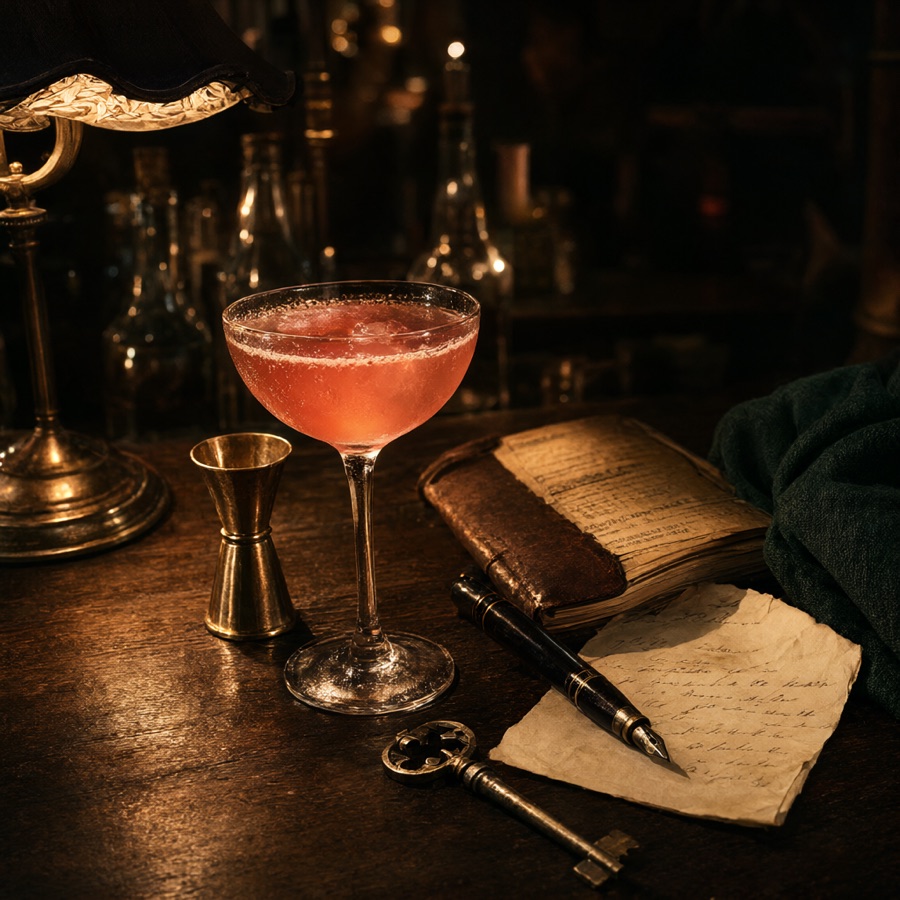
First, glassware and portions contracted. The loud punch bowls and flaming theatrics of the legal era vanished, replaced by small, quiet, easily concealed coupes and rocks glasses — a drink that could be dumped or hidden in seconds. Second came the "tea disguise": many speakeasies operated as tea rooms or soda fountains, serving cocktails in handle-less teacups beside an empty teapot for inspection, a presentation that later hardened into a retro aesthetic. Third, the bartender's status rose: in legal times a server, in underground times a gatekeeper, accomplice and arbiter of flavor. Guests had to trust his judgment, planting the seed for the modern bartender as flavor-author.
Exile in Europe and the Technique Flow-Back
Prohibition left many American bartenders unemployed, and the best were drawn to European hotel bars. Harry's New York Bar in Paris, The Savoy in London and Harry's Bar in Venice all welcomed American talent in this period, producing a rare transatlantic exchange of technique.
Harry Craddock wrote The Savoy Cocktail Book (London, 1930) there, compiling much of the Prohibition-era canon that remains a working reference today; Harry MacElhone served exiled American writers in Paris and created the Boulevardier. The era's greatest legacy is the fusion of American technique with European ingredients: Europe's deep stocks of liqueurs, vermouths and bitters gave American bartenders their first systematic exposure to the Old World aromatic family, while they carried shaking, double-straining, precise jiggering and standardized recipes into European hotel bars. When Prohibition ended in 1933, returning bartenders brought this fused grammar home and laid the skeleton of the modern classic cocktail.
Recreating the Prohibition Palate at Home
Three entry points work well. First, choose "camouflage" classics: the Bee's Knees, Last Word and South Side are acid-and-sugar-forward with the base spirit in support, ideal for studying Prohibition seasoning; thin honey into a runny honey syrup first or it will not emulsify in the tin. Second, try the tea-disguise presentation: serve in a handle-less cup with a small pot of hot water and an empty cup to recreate both the ritual and the tension. Third, respect dilution and temperature — bootleg spirit was high-proof and rough, softened only by hard shaking and deep chilling, so do not skimp on ice or shake time today; a firm twelve-second shake is usually what sands the edges smooth.
Prohibition aimed to destroy alcohol and instead produced the most creative period in cocktail history. It leaves a wry conclusion: constraint does not necessarily kill art — sometimes it forces art into being.
More tips
320 cocktail recipes, one tap away
Browse by base spirit, flavor and strength. Save your favorites.
Open MixMyth