Punch and Big-Batch Mixing: Ratio Rules and Party Execution
The Structure of Punch: Five Elements, Unchanged for Three Centuries
Punch is the earliest systematized form of big-batch mixing, carried from South Asia to Europe by East India Company sailors in the seventeenth century. Its name comes from the Hindi word for five, because classic punch is built from five elements: sour (lemon or lime), sweet (sugar or fruit), strong (the base spirit), weak (the diluting element — water, tea, soda or sparkling wine), and spice (aromatics and garnish). The power of this framework is that it turns "a big bowl of something delicious" from guesswork into a computable structure: whatever spirit and fruit you swap in, the proportional relationship between the five roles holds, and the flavor holds with it.
The Golden Ratio: 1 Sour, 2 Sweet, 3 Strong, 4 Weak
Three centuries of practice have settled on 1:2:3:4 — one part sour, two sweet, three strong, four weak. It describes the equilibrium of a large iced bowl: acidity raises the skeleton, sweetness rounds the texture, spirit provides structure, and the weak element governs strength while stretching volume. For a party of 8-10, starting from 1.5 liters of base spirit: about 500 ml citrus, about 1 liter sweetener, about 2 liters weak element — roughly 5 liters total, two to three glasses per person. In practice the weak element is your dial: raise the soda for freshness, ease back on sour and raise sweet for presence.
Two Classic Batch Templates
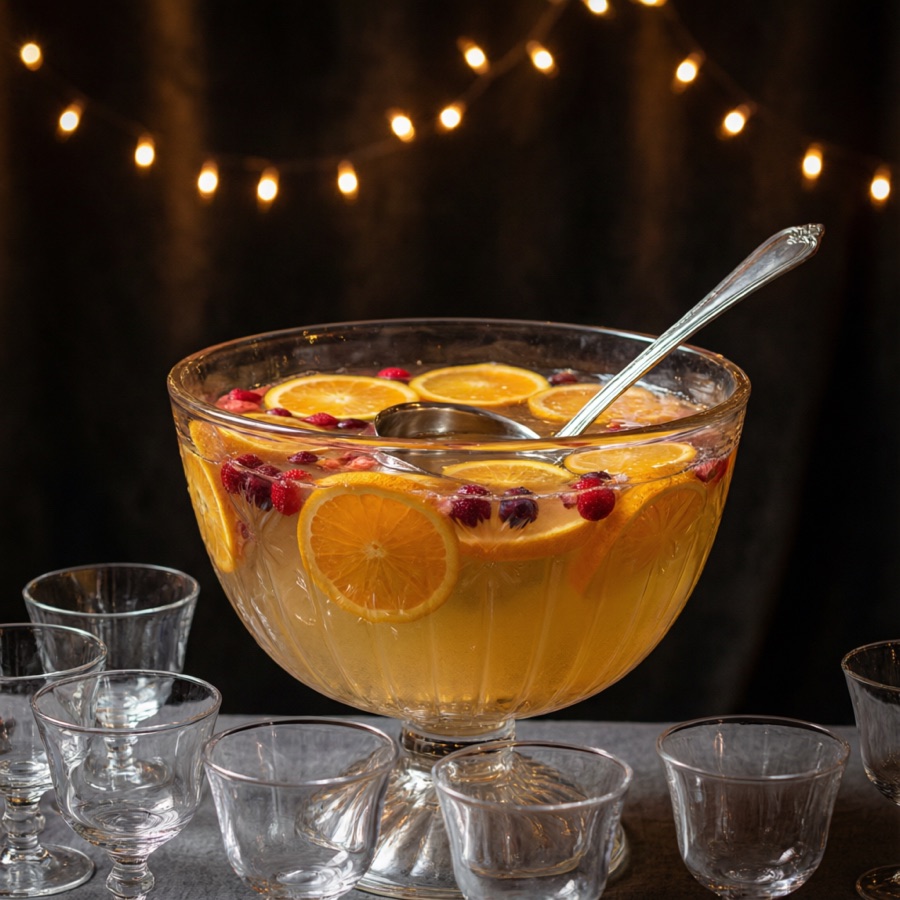
The tropical rum route: white rum, pineapple juice, lime, syrup, lengthened with soda, with pineapple chunks and whole mint branches steeping in the bowl — the thinking behind rum punch (/recipe/174/), big on fruit and atmosphere, right for outdoor gatherings. The wine route: a whole bottle of red wine with orange and lemon slices, a little brandy and sugar, steeped two hours or more and lengthened with soda just before serving — the method of Spanish sangria (/recipe/163/), lighter-bodied and food-friendly. Both share a principle: the fruit garnish is not decoration. Steeping fruit keeps releasing flavor into the bowl; it is part of the recipe. For formal occasions, documented classics like Plantation Punch (/recipe/176/) or Fish House Punch (/recipe/173/) carry full historical pedigrees.
Four Execution Details at the Party
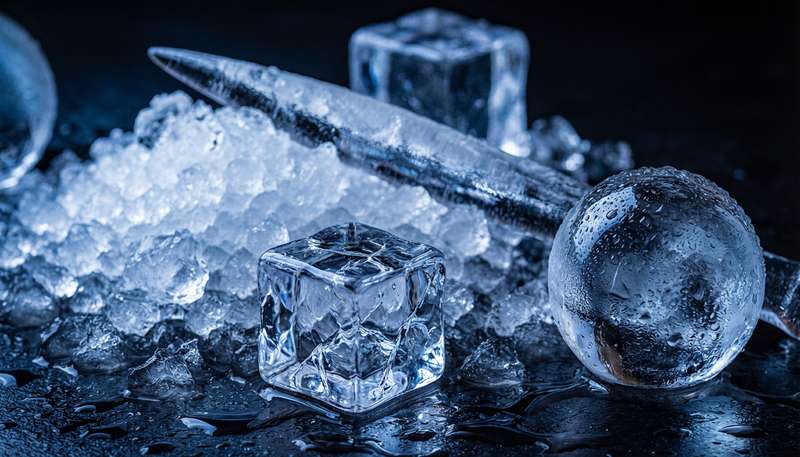
First, use big ice. Dilution is the enemy of the bowl; small cubes water it out within half an hour. Freeze 8-10 cm blocks and melting slows by more than half. Second, add carbonation last. Soda and sparkling wine cannot survive a long steep — top them up right before serving or the effervescence dies. Third, manage temperature by chilling the bowl itself in advance, which is safer than adding ice: ice changes concentration, a chilled bowl does not. Fourth, serve with a long-handled ladle and clear glasses. Punch must be stirred and portioned, so the ladle is mandatory; clear glass turns the fruit and color into part of the show.
The Boundary of Batch Preparation
Punch batches well; not everything does. The soul of a shaken drink is the foam and temperature created at the moment — batch it in advance and both are gone. Stirred spirit-forward drinks (a large-format Negroni, for instance) can be batched but must stay refrigerated as a whole and be finished within three days. The decision rule: does the recipe depend on a "just-made" state — foam, carbonation, frost? If yes, it does not batch ahead.
Source: MixMyth mixmyth.com
More tips
274 cocktail recipes, one tap away
Browse by base spirit, flavor and strength. Save your favorites.
Open MixMyth