The Complete Guide to Orange Liqueurs: Triple Sec, Curaçao and the Sweet-Dry Spectrum
The Complete Guide to Orange Liqueurs: Triple Sec, Curaçao and the Sweet-vs-Dry Debate
Why Orange Liqueur Is the Second Bottle Every Bar Needs
If you had to judge a bar's professionalism by a single bottle beyond the base spirits, many bartenders would point to the orange liqueur. It appears in the Margarita, the Sidecar, the Cosmopolitan, the White Lady and dozens of other sours — anywhere a "spirit + citrus juice" skeleton needs a sweet, aromatic and alcoholic bridge. Without it, half the sour family collapses. Understanding its raw materials, production methods and the sweet-dry spectrum is a required course in modern cocktail logic.
The terminology has long been muddled: Triple Sec, Curaçao and Orange Liqueur are used interchangeably in English, yet strictly speaking they point to different craft traditions. Untangling those boundaries is the main thread of this guide.
Raw Materials and Craft: The Essential Oil in the Peel
The core ingredient of every orange liqueur is the essential oil locked in orange peel. The traditional source is the laraha — a bitter green-skinned orange descended from Valencia stock on the island of Curaçao — while modern producers blend bitter and sweet peels to a target flavor profile: bitter peel gives structure and herbal depth, sweet peel gives bright, floral fruit.
Three production routes dominate:
- Maceration: dried peels steep in neutral alcohol for weeks; the fullest flavor, the hardest batch consistency.
- Distillation: peels and alcohol are distilled together in copper pots and the hearts are kept; the purest orange aroma and a crystal-clear body — the route of Triple Sec and Cointreau.
- Cold blending: pre-pressed peel oil is blended into base spirit and syrup; the most efficient and consistent, common among large commercial brands.
Sugar is the second variable. EU rules require the Curaçao family to carry at least 250 g of sugar per liter; Triple Sec has no legal floor, and real-world products range from 150 to 400 g/L. More sugar means a thicker, sweeter pour that must be dosed down; less sugar means a drier, cleaner stage where the orange reads louder. This is the physics behind the sweet-vs-dry debate.
Sweet vs. Dry: Two Skeletons, Two Logics
Plot the mainstream products on a sugar-by-aroma grid and two clear families emerge:
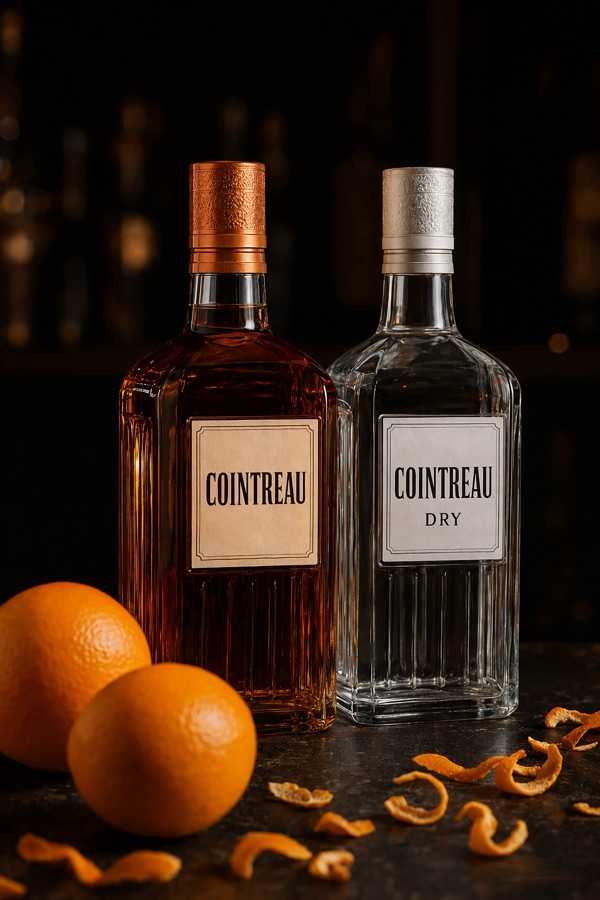
- The Cointreau line (balanced): 40% ABV, mid-high sugar, a full orange perfume with white-floral and spice undertones. It works as the default in nearly any recipe, typically at a 2:0.75–1 spirit-to-liqueur volume ratio in sours.
- The dry Triple Sec line: mostly 20–30% ABV, lower sugar, lighter aroma. Two caveats: its sweetness under-delivers, so recipes often need an extra 2–5 ml of syrup; and its lighter body thins out drinks like the Sidecar and Margarita where the liqueur is the second structural pillar.
- The Curaçao line: best known through Blue Curaçao — dyeing it blue was originally a Caribbean marketing gesture, and it tastes essentially the same as the colorless version. At a typical 25–30% ABV it behaves closer to an orange syrup: substitute it for Cointreau at roughly 1.3× volume and cut the syrup.
Practical advice for the first bottle on a home bar: choose the balanced 40% ABV tier. On a budget, a dry Triple Sec is perfectly workable with the six-word calibration — "add syrup, pour a bit more." To audition a new bottle, mix a 60 ml spirit + 25 ml lime + 15 ml liqueur miniature without ice and taste: its sweetness tier and aroma strength reveal themselves in one sip.
Dosage Across the Classic Recipes
The classic, internationally recognized ratios show a clear functional band:
- Margarita (50 ml tequila : 20 ml liqueur : 25 ml lime): ~21% of the pour, a structural second pillar carrying body and sweetness.
- Sidecar (45 ml cognac : 20 ml liqueur : 20 ml lemon): ~29%, equal to the lemon — it single-handedly balances sweet and sour.
- Cosmopolitan (40 ml vodka : 15 ml liqueur : 30 ml cranberry : 15 ml lime): ~15%, a supporting role behind cranberry's fruit acid.
- White Lady (40 ml gin : 20 ml liqueur : 20 ml lemon): the same skeleton as the Sidecar, proving the ratio translates across spirit families.
A transferable rule: the louder the base spirit's personality, the more orange liqueur it takes to tame it — tequila and cognac ask for generosity; neutral vodka asks for restraint.
Common Mistakes and Substitutions
Mistake one: swapping Blue Curaçao 1:1 for a dry orange liqueur. Its ABV and sugar structure differ; the drink goes thin and the color goes strange. Blue Curaçao belongs in long drinks and layered shots, not sour skeletons.
Mistake two: substituting orange juice. Juice brings water and fresh fruit; the liqueur brings water-free, highly concentrated oil plus alcoholic backbone. In a sour skeleton they are not interchangeable — the drink reads noticeably watery.
Mistake three: assuming expensive equals correct. Premium bottles win on batch consistency and finish, but inside a sour — where lemon and lime dominate the palate — the gap between mid-tier and top-tier collapses dramatically. Spending on the base spirit is usually better value.
Emergency substitutions: with only a dry orange liqueur on hand, remember "one tenth more liqueur, one spoon more syrup"; with only fruit liqueurs such as Chambord or St-Germain, do not substitute at all — change the recipe instead.
One Bottle, a Whole Family
Orange liqueur is the kind of purchase that keeps working for years: store it cool and dark, and it holds its character for a year after opening. From this single bottle you can reach up to the Margarita and Sidecar skeletons, down to the Cosmopolitan and White Lady, and sideways into endless riffs by rotating the base spirit. Master this one bottle and you hold half the logic of the sour family — which is exactly why it earns the title of the home bar's second essential.
More tips
356 cocktail recipes, one tap away
Browse by base spirit, flavor and strength. Save your favorites.
Open MixMyth