The Old Fashioned Family Deconstructed: A Century-Old Formula of Sugar, Bitters and Spirit
The Old Fashioned Family Deconstructed: A Century-Old Formula of Sugar, Bitters and Spirit
The Old Fashioned is often called the prototype of the cocktail. Its ingredient list is anything but flashy - just spirit, sugar, bitters and water - yet it is the first drink every bartender drills and every seasoned drinker quietly judges. To understand the Old Fashioned is to understand the original definition of the word "cocktail"; to read its family of variations is to trace two centuries of how spirits have been drunk.
I. The 1806 Definition: A Living Fossil of Four Elements
The earliest written definition of the word cocktail appeared in an 1806 New York newspaper, which described it as "a stimulating liquor composed of any spirit, sugar, water and bitters." In other words, the Old Fashioned is not one recipe among many - it is the living fossil of the cocktail concept itself. Every later drink that adds juice, liqueur or sparkle is simply doing arithmetic on these four elements. When the late nineteenth century saw a wave of "improved cocktails" acquiring new names, drinkers who stuck to the old formula asked for an "old-fashioned" one, and the name stuck. The heart of the drink, then, was never a particular spirit, but the underlying formula: sugar rounds the spirit, bitters supply structure, and water opens the aromatics.
II. Sugar: The Lever That Rounds the Spirit
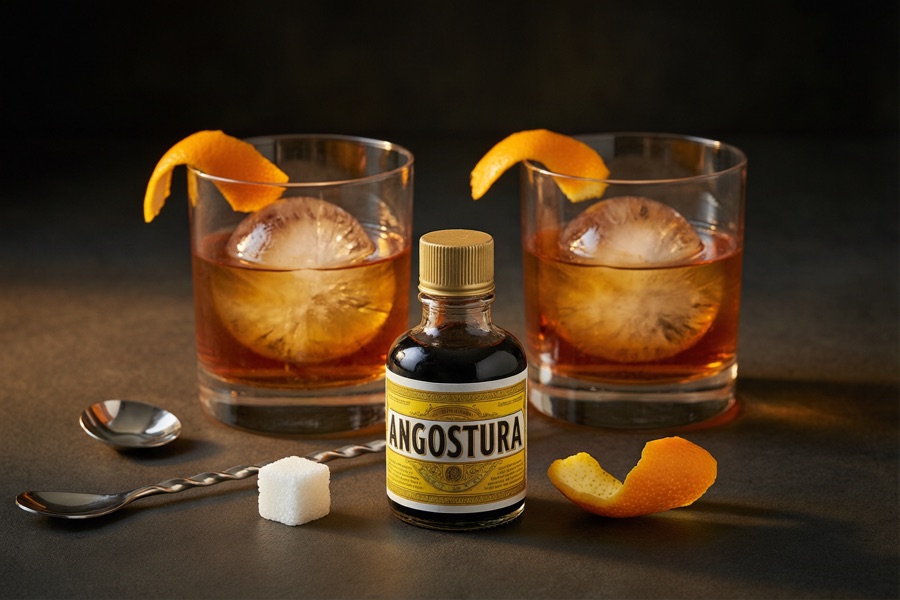
Sugar does not exist to make the drink sweet; it exists to wrap the burn and the sharp edges of high-proof alcohol so the spirit's aromatics become perceptible. The traditional method places a sugar cube on a bar spoon, dashes bitters and a little water over it, and muddles it into solution before ice is added. A cube dissolves slowly and releases sweetness gently, giving a drier finish; syrup (usually 1:1 or a richer 2:1) dissolves fast, sweetens evenly and rounds the mouthfeel. Dosage is the critical lever: one standard cube equals roughly 5-8 ml of syrup, and a single Old Fashioned rarely needs more than that - too much buries the spirit and turns cloying. The type of sugar matters too: white sugar is clean and neutral, while demerara carries molasses and caramel notes that sit beautifully with aged bourbon or rye.
III. Bitters: The Invisible Skeleton
Angostura bitters are the default choice, building a warm, gently bitter base from clove, cinnamon and gentian; two or three dashes are enough to stitch sugar and spirit into a single whole. Bitters are dosed in dashes, and too many introduce a medicinal, astringent edge. Beyond Angostura, orange bitters lend bourbon a bright citrus finish; Peychaud's brings anise and floral notes and is the classic partner for a brandy Old Fashioned; chocolate, cherry and celery bitters are the modern bartender's tools for personal variation. The key is to treat bitters as skeleton rather than seasoning - their job is to lift, never to mask.
IV. Spirit: The Watershed of the Family
The canonical base is bourbon, whose corn-derived sweetness and vanilla-caramel oak marry naturally with sugar and bitters; rye, spicier and drier, gives the drink more backbone and is the old-school preference. A Scotch version adds malt and peat complexity. Recent variations transpose the formula onto other spirits: aged rum with demerara and Angostura makes a molasses-tinged Rum Old Fashioned; tequila or mezcal with agave syrup yields an Oaxaca Old Fashioned with smoke and mineral salinity; even gin returns to the nineteenth-century "gin Old Fashioned." The family tree is really a matrix of spirit x sugar x bitters - swap any variable and you get a different but structurally complete drink.
V. Water and Dilution: The Mechanics of Stirring and Common Mistakes
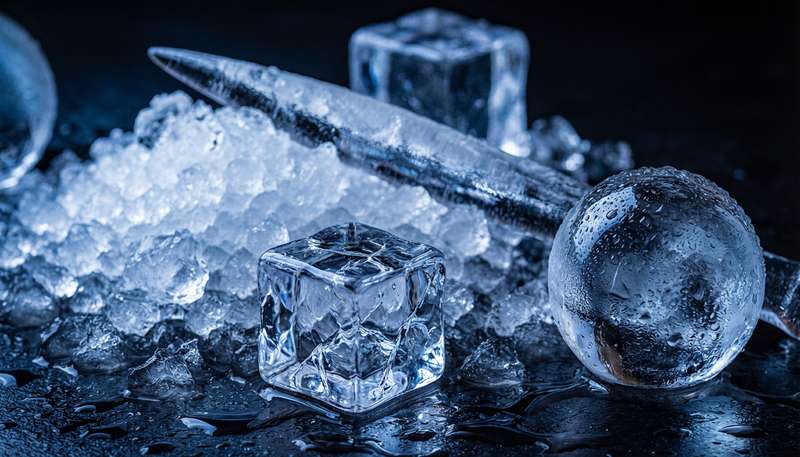
The Old Fashioned is a stirred drink: all ingredients over ice, stirred in a mixing glass for roughly 20-30 seconds so that melting water dilutes the alcohol, chills the drink and fully integrates sugar, bitters and spirit. Under-dilution leaves the drink harsh and the sweetness jarring; over-dilution leaves it thin and weak. The ideal serving temperature sits around minus five degrees Celsius, the liquid bright and silken on the palate. Stir, then strain over a large cube or a single sphere in a rocks glass - big ice melts slowly and keeps in-glass dilution stable. The three classic mistakes: treating sugar as "more is better" and burying the spirit; adding juice or soda and turning it into a different drink; and stirring by feel with no control over temperature and dilution.
Conclusion: Why It Remains the First Exam
The Old Fashioned has survived two centuries because it reduces the cocktail to its smallest working unit: one spirit, a little sweet, a few dashes of bitter, and the right amount of water. It is at once the simplest beginner's drink and the sternest test of craft - every fundamental of balance, dilution and temperature is exposed in this one glass. When you can reliably build a structurally complete Old Fashioned and explain the flavor logic behind every adjustment, you hold the key to understanding the entire world of cocktails.
More tips
274 cocktail recipes, one tap away
Browse by base spirit, flavor and strength. Save your favorites.
Open MixMyth