The Complete Guide to Muddling: Extraction Principles for Herbs, Citrus, and Fruit
The Complete Guide to Muddling: Extraction Principles for Herbs, Citrus, and Fruit
Muddling looks like the least demanding move in bartending - grab a stick and press a few times in the bottom of a glass - yet it is also the easiest way to ruin a drink. Press too gently and the aromas never emerge; press too hard and bitterness, astringency, and shredded debris all flood into the glass. The real issue is that different ingredients release completely different things: mint yields the aromatic oils on the surface of its leaves, citrus yields peel oil and pulp juice, fruit yields juice and fiber, and a sugar cube only needs to dissolve. Treating them all the same and mashing away is the most common beginner mistake.
I. Principle: what muddling actually extracts
Muddling is essentially "breaking cells to release aroma," not "pulverizing the ingredient." Plant flavor compounds sit in three places: the oil glands on the surface (citrus peel, herbs), the juice inside the cells (fruit), and the woody or seed structures that carry bitter compounds (white pith, seeds, stems). The first two are what we want; once the third is released it cannot be taken back. The goal is therefore always "the least destructive force that extracts the most target flavor" - burst the oil glands and fruit cells, but never grind the pith, seeds, and leaf veins. With that in mind, whether to press lightly or pound hard is no longer a matter of feel; it is decided by the structure of the ingredient.
II. Tools: muddler material and shape
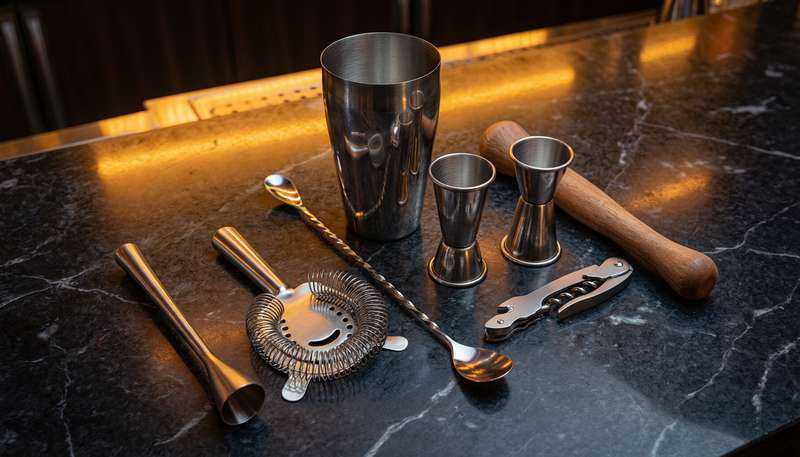
Muddlers fall into three broad types. Wood is gentle with a moderate grip and is the first choice for delicate herbs like mint; its downsides are that it absorbs flavor and can crack, so it must be wiped dry after use and never soaked. Stainless steel is sturdy, non-porous, and easy to clean, often with a serrated or flat head for pounding fruit and ice, but brute force with it easily over-breaks the cells. Nylon or plastic sits in between - flavor-neutral and glass-safe - and suits home bars. In terms of shape, a flat wide head is for pressing (citrus, sugar cubes), a serrated or dimpled head is for grinding (spices, mashing fruit), and a smooth round head is for lightly patting herbs. Choosing the right head matters more than choosing force.
III. Technique by ingredient: herbs, citrus, fruit, sugar, and spices
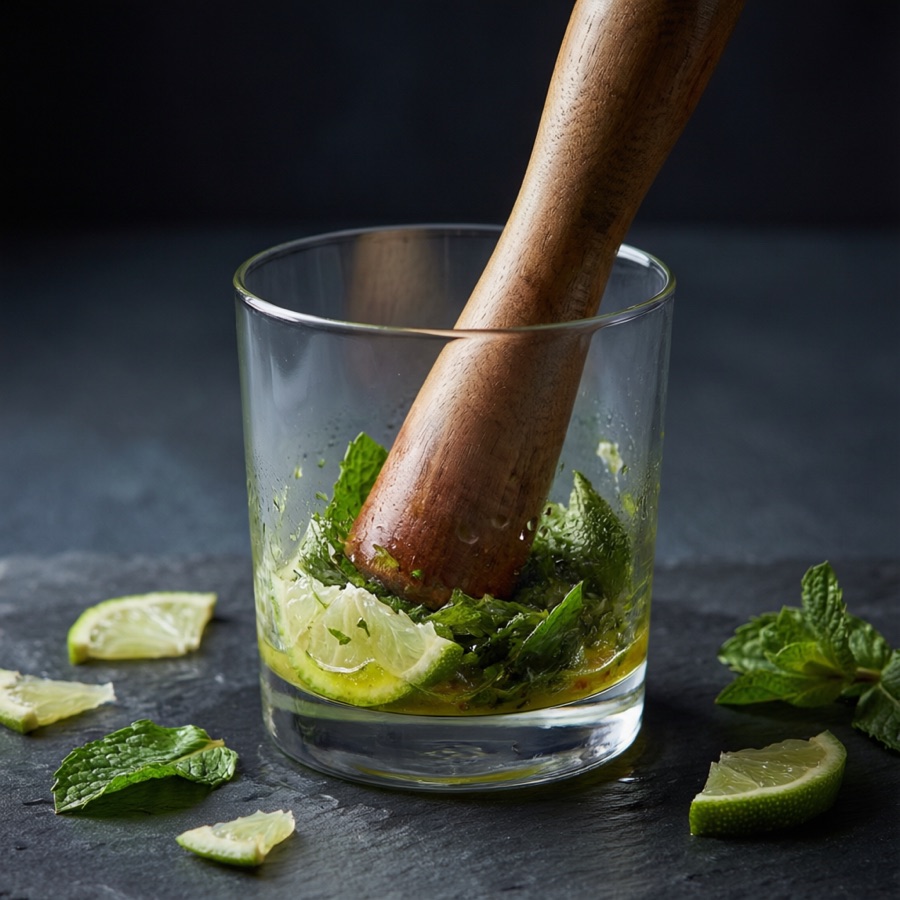
Herbs (mint, basil, shiso) need only "light press plus twist": press the leaves against the glass wall two or three times with the base of the muddler and give a gentle half-turn, aiming to release the surface oils - never mash them into confetti, or the bitterness of chlorophyll and leaf veins will overwhelm the fresh aroma. Citrus (lime and lemon wedges) should be handled "peel first, pulp after": press a peel-side-down wedge so the oils spray, then carry through to squeeze out the pulp juice while pressing the white pith as little as possible. Fruit (strawberry, pineapple, raspberry) needs "firm mashing" - press the flesh into a pulp to force out the juice - while seedy fruit (passion fruit) should be pressed only briefly. Sugar and spices (cubes, ginger, nutmeg) take the "grinding" route, worked fine with a little liquid until dissolved.
IV. Order of operations: what to muddle first, what to add after
The correct order is "dry before wet, solid before liquid." First muddle the solids that need pressing (herbs, citrus, fruit, sugar) alone in the glass so their flavors fully release, then add the spirits and citrus juices, and only then add ice. If you add ice first and then muddle, the ice blocks the muddler, dilutes the flavors already released, and shreds the herbs to pieces. After muddling you can let it rest a dozen seconds for the aromas to marry before it goes into the shaker or is built directly. For recipes built around muddling - the Mojito, the Caipirinha - the flavor concentration of this step all but sets the ceiling for the whole drink.
V. Common mistakes: shredding the mint, pressing bitter pith into the drink
Mistake one is "harder means more aromatic," especially with mint - mint mashed to a pulp releases bitter chlorophyll, turning the drink green and harsh; the correct move is to pat lightly and stop the moment the aroma rises. Mistake two is pressing citrus pith relentlessly; the naringin and other bitter compounds in the white pith dissolve quickly, so always avoid the white inner skin when pressing juice. Mistake three is shaking already-muddled herbs hard with ice in the tin; high-speed impact shreds the leaves finer and doubles the bitterness, so muddled herbs should be treated as gently as possible. Mistake four is tossing in whole stemmed herbs - stems are woody and bitter, so use the leaves only. Mistake five is skipping the strain, leaving debris in the drink and hurting the texture; double-strain through a Hawthorne strainer plus a fine mesh when you pour, and you get a clean, clear result. Master the three rules - press rather than grind, adjust to the ingredient, solid before liquid - and muddling turns from the move most likely to fail into a reliable fundamental that lifts the layers of flavor.
More tips

320 cocktail recipes, one tap away
Browse by base spirit, flavor and strength. Save your favorites.
Open MixMyth