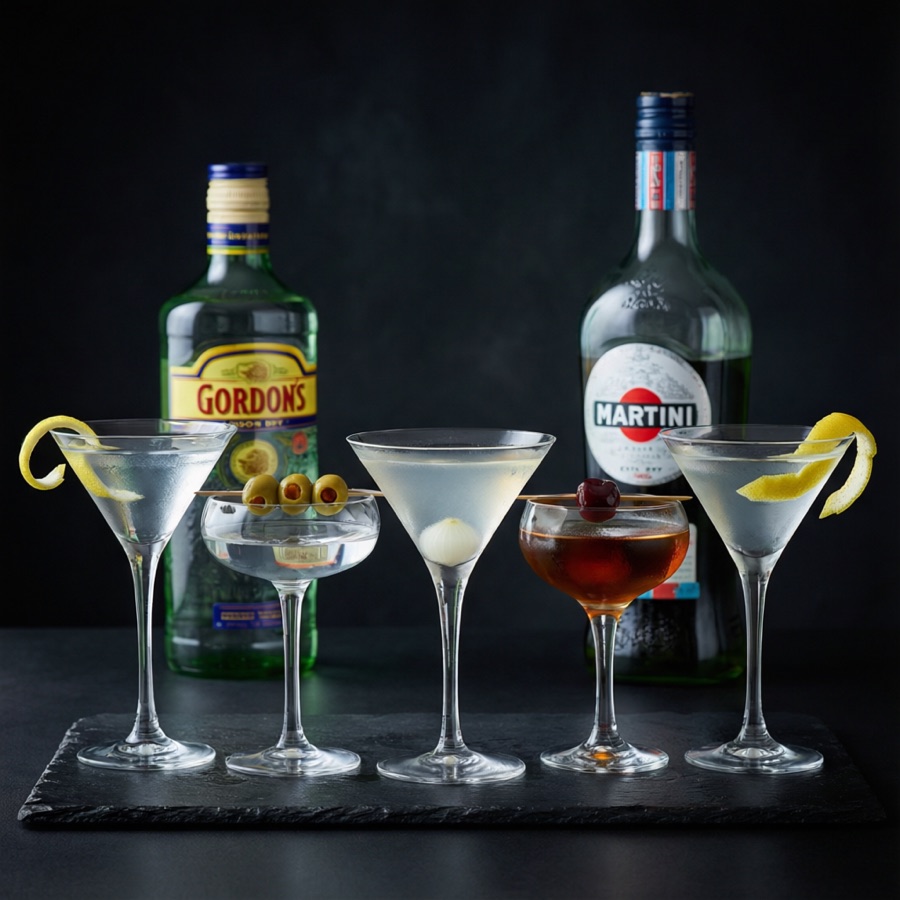
The Martini Family Deconstructed: Gin, Vermouth, and the Classic Ratios
The Martini Family Deconstructed: Gin, Vermouth, and the Classic Ratios
The martini is the most discussed—and most oversimplified—cocktail in the world. Behind a bar call of "dry martini" lies a complete lineage running from the nineteenth-century Martinez to today's dirty vodka: ratios drifting from 1:1 to 15:1, garnishes swapping from cherry to olive to onion, base spirits expanding from gin to vodka and even tequila. Reading this family does not require memorizing recipes; it requires holding three threads—ratio, temperature, and dilution.
I. Origins: From Martinez to the Modern Dry Martini
The martini's direct ancestor is the Martinez of the 1870s: sweet Old Tom gin, sweet vermouth, maraschino liqueur, and orange bitters at roughly 2:1, rounded and sweet on the palate. Through the twentieth century, dry gin and dry vermouth replaced the sweet originals, the ratio tightened steadily, and the garnish simplified from cherry to lemon peel or olive, forming the dry-martini skeleton we recognize today. This evolution matters: it shows the martini was never a fixed recipe but a ratio band that drifts with ingredients and taste.
II. Four Elements: Gin, Vermouth, Bitters, Garnish
Members of the martini family share four elements. Gin supplies the juniper-and-botanical backbone; vermouth supplies herbal complexity and a trace of sweetness, acting as the wet/dry dial; bitters (orange or Angostura) stitched the two wines together in early formulas and are often omitted in modern dry versions; the garnish defines the first aromatic impression—lemon peel for bright citrus oils, olive for brine and body, cocktail onion (Gibson) for pickled sharpness. Every substitution of one element produces a named variation.
III. The Ratio Scale: A Palate Map from 1:1 to 15:1
Plot gin-to-vermouth on a scale and the family becomes legible. 1:1 is the wet martini, vermouth's herbs and sweetness nearly equal to the gin; 2:1 to 3:1 is the classic band and the default in most recipes; 4:1 to 6:1 enters dry territory, vermouth reduced to an aromatic layer; 8:1 and above approaches extra dry, vermouth only a rinse; 15:1 or "just look at the vermouth bottle" is the Churchillian joke extreme. Each step tighter makes the drink hotter, colder, and more dependent on the gin's own quality—which is why the dry martini demands an excellent base spirit.
IV. The Variation Lineage: Dry, Wet, Perfect, Dirty, Gibson
Beyond the ratio scale, four substitutions generate the principal variations. The Perfect martini uses equal parts dry and sweet vermouth for the richest herbal layering; the Dirty adds olive brine, its salinity thickening the body; the Gibson swaps the olive for a cocktail onion, sharper and more pickled; the Vesper replaces vermouth with part vodka and Lillet for a harder, colder body; the Vodka Martini swaps the base entirely, trading botanicals for purity. Modern riffs on tequila or mezcal share the same ratio and technique logic.
V. Dilution and Temperature: Stir Time and the Physics of Ice
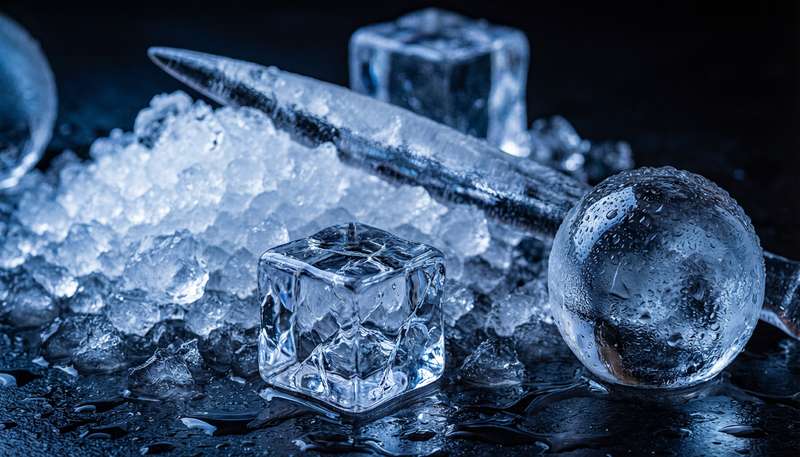
The martini is the textbook stirred cocktail: no citrus, no dairy, only ice delivering chill and dilution through stirring. The standard is a full charge of hard ice stirred 25 to 40 seconds—time sets the dilution rate, typically targeted at 20 to 30 percent. Under-stirred, the drink burns and its aromas stay closed; over-stirred, water flattens the structure. The glass must be frozen or chilled in advance, or the first sip loses its edge to a warm wall. Dilution is not a side effect; it is the martini's third ingredient.
VI. Common Pitfalls: Vermouth Oxidation, Glass Temperature, Garnish Oils
Three pitfalls are most often missed. First, vermouth is a fortified wine that oxidizes fast once open; weeks at room temperature strip its herbs and leave only acidity—refrigerate and finish within a month, or no ratio can rescue the flavor. Second, glass temperature: an unchilled wall raises the liquid to an undrinkable temperature within ten seconds; a frozen glass is the floor, not a bonus. Third, garnish handling: lemon peel must be expressed over the rim to release its oils before entering the glass—dropping it in unexpressed contributes only bitter pith; olives should slide gently down the wall rather than splash the surface.
VII. Closing: Ratio Is Style
The martini family has no single correct answer, only a ratio scale and three tools—good gin, fresh vermouth, hard ice. Build a 3:1 baseline first, then tighten or loosen step by step and note where your own palate turns; that is worth more than memorizing twenty variations. When you can say "I like 4:1, stirred thirty seconds, lemon peel," you have truly entered the family.
More tips
320 cocktail recipes, one tap away
Browse by base spirit, flavor and strength. Save your favorites.
Open MixMyth