The Julep Family Deconstructed: The Classic Formula of Spirit, Mint and Crushed Ice
The Julep Family Deconstructed: The Classic Formula of Spirit, Mint and Crushed Ice
The julep is one of the oldest cocktail families in America, appearing in print even earlier than the Old Fashioned, yet today it is often reduced to "sweet bourbon with mint in it." A true julep does not win by shaking or by a long ingredient list; its charm comes from a few of the plainest things in the bar: good spirit, sugar, a great deal of crushed ice, and one sprig of mint properly awakened. To understand the julep is really to understand how dilution and aroma work together to shape a drink - it is very nearly a hands-on lesson in temperature and smell. For a bartender, making a good julep means you have genuinely mastered the leverage that water and ice exert over flavor.
I. Origins and definition: what a julep is
The word "julep" comes from the Persian "gulab" (rose water), which traveled into Europe through Arabic and Latin and originally meant a sweetened medicinal water used to mask the taste of bitter medicine. In the eighteenth century it evolved in colonial North America into a morning pick-me-up of spirit, sugar, and water - later, ice. The structure of a julep is extremely spare: spirit as the base, sugar to round it out, meltwater to dilute, and mint for aroma, all built directly in the glass without shaking. It is essentially a close cousin of the Old Fashioned, the difference being that the julep is built around crushed ice and mint, chasing maximum chill and a fresh, fragrant lift rather than the dense richness of an Old Fashioned.
II. The structural formula: spirit, sugar, mint and crushed ice
A classic julep runs roughly to 60 ml of spirit, 10-15 ml of syrup or granulated sugar, six to eight mint leaves, and a glass packed with crushed ice. Bourbon is the default base, but historically rum, brandy, and even peach brandy have all been made into juleps. Sugar does more than sweeten: it carries the meltwater and balances the heat of the spirit - too little and the drink is thin, too much and it turns cloying. Crushed ice is the key variable: it offers an enormous surface area that drops the liquid to near freezing within minutes while steadily releasing meltwater. The "watery" quality of a julep is therefore not a fault but a design - it must be well diluted, or it will taste harsh and hot.
III. Crushed ice and dilution: the science of temperature
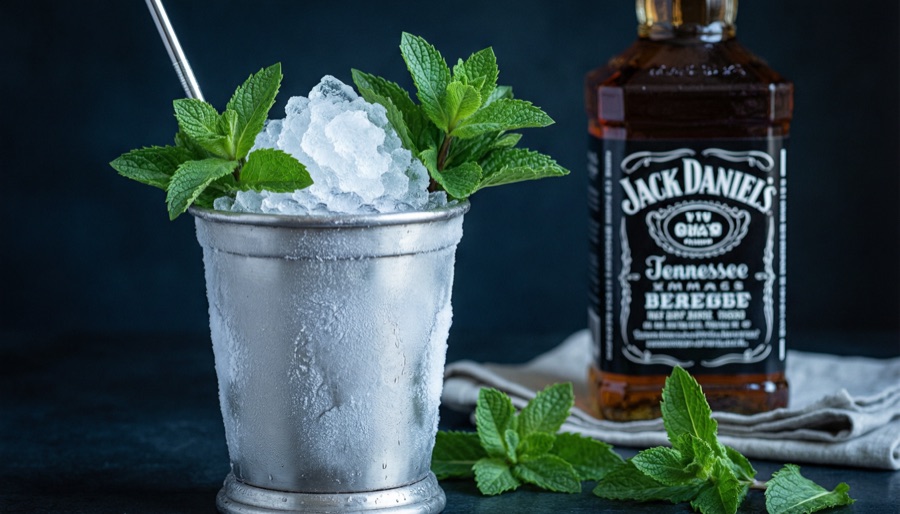
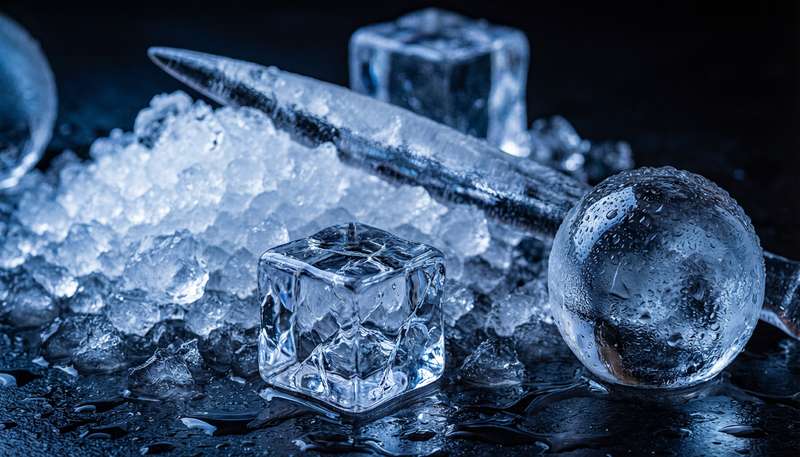
Crushed ice beats large cubes because its surface-area-to-volume ratio is far higher, accelerating chilling and dilution at once. But that brings a risk: crushed ice melts quickly, and if the drink is not built correctly, a julep turns into a puddle within minutes. The professional approach is "season first, then pack with ice": first stir the spirit, sugar, and a little water into a strong, balanced base, then pour it into a glass filled with crushed ice and let the ice carry the chilling and the gradual dilution. A glass frosted white on the outside with crushed ice heaped into a little dome on top is the signature look of a julep - and the sign that the drink is cold enough.
IV. Handling the mint: clap it, do not shred it
Mint is where a julep most often goes wrong. Many people muddle it hard the way they would for a Mojito, releasing bitter chlorophyll and turning the drink green and harsh. In a julep the mint is mainly an "aroma carrier," not a source of juice. There are two correct moves: first, place the leaves in your palm and clap them once, hard, to burst the surface oils, then set them into the glass; second, plant a full sprig upright in the crushed ice on top as a "nose garnish," so the drinker smells fresh mint before every sip. If you want to extract more flavor, press the leaves gently with a little syrup or spirit, but never mash them to confetti, and strip out the woody, bitter stems.
V. Family variations and common mistakes
The julep family is far richer than a single Kentucky Mint Julep: the Georgia Julep adds peach brandy and blackberry liqueur, the John Julep swaps rye whiskey for bourbon, and there are historical rum juleps and brandy juleps besides. There are three common mistakes. First, shredding the mint so it turns bitter and green. Second, using too little crushed ice, or ice that is not fine enough, so the drink never chills and the aromas never gather. Third, under-sugaring while building straight with a high-proof spirit, which drinks harsh and unbalanced. Master the four divisions of labor - ice manages temperature, sugar manages balance, mint manages aroma, and spirit manages structure - and the julep turns from a seemingly simple sweet drink into a classic that showcases your command of temperature and smell.
More tips
320 cocktail recipes, one tap away
Browse by base spirit, flavor and strength. Save your favorites.
Open MixMyth