Building a Home Bar: The Logic Behind Your First Five Bottles
The Principle: Coverage per Bottle
The most common home-bar mistake is buying mechanically from a "must-have list" and watching half the bottles gather dust. Work backwards instead: decide what you actually like to drink, then derive which spirits you need. A bottle's value is measured by how many classics it supports — a single gin powers gin & tonics, Martinis (/recipe/1/), Negronis (/recipe/108/) and gin fizzes by the dozen. That coverage efficiency is the ranking criterion.
Taste Test Yourself First
Three questions before you buy: What style do you order at bars? Crisp and fizzy (gin & tonic, mojito territory), strong and short (Old Fashioned, Martini territory), or bright and sweet-sour (Margarita, Cosmopolitan)? And how much alcohol heat do you tolerate? The answers set the priority order: fizzy-fresh drinkers should lead with gin and rum; strong-short drinkers with whiskey and gin; sweet-sour party drinkers with tequila and vodka.
The Five Bottles and Their Jobs
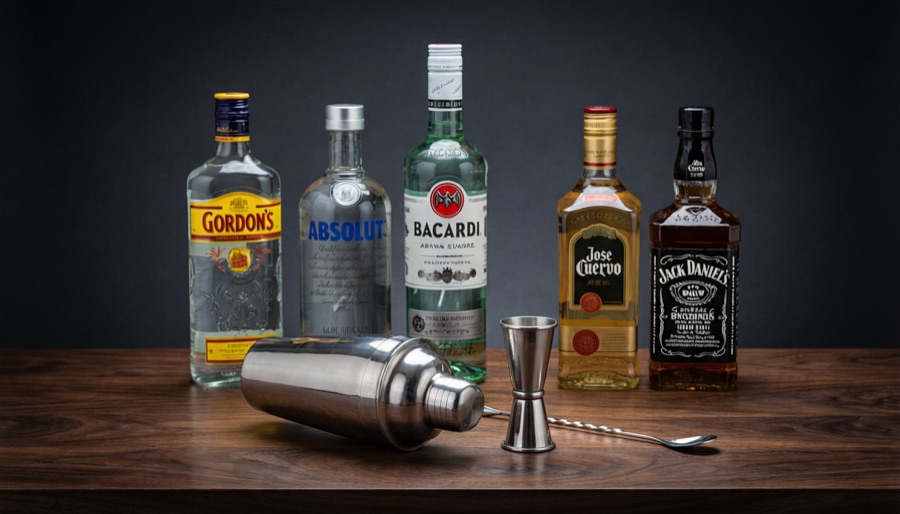
Gin is the master key of the cocktail world — its botanicals drink well even unadorned, and one London Dry covers the vast majority of recipes. Vodka is a neutral flavor canvas that delivers alcohol without stealing the show, powering the Moscow Mule (/recipe/60/) and White Russian (/recipe/153/). Rum carries sugarcane sweetness, the soul of the Mojito (/recipe/57/) and Daiquiri family; start with a white rum, add a dark one later. Tequila is intensely vegetal and unmistakable — essential for Margaritas and Palomas; look for the "100% de agave" mark, the true quality dividing line. Whiskey rules the short drinks: Old Fashioned (/recipe/41/), Manhattan (/recipe/42/) and Whiskey Sour (/recipe/21/) all fall under one bourbon, whose sweetness makes it the friendliest first bottle.
Second Tier: Vermouth and Liqueurs
Once the five bottles are in place, put the first reinforcement budget into dry and sweet vermouth — the co-stars of the Martini and the Manhattan. They cost little and double your recipe count. Then add one liqueur by preference: Cointreau for citrus, Kahlúa for coffee, Campari for bitter herbs. The logic is still coverage: vermouth activates two entire classic families; liqueurs open the door to flavor variations.
Budget Allocation and Traps
At a fixed budget, "mid-range staples plus a few considered picks" beats "everything cheap." The core entry bottles of major brands taste clean and standard — spend the savings on vermouth and tools instead. Two traps to avoid: limited editions and flavored spin-offs belong to collecting, not foundation-building; and vermouth must be refrigerated after opening and finished within 6-8 weeks, so buy small bottles.
Source: MixMyth mixmyth.com
More tips

274 cocktail recipes, one tap away
Browse by base spirit, flavor and strength. Save your favorites.
Open MixMyth