The Highball Family, Deconstructed: Spirit, Fizz, and the Classic Ratio
The Highball Family, Deconstructed
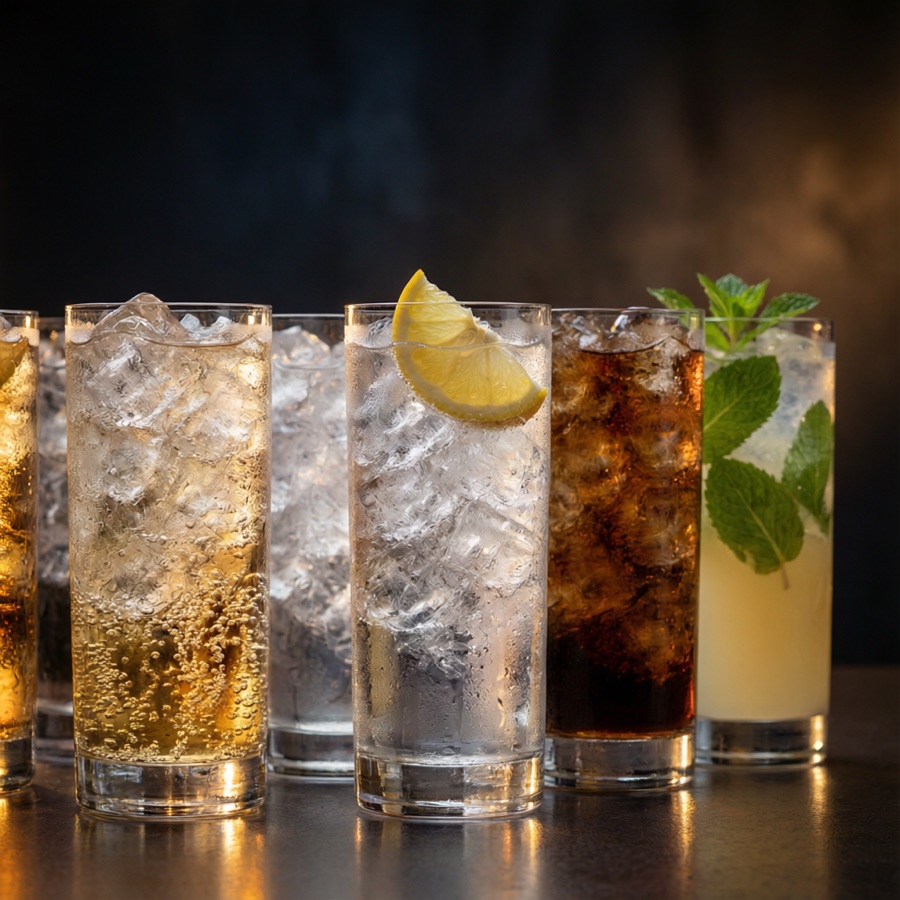
The highball is the most humble and most revealing form in the cocktail canon: a straight-sided glass, plenty of ice, one measure of spirit, topped with a carbonated soft drink, finished with a citrus wedge or a sprig of mint. It is neither shaken nor stirred (or stirred only barely), demands almost no technique, and yet it is the form that most purely expresses the trinity of spirit character, carbonation, and temperature. Understanding its structural logic is the key to the fastest, lowest-failure-rate family of long drinks on any home bar.
I. Structural definition: what actually counts as a highball
Strictly speaking, a highball is a long drink built (not shaken) in a tall glass over ice, in which a spirit is lengthened with a carbonated soft drink - soda water, tonic, cola, ginger ale, ginger beer, or sparkling wine. Two close relatives must be distinguished. A Fizz is shaken first with citrus and sugar, then topped with soda: it belongs to the sour family. A Collins is likewise shaken and strained before topping. The highball's defining trait is "no shake" - spirit and carbonated mixer meet directly in the glass, cooled by ice, diluted by meltwater, lifted by bubbles. Gin & Tonic, Cuba Libre, Moscow Mule, Whiskey Highball, Paloma, and Dark 'n' Stormy are all members of this structure.
II. The golden ratio: the mechanics of spirit and fizz
Highball ratios typically run from 1:2 to 1:4. The Japanese-style whisky highball chases absolute refreshment at 1:3 or even 1:4, dropping the ABV into the 8-12% range for easy drinking; richer builds like the Cuba Libre or Dark 'n' Stormy balance sweetness and body at 1:2.5 to 1:3. The ratio is really a triangle of dilution, sweetness, and strength: the sweeter the mixer, the larger the ratio needed to avoid cloying; the more characterful the spirit, the smaller the ratio you can afford in order to let it speak. A safe starting point is 45 ml of spirit to 120-135 ml of carbonated mixer, then adjust to taste.
III. Temperature and carbonation: why the bubbles stay
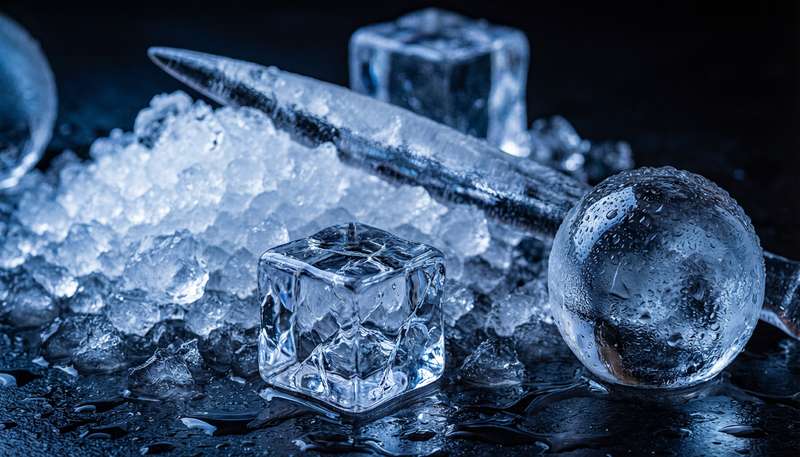
Carbon dioxide solubility rises as temperature falls; around 4 degrees Celsius the fizz is most stable. Every move in a highball therefore serves coldness: chill the glass, fill it generously with large cubes, keep the mixer refrigerated, and chill the spirit too. Too little ice lets the drink warm quickly, sheds its bubbles, and over-dilutes at the same time. Pour the carbonated mixer slowly down the inside wall or over the back of a bar spoon to minimise gas loss from impact; stir at most once, two gentle pushes, because over-stirring is simply stirring the bubbles out. Express citrus peel last so the oils land on the surface and seal in aroma.
IV. The family tree: one soft drink, one cocktail
The highball family sorts itself by which carbonated mixer it uses. Soda and tonic branch: Gin & Tonic (tonic), Whiskey Highball, Americano and Gin Rickey (plain soda). Cola branch: Cuba Libre, Rum & Coke, Charro Negro. Ginger branch: Moscow Mule (ginger beer), Dark 'n' Stormy and Whiskey Ginger (ginger ale). Citrus-soda branch: Paloma (grapefruit soda). And the juice-based Sea Breeze and Bay Breeze sit at the edge - strictly non-carbonated, they are the highball form extended into still long drinks. Learn this tree and swapping one mixer generates an entire new family of recipes.
V. Glassware, service rhythm, and common mistakes
A highball glass typically holds 240-350 ml: straight-sided and moderately narrow, it carries enough ice while giving the bubbles a long column to rise through; too short a glass caps the ice volume and the bubble column, too wide a mouth accelerates gas loss. On service rhythm, the highball is a made-to-order drink: carbonation decays within minutes of topping, so never batch-top in advance - the base (spirit plus sugar or citrus) can be pre-batched, but the carbonated mixer goes in at the last second before serving, so the first sip still fizzes. On this foundation, five mistakes recur. First, too little ice: a highball demands a full glass of ice; skimp and it warms fast, dilutes out of control, and loses its fizz. Second, pouring the mixer before the spirit: the correct order is spirit first, then mixer (or mixer to half, then top), so the two marry without knocking the gas out. Third, stirring hard: a highball is not a mixing problem - two pushes suffice, more only degasses it. Fourth, ignoring a chilled glass and cold mixer: room-temperature soda ruins the drink instantly. Fifth, over-squeezing citrus peel and pressing bitter white pith into the glass. Avoid these five and a clean, icy, effervescent highball is nearly impossible to get wrong.
The greatness of the highball lies in its restraint: it does not mask the spirit, it uses bubbles and cold to amplify the spirit's best face. From Gin & Tonic to Cuba Libre, from Whiskey Highball to Paloma, this family spans nearly every spirit-and-mixer pairing, making it the ideal proving ground for a beginner to build ratio intuition and for a veteran to test fundamentals. That is precisely why it is the first drink on every home bar in the world.
More tips
320 cocktail recipes, one tap away
Browse by base spirit, flavor and strength. Save your favorites.
Open MixMyth