The Flip Family Deconstructed: Egg, Sugar, and Spirit in Classic Formula
The Flip Family Deconstructed: Egg, Sugar, and Spirit in Classic Formula
I. Definition and Historical Origins
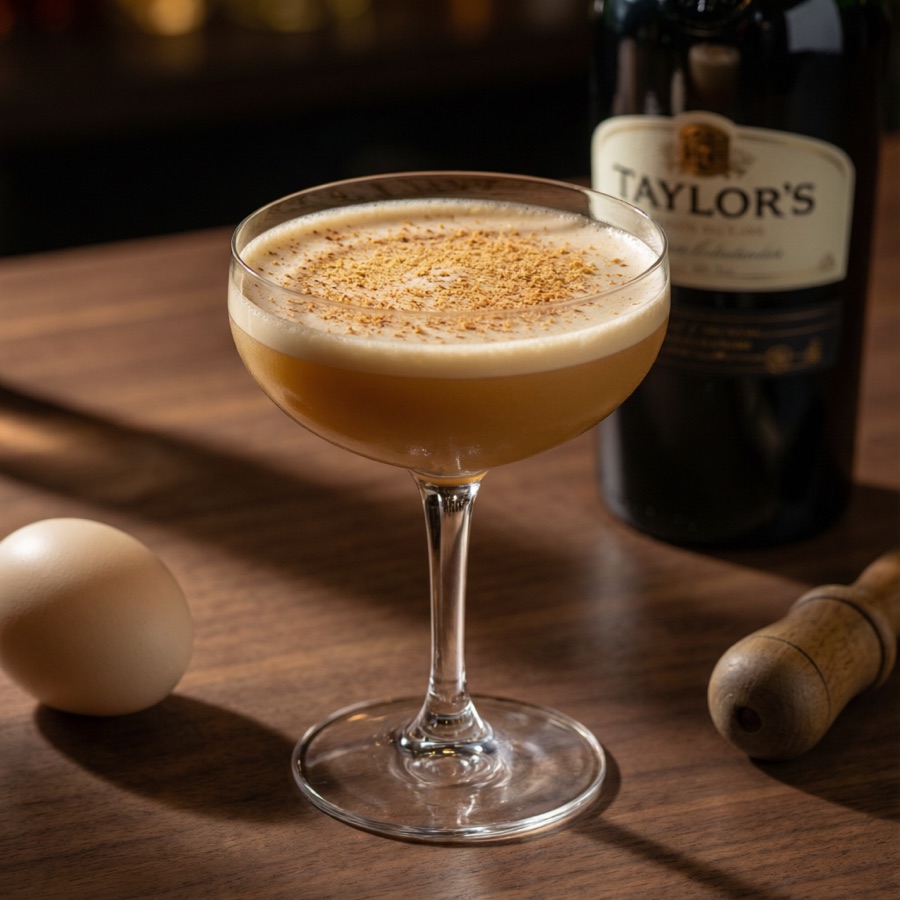
The Flip is the oldest and most misunderstood branch of the cocktail family. Its core formula is deceptively simple: spirit (or fortified wine) + whole egg (or yolk) + sugar + spice, shaken to a velvety texture. Unlike the Sour family, which uses only egg white, the Flip employs whole egg or yolk, yielding a richer, creamier body and deeper color.
The word "Flip" first appears in late 17th-century English literature. The original method combined beer, rum, and sugar heated together, then an egg was beaten in and a red-hot iron rod (the flip iron) was plunged into the mug — the intense heat instantly emulsified the egg and produced a caramelized aroma, while the iron's entry sent foam surging upward, giving the drink its name. This practice was especially popular in colonial North American taverns, which kept flip irons on hand for guests.
By the 19th century the Flip had evolved from a hot drink to a cold one. Jerry Thomas's 1862 Bartender's Guide included several Flip recipes that no longer called for the heated iron, relying instead on shaking to emulsify the egg. The Savoy Cocktail Book (1930) further codified the modern paradigm: spirit + egg + sugar + nutmeg, served cold.
II. Formula Deconstructed: The Logic of Four Elements
The modern Flip formula reads: 60 ml spirit + 1 whole egg (or 2 yolks) + 15-20 ml syrup + a pinch of nutmeg.
Spirit (or fortified wine) provides the backbone and primary flavor. Traditionally sherry, port, brandy, or rum; modern variations also use bourbon, gin, or even Baileys. The higher the ABV, the stronger the protein-denaturing effect on the egg, but also the greater the risk of a harsh finish. Fortified wines (15-20% ABV) are the safest entry point; full-strength spirits (40%+) demand more precise sugar and dilution to balance.
Whole egg versus yolk: a whole egg (roughly 50 ml) delivers a complete emulsification system — lecithin in the yolk acts as the natural emulsifier while the white incorporates air during shaking to form a dense foam. Yolk only (2 yolks, about 35 ml) produces a richer, silkier body but less foam. The classic Porto Flip uses whole egg; many modern variations prefer yolk alone for a heavier texture.
Sugar balances the spirit's heat while increasing viscosity and stabilizing the emulsion. Rich syrup (2:1) dissolves more readily than granulated sugar and is preferred for cold Flips. Nutmeg is the family's signature spice — freshly grated over the surface, a small amount suffices.
III. Technique: Dry Shake, Wet Shake, and Emulsification
The core of Flip preparation is thorough egg emulsification, with two technical routes:
Dry shake plus wet shake: combine all ingredients (no ice) in a shaker and shake vigorously for 15-20 seconds to fully integrate the egg with sugar and spirit and begin aeration; then add ice and shake another 12-15 seconds until cold. This method produces a denser foam layer, suited to modern variations seeking a "cream cap" effect.
Single wet shake: add all ingredients directly with ice and shake 15-20 seconds. The traditional approach — more efficient, yielding a more uniform texture but slightly less foam. Classic Porto Flip and Brandy Flip typically use this method.
Either way, shaking time is longer than for standard cocktails. Egg requires sufficient mechanical force to fully emulsify; under-shaking leads to separation and a coarse mouthfeel. The test: after shaking, the liquid should resemble a smooth milkshake with no visible egg strands.
Straining usually requires a double strain (Hawthorne plus fine mesh) to remove undispersed egg strands and ice shards. On food safety: modern bars use pasteurized eggs or sanitized shells; home bartenders can purchase pasteurized egg liquid or pasteurize eggs by holding them at 57°C for 2 hours.
IV. Classic Variation Genealogy
Fortified wine branch: Porto Flip (port + brandy + whole egg + sugar + nutmeg), Sherry Flip (sherry + egg + sugar), Port Flip (port alone). Lower ABV, the most natural marriage of egg and wine aromatics — the ideal starting point.
Brandy branch: Brandy Flip (brandy + whole egg + sugar + nutmeg). Dried-fruit and oak notes complement yolk richness beautifully.
Rum branch: Rum Flip (dark rum + whole egg + sugar + nutmeg), Hot Buttered Rum Flip (a hot variation with butter and spices). Caramel and molasses flavors are natural Flip partners.
Whiskey branch: Whiskey Flip (bourbon or rye + whole egg + sugar), Kentucky Flip (bourbon + yolk + cream). Vanilla and smoke add dimension.
Modern creative branch: Baileys Flip (Baileys + yolk, no added sugar needed), Espresso Flip (espresso + rum + yolk). These leverage the inherent sweetness and texture of liqueurs to simplify the formula.
V. Common Mistakes and Corrections
Flip does not equal Eggnog. Eggnog is a diluted drink of "spirit + egg + milk/cream + sugar + spice," batch-prepared and aged cold; the Flip is a concentrated "spirit + egg + sugar" drink, made to order without dairy — thicker in body and more egg-forward.
Do not shorten shaking time. The 15-20 seconds of dilution (roughly 15-20 ml) precisely balances the whole egg's viscosity; the result is neither too thin nor too thick.
Egg white cannot substitute for whole egg. White produces foam only and lacks the yolk's fat and emulsifying power; a "Flip" made with white is actually a Sour.
Never omit the nutmeg. Its warm aromatics complement the egg-fat flavor and serve as the family's taste signature.
VI. The Flip's Contemporary Revival
Since the 2010s the Flip has undergone a revival in craft cocktail bars. Bartenders have rediscovered the yolk's textural potential — it not only creates dessert-like drinks but also provides a velvety buffer for bitter spirits such as Fernet and Amaro. Modern variations like Flip the Bird (Fernet-Branca + yolk + honey) and Golden Flip (Calvados + yolk + maple) demonstrate the family's extensibility.
The Flip is also a natural partner for fat-washing: spirits washed with butter or bacon fat, combined with yolk, produce an intensely rich "liquid dessert" experience, often appearing as the closing course in tasting-menu cocktail bars.
From the 17th-century flip iron to today's dry shake, the Flip family's core has never changed: tame the spirit's edge with egg's silk, build warmth with sugar and spice. It is the closest thing to comfort food in cocktail history — and the best textbook for understanding egg emulsification technique.
More tips
320 cocktail recipes, one tap away
Browse by base spirit, flavor and strength. Save your favorites.
Open MixMyth