The Fizz Family Deconstructed: The Classic Formula of Spirit, Citrus, Sugar and Carbonated Water
The Fizz Family Deconstructed: The Classic Formula of Spirit, Citrus, Sugar and Carbonated Water
The Fizz is the most clearly structured family of long drinks in cocktail history: one part spirit, one part citrus, one part sugar, shaken and strained into a glass, then lengthened with ice-cold carbonated water. It was written into recipe books earlier than the Collins and is far easier to reproduce than most tiki drinks, which makes it the best teaching material for the "shake, then top with soda" logic of long drinks. What makes the family complicated is not the recipe itself but three variables: how the egg enters, when the soda is poured, and the rules of glassware and ice at service.
I. Lineage: A Hundred Years from Fix to Fizz
Jerry Thomas's 1862 Bartender's Guide already contains the prototypes of the Fix and the Soda Cocktail: spirit, sugar and citrus over crushed ice, somewhere between a short and a long drink. The Fizz settles into form in the same book as the Gin Fizz, its structure fixed at four things - spirit, lemon juice, sugar and carbonated water - shaken, strained into a glass and topped with soda. Around 1888, Henry Ramos of New Orleans added orange flower water, cream and egg white to his gin fizz and kept a relay of a dozen shakers working for over ten minutes, producing the milkshake-dense Ramos Gin Fizz and turning the Fizz from a quick drink into a craft. The family then kept branching: the Tom Collins stretched the glass and added soda; the Buck's Fizz replaced soda water with champagne; the French 75 stacked gin and champagne together. Nearly every "long drink plus bubbles" structure on today's menus can be traced back to this line.
II. The Skeleton: The Ratio and the Physics Behind It
The Fizz skeleton can be written as 2 : 0.75 : 0.5 : top - 60ml spirit, 22ml fresh lemon juice, 15ml syrup, shaken and then topped with about 90ml of soda water. The key to this ratio is the strength of the shaken segment: after shaking, the glass holds roughly 105-110ml of liquid, and once the soda is added the total approaches 200ml, dropping the spirit's share to around thirty percent - exactly the comfortable range a long drink should sit in. The syrup must be tuned together with the citrus: with a sharp lemon, raise the syrup to 18-20ml; with a sweeter lime or Meyer lemon, drop it to 10-12ml. Shake for 12-15 seconds, aiming for full chilling and roughly twenty percent dilution; too little dilution leaves the finished drink hot even after topping, too much leaves the body slack with the bubbles drowned in watery flavour.
III. The Four Egg Branches: Silver, Golden, Royal and Ramos
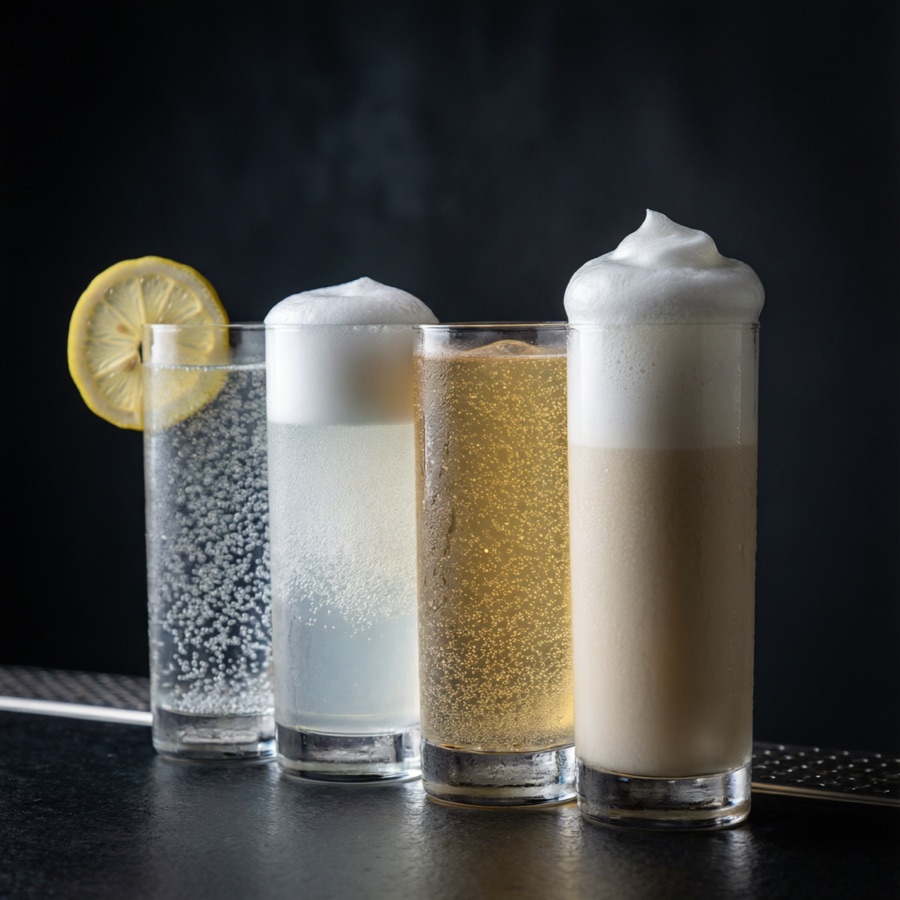
The family's most classic taxonomy is not by base spirit but by egg. Without egg you have the Gin Fizz. With egg white only, the Silver Fizz: light on the palate with a white foam, and it must be dry-shaken first (15-20 seconds without ice) so the proteins fully unfold before the ice goes in, otherwise the foam is thin and collapses. With yolk only, the Golden Fizz: an oily, rounded body in a golden hue, well suited to brandy and rum. With the whole egg, the Royal Fizz, gaining both foam and weight. The Ramos Gin Fizz is the extreme of this line: egg white, cream and orange flower water with the double acid of lemon and lime, requiring a long shake or an electric blend to build a meringue structure, after which the soda is poured slowly down the wall so the body rises above the rim like a soufflé. Remember that the white supplies structure, the yolk supplies mouthfeel and the whole egg supplies both, and you can substitute freely within the family.
IV. Timing and Temperature When the Soda Goes In
Almost everything about a Fizz is decided at this step. First, shake first and top later: if the carbonated water goes into the shaker, the carbon dioxide escapes entirely in the violent agitation, leaving a flat drink and a lid that may blow off. Second, chill the soda to 2-4°C: carbon dioxide dissolves far better at low temperature, and room-temperature soda foams away the moment it is poured. Third, pour slowly down the wall of the glass or over the back of a bar spoon, avoiding a direct hit on the ice that triggers explosive foaming. Fourth, the standard order is ice in the glass, the shaken liquid strained in, soda added down the wall, then one single gentle pull from the bottom with a bar spoon - one only, because over-stirring is degassing your own drink.
V. Glassware, Ice and the Rules of Service
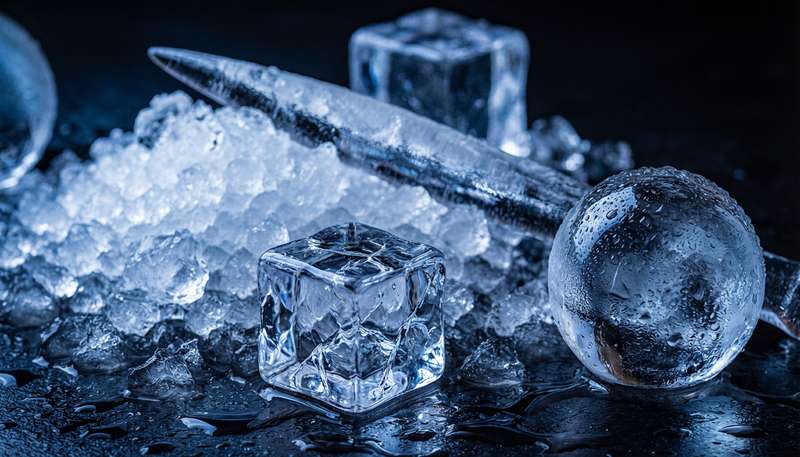
The traditional Fizz uses a narrow 200-240ml glass (a fizz glass or Collins glass); the narrow body reduces the liquid's contact with air and slows the loss of gas, while the Tom Collins and the Ramos use the same shape in a larger size. For ice, a home bar can fill the glass with cubes, but bars prefer a single spear - it melts slowly, dilutes less and keeps the bubbles longer. Service also admits ice-free variants: the classic Silver Fizz is strained into an un-iced champagne flute, its foam carrying the body, while egg-free versions must have ice or they warm too fast and go flat. Garnish stays minimal - a lemon wheel or a lemon twist - and the cream-laden Ramos is traditionally served ungarnished.
VI. Common Mistakes and the Home Route
The five most common errors: putting the soda in the shaker; mismatching syrup against the citrus's acidity; shaking too briefly so dilution falls short; using room-temperature or long-opened soda; and stirring repeatedly after the soda is in. Home reproduction needs only three things - fresh lemon, a properly iced shake, and genuinely cold soda water. The base spirit is free to change: gin for the classic route, brandy and rum for the Golden and Royal, tequila and mezcal for modern variations with smoke and minerality, and zero-proof versions work just as well with non-alcoholic gin or a tea extraction in place of the spirit. Treat the Fizz as a formula you can apply rather than a fixed recipe, and four ingredients will generate the whole family.
More tips
288 cocktail recipes, one tap away
Browse by base spirit, flavor and strength. Save your favorites.
Open MixMyth