Dry Shaking and Foam: The Science of a Cocktail's Silky Head
Dry Shaking and Foam: The Science of a Cocktail's Silky Head
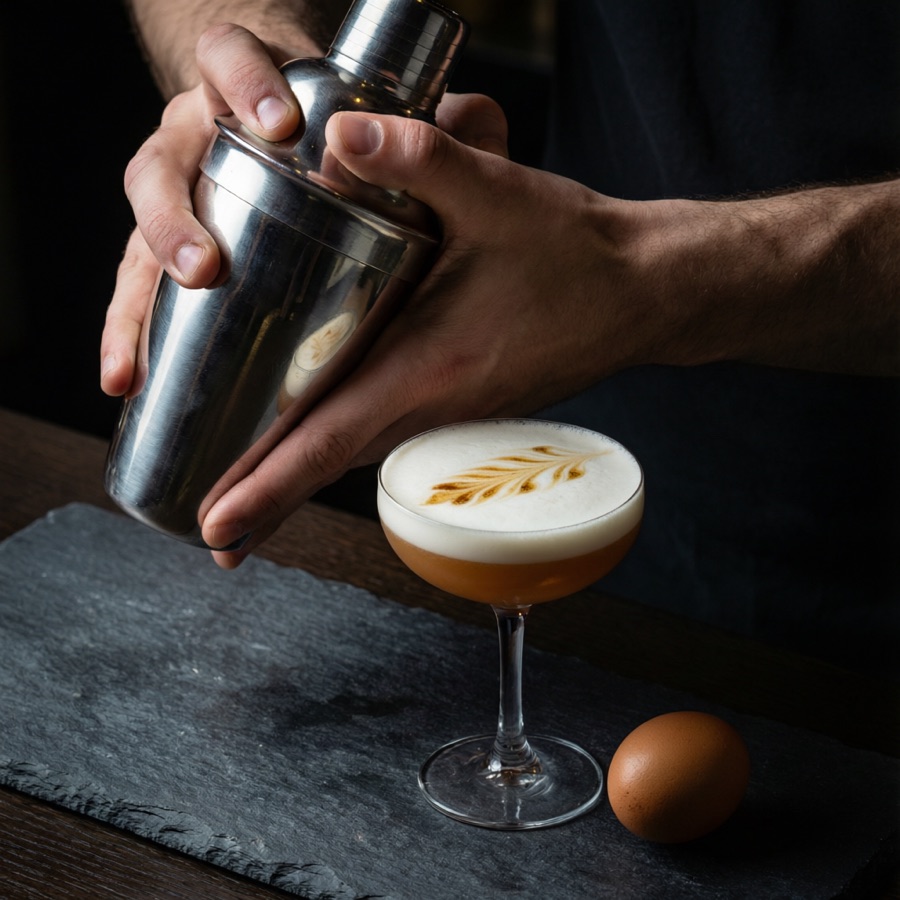
That dense white cap on a whiskey sour is the most immediate signal that a drink was made with care. It requires no additives — just one egg, the right shaking order and a little patience. This guide starts with the science of foam, then breaks down the dry shake and the reverse dry shake, the parameters that matter, and what to do when eggs are off the table.
Where Foam Comes From
Egg white is about ninety percent water; the rest is mostly protein, with ovalbumin and lysozyme doing the heavy lifting. Shaking drives two processes at once. First, aeration: hard shaking shears air into fine bubbles. Second, protein denaturation: the agitation unfolds the protein molecules, their water-repelling ends facing the air and their water-loving ends facing the liquid, forming an elastic film around each bubble that locks it in place. Chilling raises the viscosity of the egg white and slows foaming, which is why shaking with ice from the start never builds as thick a head as shaking without ice first. Once the foam stands, alcohol and acid become liabilities — too much lemon juice or too high an ABV weakens the bubble walls, so balance the sweet-sour skeleton of the drink before you think about foam.
The Dry Shake: No Ice First, Ice Second
A dry shake means shaking first without ice, letting the egg white unfold and aerate fully at room temperature, then adding ice for a second shake to chill. The classic sequence: all ingredients into the tin, shake hard without ice for fifteen to twenty seconds; open, pack with ice, shake another ten to fifteen; double-strain into the glass. The upside is a thick, plush head; the downside is that the liquid is warm after the first shake, so the second shake needs plenty of ice and real speed to pull the temperature back down.
The Reverse Dry Shake: A More Stable Approach
The reverse dry shake flips the order. Shake normally with ice first, nailing flavor and temperature in one pass; strain out the ice, return the liquid to the empty tin, and shake again without ice for ten to fifteen seconds to build the foam; strain into the glass last. The advantage: the foam is created in the final step and never gets battered by ice, so it lands finer and lasts longer, while the flavor shake proceeds as usual with no temperature sacrificed for foam. For drinks with extreme foam demands like the Ramos Gin Fizz, the reverse dry shake is essentially standard bar practice.
Parameters That Matter
Start with fifteen milliliters of egg white — about half an egg; a full white is too much for one drink and the foam will overpower the flavor. Fifteen to twenty seconds is the right window for the dry phase: shorter and the film never forms, longer and the bubbles turn coarse. For the second shake, use plenty of ice, shake hard, and finish in about twelve seconds. Double-strain through a Hawthorne strainer and a fine mesh to keep chip ice and stray egg threads out of the glass. Let the poured drink rest for half a minute; the foam and the body separate, and both look and texture come out cleaner.
Classics That Defined Foam
Nearly every foam-crowned drink belongs to the sour family. The Whiskey Sour is the template: bourbon, lemon and sugar build the frame, and the egg-white head rounds off the edges of the alcohol. Peru's Pisco Sour lays its foam straight over an unfiltered, pulpy body for extra fullness. The Clover Club swaps part of the lemon for raspberry and dry vermouth, tinting the foam pale pink. And the Ramos Gin Fizz is the extreme case — orange flower water and cream support a snow-cap of foam that stands proud above the rim, the drink behind the legend of thirty-five shaker boys working in shifts. Read these four and you have the flavor logic of foam drinks: the head is never decoration, it is a buffer between sharp acid, alcohol and the drinker.
The Egg-Free Option: Aquafaba
For vegan service or raw-egg concerns, aquafaba stands in: the viscous liquid drained from canned chickpeas carries proteins and saponins similar to egg white, and thirty milliliters roughly equals the foaming power of one white. Use it exactly as you would egg white, dry or reverse. No bean flavor survives in the finished drink; acid and sugar see to that. Modern foaming agents like methylcellulose appear in commercial bars, but for home use aquafaba is more than enough.
Common Mistakes
Mistake one: more egg white means more foam — excess white turns the texture cloying and the bubbles coarse as soap. Mistake two: shaking with ice from start to finish — the head comes out thin and dies fast. Mistake three: dropping bitters for latte art before the foam has settled — the pattern bleeds instantly on unstable foam. Mistake four: stale eggs — thin, watery white has dramatically less foaming power; a fresh, refrigerated egg is the floor. Mistake five: stopping as soon as foam appears — a stable head needs the proteins to fully wrap every bubble, and quitting early makes the foam visibly deflate within minutes of pouring; five more seconds of shaking usually saves it. Control those four variables — amount, order, time, freshness — and any sour can carry a bar-level head.
More tips
274 cocktail recipes, one tap away
Browse by base spirit, flavor and strength. Save your favorites.
Open MixMyth