Dilution Technique: A Complete Guide to Water, Temperature and the Stir-vs-Shake Balance
Dilution Technique: A Complete Guide to Water, Temperature and the Stir-vs-Shake Balance
Beyond gin, spirit, sugar and acid - the four visible ingredients - water is the most underrated fifth ingredient in a cocktail. It contributes no flavour of its own, yet it decides how every other flavour presents itself: under-diluted, the drink is hot and angular, the burn of ethanol flattening every detail; over-diluted, the structure collapses into something thin and flavourless that no base spirit can rescue. When professionals judge a drink, their first question is usually "how far was it diluted?", not "what went into it?". Understanding and controlling dilution is the first threshold between amateur and professional.
1. Why dilution is necessary
Spirits are bottled at 40% ABV or higher. At that strength alcohol numbs the palate and suppresses the release of aromatic molecules, so what reaches you is more harsh ethanol than the spirit's floral, fruity or woody character. Adding water to bring the serving strength down into the 20%-30% range drops the burn sharply, lets esters and terpenes open up, and only then does the balance of acid and sugar truly hold. Dilution also brings temperature down, and cold further tames bitterness while lifting crispness and a clean finish. Dilution is therefore not "making the drink weaker"; it is opening a sealed spirit so it can be tasted in the state it was meant to be tasted. This is also why the same bottle of gin reads as two entirely different experiences neat versus in a gin and tonic - water and ice rewrite not the recipe but the threshold of perception.
2. Stirring and shaking: two dilution paths
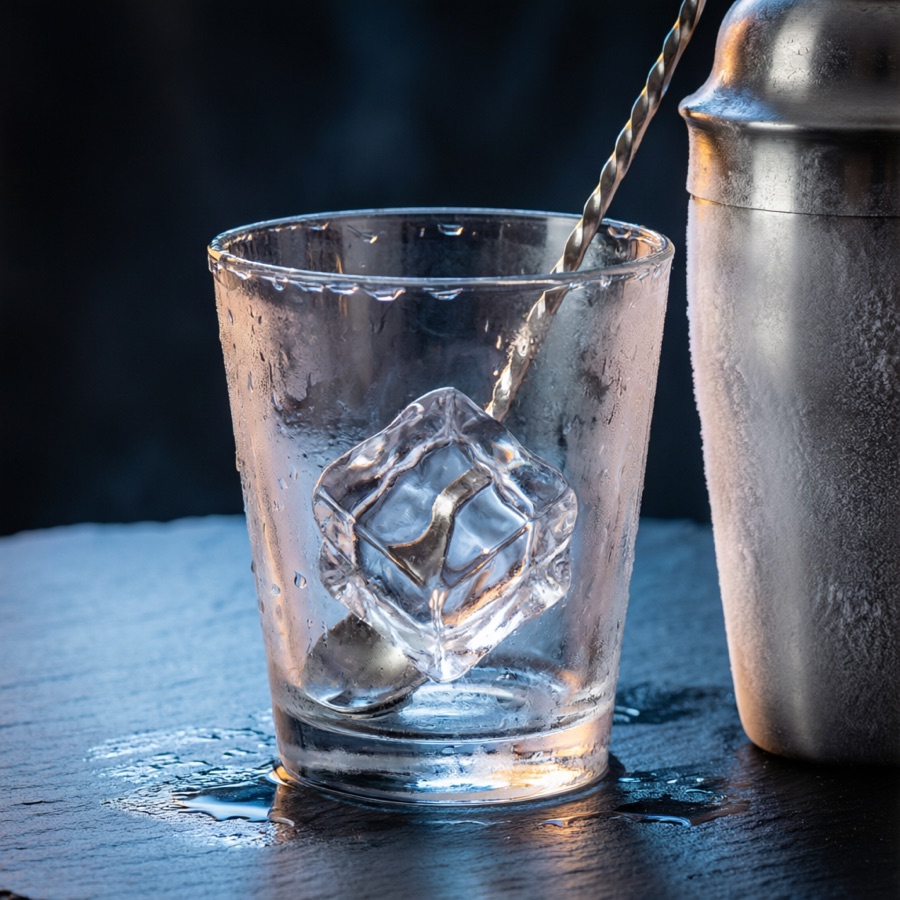
The essential difference between stirring and shaking is control over dilution rate and aeration. Stirring turns the ice in a steady circle against the glass with a bar spoon; contact between ice and liquid is gentle and continuous, dilution is gradual and almost no air is incorporated, so the result is brilliant, silky and clear - ideal for spirit-only builds such as the Martini, Manhattan and Old Fashioned. Shaking drives the ice at high speed through the liquid; dilution is faster, chilling more aggressive, and a cloud of fine bubbles is beaten in, fogging the body and lightening the mouthfeel - ideal for recipes containing juice, cream or egg white that need emulsification or aeration. Rule-of-thumb parameters: 30-45 seconds of stirring yields roughly 25%-30% dilution; 10-15 seconds of shaking yields roughly 20%-25% dilution at a lower serving temperature. Choosing the wrong method is choosing the wrong dilution curve for the drink. In other words, method is dilution strategy: the stir pursues restraint and clarity, the shake pursues integration and froth; neither is superior, only better or worse matched.
3. Target dilution range and how to measure it
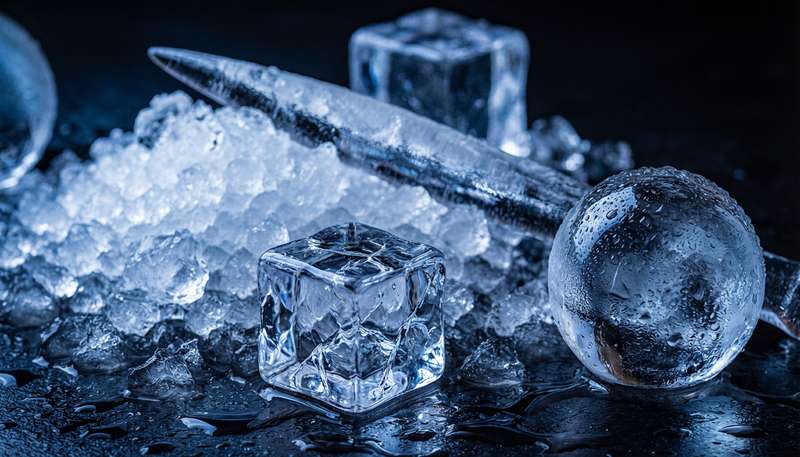
In a standard cocktail, water typically makes up 20%-30% of the final volume. To turn that from feel into data, calibrate by weight: record the total weight before shaking or stirring, weigh again after straining, and the difference is the water added. Professional bars guarantee consistency precisely by fixing ice volume, technique and straining time. Ice choice serves dilution too: large, dense, old ice melts slowly and steadily, suiting drinks that need a long stir; cracked or crushed ice has huge surface area and melts fast, suiting drinks that need rapid chilling and high dilution such as Tiki builds or the Mint Julep. The first criterion for choosing ice is dilution rate; appearance comes second. Without a scale you can rough-check by volume: the gap between the strained level and the pre-shake level approximates the water added, and with practice this builds a reliable sense of measure.
4. Common mistakes and corrections
The most common error is "shaking less for fear of watering it down", which leaves the drink hot and out of balance - an unfinished product. The second is pouring a strained drink back into the tin and re-shaking, which over-dilutes and collapses the structure. The correction is muscle memory: fix the recipe, fix the ice, fix the seconds, so dilution becomes a reproducible parameter rather than a gamble on feel. Another overlooked mistake is failing to chill the glass - a warm glass keeps melting residual ice after serving and quietly wrecks the intended dilution ratio. Finally, take ice quality seriously: hollow or cracked ice melts at an unpredictable rate and gives the same recipe different results on different days; dense, clear old ice is the foundation of consistency. In addition, drinks with egg white or cream that are under-shaken never fully emulsify and taste watery, while over-shaking beats in too much air and coarse foam - both demand the same discipline of seconds.
5. Writing dilution into the recipe's structure
Mature recipes write water directly into their structure. The Old Fashioned adds a little water after the sugar cube and bitters to help them dissolve - that is deliberate dilution. A Hot Toddy is built on hot water, where dilution is the body of the drink. Once you see this, you can judge for yourself "how long should this one be stirred?" or "should it be dry-shaken before the wet shake?" when recreating a classic, instead of mechanically copying a steps list. Dilution is technique and it is also taste: it decides whether a drink reads sharp or round, bold or reserved. Respect water as an ingredient and every glass will land, reliably, exactly where it belongs. When you can taste a finished drink and reverse-engineer its dilution path, dilution stops being a step and becomes the language in which you converse with the drink.
More tips
274 cocktail recipes, one tap away
Browse by base spirit, flavor and strength. Save your favorites.
Open MixMyth