The Daisy Family Deconstructed: The Classic Formula of Spirit, Citrus, Sugar and Soda
The Daisy Family Deconstructed: The Classic Formula of Spirit, Citrus, Sugar and Soda
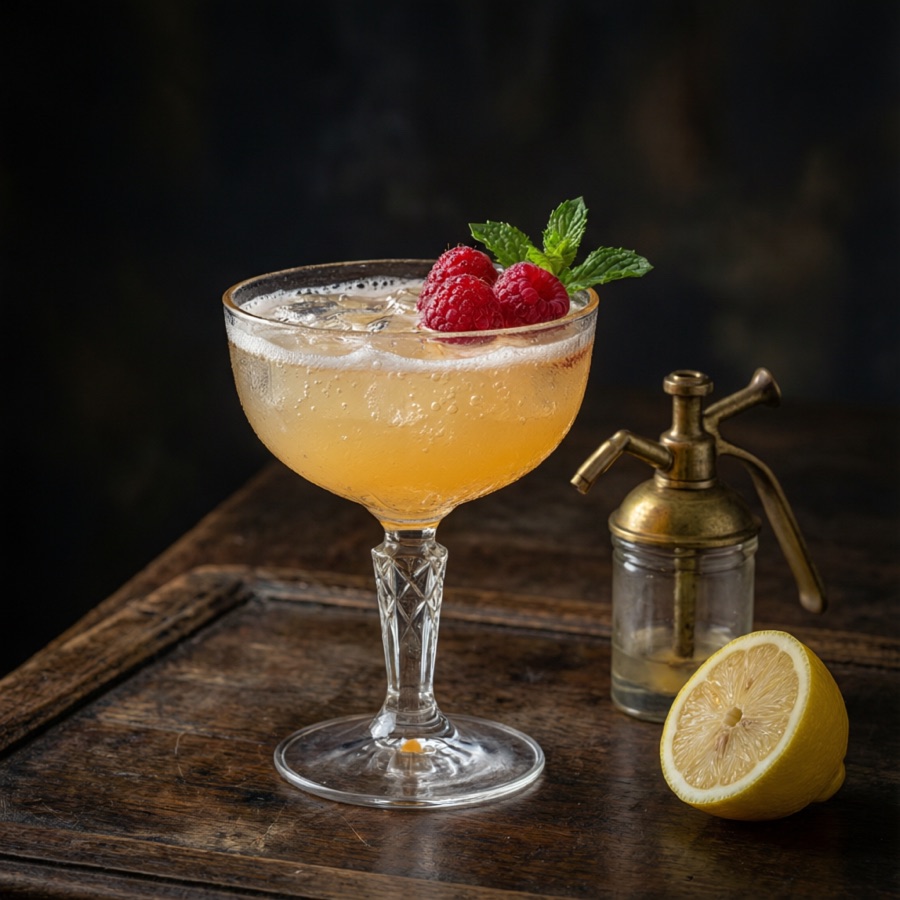
Beyond the endlessly retold names of the Old Fashioned, the Martini and the Negroni, there is another lineage just as old yet increasingly invisible on modern menus: the Daisy. In Victorian English the word named both the little field flower and, by implication, "the finest one of the lot." In the second half of the nineteenth century it was not a single drink but a category: a measure of spirit, a measure of citrus, a measure of sweetener, shaken and strained into a glass, then topped with soda or sparkling water and finished with seasonal berries and mint. To read the Daisy is to hold a key to the Margarita, the Sidecar and the entire sour family.
The formula: a four-part skeleton
The Daisy's skeleton is a four-part structure — spirit, citrus, sweet and sparkle — and none of the four can be dropped. The spirit is the body, usually 45–60 ml, and it sets the drink's character. Citrus supplies acidity and structure, most often 15–25 ml of fresh lemon or lime juice. The sweetener balances and rounds, and may be a syrup, a liqueur or a fruit preserve. Soda is the most overlooked member: it adds no flavour of its own, it simply lifts the other three, lightening the body and giving a fine, pricking effervescence. The proportions settle around 3 : 1 : 0.5 : top-up, with the sweetener arbitrating the tension between spirit and citrus and the sparkle closing the drink. Understand this ratio and any base spirit can be poured into the Daisy template.
The sweetener's dialects: syrup, liqueur and preserve
Nearly every branch of the Daisy family is defined by its choice of sweetener. The gin Daisy traditionally takes raspberry syrup — sweet-tart, fruity, faintly pink. The brandy Daisy prefers maraschino or orange liqueur with a drop of grenadine for colour, giving a rounder body with notes of nut and dried fruit. When the tequila Daisy evolved in Mexico, the sweetener became orange liqueur and the citrus became lime — which is precisely the embryo of the Margarita. In other words the sweetener is the Daisy's dialect: the same skeleton, a different sweetener, and you have a different region and a different decade. This is why early recipe books always print "Daisy" followed by a spirit name — the skeleton is constant, the variable is the sweet.
The bloodline: from Daisy to Margarita and Sidecar
The most fascinating thing about the Daisy is its offspring. Fix the sweetener as orange liqueur, the citrus as lime, the spirit as tequila, and gradually drop the soda top, and the Daisy becomes the Margarita — and "margarita" is Spanish for "daisy," an etymological thread that is no coincidence. Likewise, strip the sparkle from a brandy Daisy and lean on orange liqueur and lemon and you slide toward the Sidecar; keep the soda top but switch to gin and raspberry and you share dilution logic with the later raspberry sour and even the Fizz family. The Sour is the Daisy's close cousin without sparkle; the Fizz is the cousin with sparkle turned all the way up. All three are of one blood, diverging only on whether, and how much, carbonation is present.
Glassware and presentation: the rise and fall of the Daisy glass
The nineteenth-century Daisy had its own vessel — the Daisy glass, a short-stemmed, gently bulging goblet sized between an Old Fashioned glass and a highball, just large enough for the shaken body plus a short cap of sparkle. The rim was dressed with seasonal berries, a mint tip and a slice of citrus; colour was part of the ritual, pink, green and yellow set side by side, the visual footnote to the flower's name. Through the twentieth century the dedicated glass faded, and the Daisy was either folded into the sour's coupe or stretched into a highball to hold more carbonation. A modern rebuild need not chase antique glassware: keep the soda top and a 180–240 ml coupe or small highball both work; drop the sparkle for a short drink and return to the coupe, concentrating body and aroma. The choice of glass is, in the end, an answer to one question — do you want this Daisy light, or rich?
Modern parameters and common mistakes
For a home rebuild, the parameters converge to: 50 ml base spirit, 20 ml fresh citrus, 10–15 ml syrup (or 15 ml liqueur), shake 12 seconds, double-strain into a chilled glass, then top with 30–45 ml of iced soda poured down the side. Three mistakes recur. First, shaking the soda into the tin: carbonation in a sealed shaker either bursts or goes flat — soda must be added last. Second, over-sweetening: the Daisy's sweetness should underpin, not dominate; beyond 15 ml of syrup it buries the citrus acidity and the spirit's aromatics. Third, ignoring glass temperature and ice: the Daisy sits between short and long drink, and with a warm glass or weak ice the soda top collapses and the body turns watery. Hold to three rules — shake first then top, sweet never over acid, glass and ice well chilled — and this nineteenth-century drink still stands tall today.
More tips
320 cocktail recipes, one tap away
Browse by base spirit, flavor and strength. Save your favorites.
Open MixMyth