The Crusta Family Deconstructed: Sugar Rim, Whole Citrus Peel and the Ancestor of the Modern Sour
The Crusta Family Deconstructed: Sugar Rim, Whole Citrus Peel and the Ancestor of the Modern Sour
In the family tree of cocktails, the Crusta is one of the most underrated branches. Born in 1830s-40s New Orleans, it fixed the combination of sugar rim, whole citrus peel, spirit, citrus juice and a touch of liqueur long before many later "classics" existed. Few bars take an order for it today, yet the Daisy, the modern sour, and even the salt-sugar rim on a Margarita all trace their lineage back to this drink. To understand the Crusta is to understand the starting point of the entire classical technique of dressing a spirit with peel and sugar, and to see how the sour family branched off from the old-fashioned. It relies neither on flashy shaking nor on rare ingredients, but on precise control of three things: the rim, the peel and the ratio.
1. Origin and definition: what "Crusta" actually means
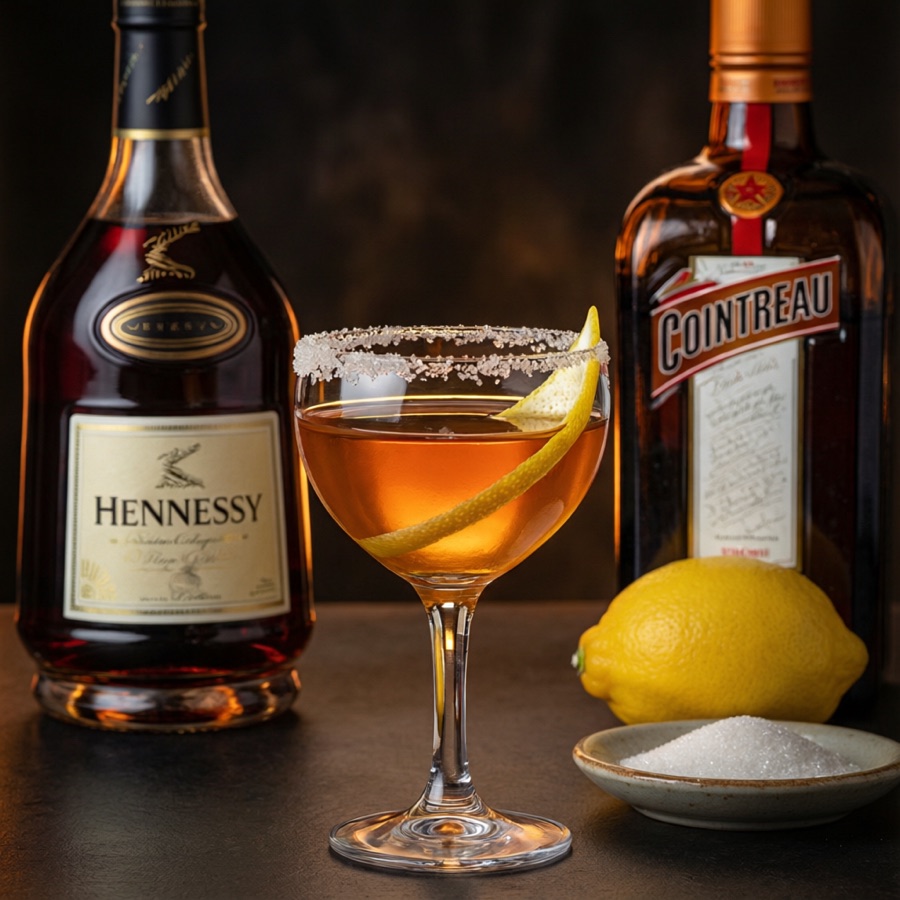
The word "crusta" simply means a crust or shell, and the name comes from its two signature features: a fine ring of sugar on the outside of the rim, and a whole strip of lemon or orange peel lining the inside of the glass. It was created around the 1830s by New Orleans barkeeper Joseph Santini, originally on a brandy base - hence the Brandy Crusta. Compared with the contemporary cocktail of "spirit, sugar, bitters and water," the Crusta was the first to systematically introduce citrus juice and orange liqueur, using the sugar rim and the whole peel to amplify aroma and appearance at once. It is the hinge between the old-fashioned and the sour family, and the common ancestor of every rimmed cocktail since. In the literature it is often filed under the "Improved Cocktail" line, which is exactly what it is: an addition built on the classical skeleton.
2. Structural formula: spirit, citrus, liqueur, sugar and peel
A classic Brandy Crusta runs roughly: brandy 60 ml, Cointreau or orange liqueur 15 ml, fresh lemon juice 15 ml, syrup or maraschino 5-10 ml, shaken and strained into a small wine glass or coupe prepared with a sugar rim, then a whole strip of lemon peel coiled along the inner wall. Its skeleton is "spirit dominant, citrus brightening, liqueur perfuming, sugar balancing the acid" - very close to a Sour. The difference is that the Crusta adds an aromatic layer from the liqueur and essential oils from the whole peel, making it more complex, more perfumed and more restrained. The spirit must remain dominant; citrus and sugar only polish its edges rather than diluting it into juice.
3. Sugar rim and whole peel: the two core techniques
The sugar rim is not mere decoration but part of the flavour. Wet the outer rim with a lemon wedge, then dip and half-turn the glass in fine sugar to form an even ring; the rim should sit only on the outer edge so it does not fall into the drink and over-sweeten it. The whole peel is the soul of the Crusta: traditionally a whole lemon is peeled in one continuous strip and coiled inside the glass so its oils reach the nose before the liquid reaches the lips. Peel with even thickness in one stroke - too much white pith turns bitter, too thin gives no aroma. Both techniques demand restraint: one ring of sugar, one strip of peel, no more.
4. Family variations and common mistakes
Change the base and you have a family: Brandy Crusta is the classic; a gin Crusta is crisper and more botanical; a tequila Crusta is effectively the prototype of the Margarita; a rye version is spicier and heavier. Three common mistakes: making the rim a thick crust or even a salt rim that overwhelms the drink; skipping the whole peel and settling for a small twist, which collapses the aromatic layer; and over-pouring the liqueur until the drink turns cloying. Remember the Crusta remains a spirit-led classical drink - citrus and sugar are supporting actors, and the peel and rim are amplifiers, not protagonists.
5. Practical parameters and the serve check
A few measurable checkpoints: keep the sugar rim 2-3 mm wide, wider and the sweet-salt balance breaks; the peel coil should hug the wall without dipping into the liquid, or bitterness leaches out; shake only 8-10 seconds, since over-dilution washes out an already restrained body; chill the glass beforehand so the serve lands cold. Then check three things - a first line of sugar on the lips, peel oils on the nose, and a finish still carried by the spirit's backbone. Only when all three are present is the Crusta done right.
A well-made Crusta gives the lips a thread of sugar first, then opens the peel's oils at the nose, and only then delivers the trio of spirit, citrus and liqueur. It does not shout or show off, yet it explains with total clarity how peel and sugar can dress a spirit. Before your next Margarita or Daisy, make a proper Brandy Crusta first - you will taste the source of the whole sour family.
More tips
320 cocktail recipes, one tap away
Browse by base spirit, flavor and strength. Save your favorites.
Open MixMyth