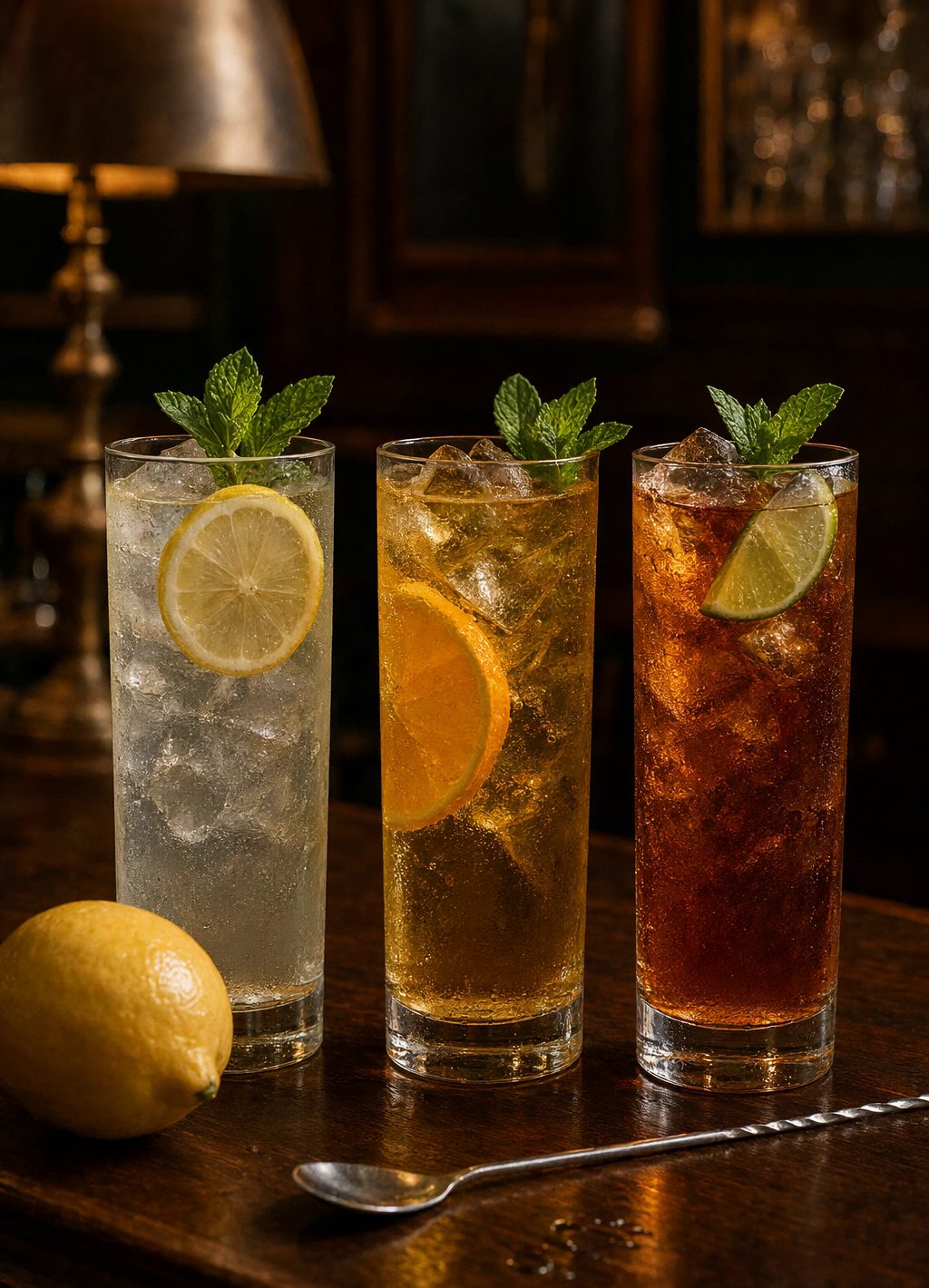
The Collins Family, Deconstructed: The Classic Long-Drink Formula of Spirit, Lemon, Sugar and Soda
The Collins Family, Deconstructed: The Classic Long-Drink Formula of Spirit, Lemon, Sugar and Soda
In the world of long drinks, the Collins holds a near-mother-formula position: a spirit, lemon juice, sugar and soda — four utterly ordinary ingredients that have anchored a family tree spanning a century and a half. From the Tom Collins to the John, the Pedro and the Colonel, every member of the family simply swaps the base spirit; the formula itself never changes. To understand the Collins is to understand one core question: how a sour's acid-sugar structure stretches and breathes inside carbonation.
The Skeleton: A 2:1:0.5 Acid-Sugar Structure
The standard Collins ratio is 45-50 ml of spirit, 20-25 ml of lemon juice, 10-15 ml of sugar, topped with soda. In structural terms that is 2 parts spirit, 1 part lemon, half a part sugar — the Collins deliberately halves the sugar compared with the Sour family's 2:1:1. The reason is straightforward: soda dilutes both acidity and sweetness, while carbonation itself sharpens the perception of acid. Keep the sugar high and the drink turns both cloying and aggressive under the bubbles. Half a part of sugar is the sweetness anchor of any carbonated drink — the same logic that governs cola and tonic. Once you own this skeleton, any spirit you drop into it yields a structurally sound Collins.
Where the Collins Ends and the Fizz and Sour Begin
All three families share the front half — spirit, lemon, sugar — and diverge on technique and finish. The Sour takes no bubbles and drinks short after shaking. The Fizz whips air into the shake (even whole egg for a dense foam) and finishes with a short soda top. The Collins is typically shaken, strained into an ice-filled tall glass and lengthened with soda. Glassware differs too: the Sour sits in a small coupe, while the Fizz and Collins both go tall — but the Collins wears the fuller garnish, a cherry plus a lemon slice functioning as its family crest. History genuinely blurred the line, yet the modern consensus is clean: whip foam and it is a Fizz; lengthen with soda and it is a Collins.
The Family Tree: Tom, John and Pedro
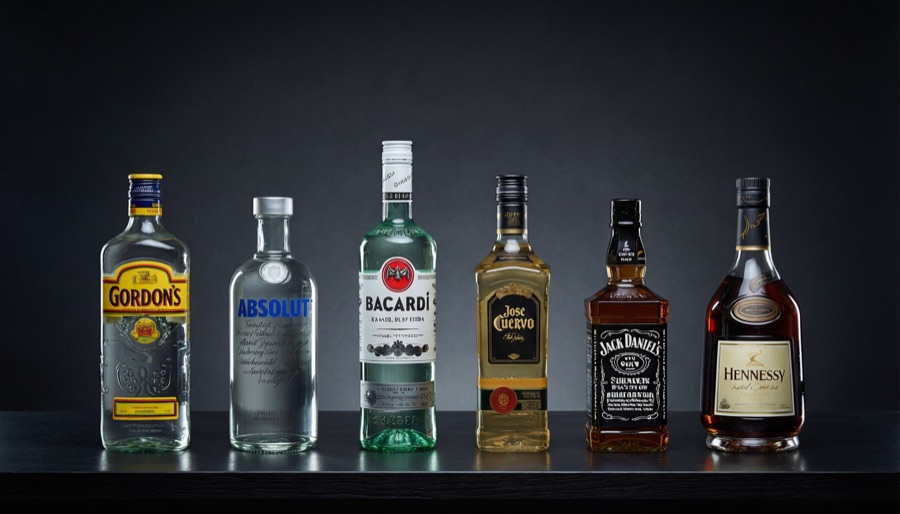
The Tom Collins (gin) is the famous sibling, simultaneously popular in London and New York in the 1870s, even inspiring the "Have you seen Tom Collins?" prank. The John Collins swaps in whiskey, named — most likely — after the London bartender John Collins himself. The Pedro Collins takes rum, the Juan Collins tequila, the Colonel Collins bourbon: every producing region grafted the formula onto its signature spirit. For the home bartender the lesson is liberating: buy one bottle and you already own a Collins; assemble the five starter bottles and you hold five structurally identical long drinks at near-zero learning cost.
Soda Water: Carbonation Is Texture
The Collins is "long" because of soda volume, but bubbles do far more than dilute. Dissolved CO2 forms carbonic acid that lightly stimulates the trigeminal nerve on entry; this prickle measurably heightens the perception of refreshment while suppressing cloying sweetness. Temperature is decisive: cold soda holds more gas with finer, longer-lasting bubbles, while room-temperature soda poured into the glass fountains, degasses and leaves the drink flat and dull. The professional sequence is therefore fixed: fill the glass with ice first, strain the shaken drink over it, then pour the soda slowly down the side wall to preserve maximum carbonation. When the bubbles die halfway through the glass, the Collins is officially expired.
Common Pitfalls and Parameter Tuning
The classic failure is sugar: carry over the Sour's 2:1:1 into a Collins and post-soda dilution leaves the drink syrupy. Second is over-juicing the lemon — amplified by carbonation, the drink drifts toward lemon soda. Start from 45 ml spirit, 20 ml lemon, 10 ml sugar, top with soda, taste, then adjust. Third is glassware: a rocks glass lets bubbles collapse and the drink warm; always go tall and straight. Last, the garnish: the lemon slice keeps releasing aromatic oils from the surface, and the cherry anchors the eye — remove them and the drink effectively stops being a Collins. Master these variables and you hold the most durable formula in the long-drink world.
More tips
360 cocktail recipes, one tap away
Browse by base spirit, flavor and strength. Save your favorites.
Open MixMyth