Coffee Liqueur: A Complete Guide to Flavor Categories and Cocktail Applications
Coffee Liqueur: A Complete Guide to Flavor Categories and Cocktail Applications
What Coffee Liqueur Is
Coffee liqueur is a sweet, low-proof liqueur built on coffee beans: a base spirit (usually rum, vodka, or neutral grain alcohol) infused or distilled with coffee, then sweetened. Typical bottlings sit at 20-26% ABV with sugar content as high as 30-40%, drinking like a liquid espresso-caramel. Its flavor source is remarkably narrow — Maillard-reaction products from roasted beans: caramel, nut, roast, and gentle bitterness. That narrowness is both its limit and its strength, because those notes bond naturally with dairy fat, cacao, and cream. The Espresso Martini, Black Russian, White Russian, and Mudslide are all built on this affinity.
Major Brands and Flavor Categories
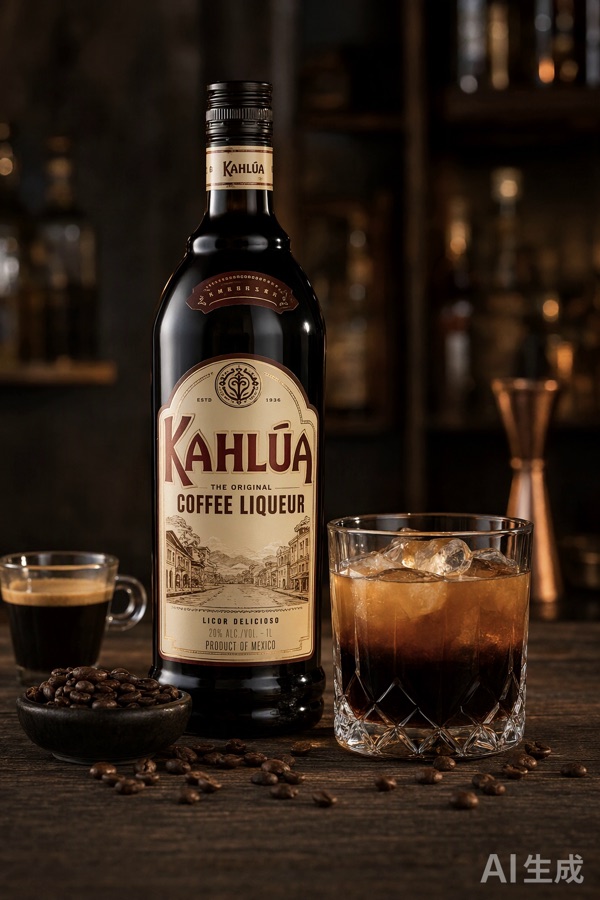
Commercial coffee liqueurs fall into three tiers by coffee intensity and sweetness structure. Standard sweet: KAHLUA is the best-selling benchmark — rum-based, infused with arabica beans, carrying vanilla and caramel sweetness; the most versatile bottle behind the bar. Concentrated dry: KAHLUA Especial, Patrón XO Cafe (cold-extracted coffee oils on a tequila base), and Mr Black (Australian, roughly half the sugar, double the cold-brew intensity) deliver truer, more bitter coffee character for modern low-sugar builds. Flavored extensions: salted-caramel, vanilla, and hazelnut variants work neat or over ice, but clash with layered recipes; buy the standard expression first. For a home bar, a single bottle of standard KAHLUA (~20% ABV) covers nearly every recipe.
Its Role in Classic Recipes
Coffee liqueur plays three roles in cocktails. As the flavor engine: in a Black Russian (vodka to coffee liqueur, 5:2) it stands equal to the base spirit, supplying all the sweetness and roasted bitterness; adding cream turns the coffee-dairy structure into dessert. As an amplifier: in the Espresso Martini (vodka, fresh espresso, coffee liqueur, a dash of syrup) real espresso contributes bright acidity and crema foam while the liqueur adds sugar for body and deepens the roast; drop the liqueur and keep only syrup and the drink's roasted depth visibly collapses. As a float: the Mudslide top layer and the B-52's middle band depend on its density (roughly 1.05-1.1 g/ml from sugar and ~20% ABV), sitting between Irish cream and the lighter coffee brandies.
Key Operating Parameters
Three variables decide success. Sweetness budget: the liqueur brings about a third of its volume as sugar, so cut or eliminate additional syrup in any recipe it enters — in an Espresso Martini, 1/4 oz of syrup is already near the ceiling, or sugar will mask the coffee. Ratios: 15-20ml (0.5-0.75 oz) when it plays a supporting role; 30-50ml when it is a structural half (Black Russian); 5-10ml for a float. Temperature and dairy: in cream drinks (White Russian, Mudslide), pour cream last over the back of a bar spoon so it stacks rather than crashes into the coffee layer; shake dairy builds briefly, 5-8 seconds, or the cream whips into a chalky texture.
A Short History and Regional Styles
Industrial coffee liqueur is older than most people assume: on Caribbean plantation economies where coffee and rum shared the same fields, infusing coffee into rum was a local tradition long before bottling. The modern KAHLUA prototype appeared in 1936 in Veracruz, Mexico, its name borrowed from the Nahuatl word for coffee beans, "kahua." Regional styles matter in practice: Mexican expressions (KAHLUA) are rum-based and roundly sweet; American craft bottles (Mr Black) push cold-brew intensity and forward bitterness; European styles lean lighter on vodka or brandy bases, reading more like after-dinner treats. For bartenders the origin label is not mysticism — the base spirit and extraction method determine whether the bottle amplifies coffee or merely supplies sweetness.
Common Mistakes
Mistake one: substituting it for espresso. Liqueur coffee is infused and lacks fresh espresso's volatile aromatics and oils; in an Espresso Martini they are not interchangeable. Mistake two: careless storage. 20% ABV won't fully preserve a high-sugar bottle; oxidation dulls it within months. Refrigerate after opening, use within 3-6 months, and replace when the aroma flattens. Mistake three: only knowing KAHLUA. For modern low-sugar classics a concentrated dry style like Mr Black balances better; the standard bottle can read cloying. Mistake four: ignoring the cacao stack. Coffee plus cacao liqueurs (the Mudslide structure) are flavor twins that stack sweetness fast — pair with cream, and abandon any extra sugar entirely.
Buying and Storage
Check three things when buying: base spirit (rum-based reads rounder, vodka-based cleaner), extraction claim (cold-brew or arabica on the label usually means truer flavor), and sugar position on the ingredient list. High-frequency users should buy the standard 700ml; occasional after-dinner drinkers, a small bottle. Store upright, dark, and cool; refrigerate after opening. Final home workaround: 2 parts dark rum or vodka, 1 part cold-brew concentrate, 0.5 part sugar, shaken fresh, approximates a Black Russian's spine in an emergency — but the fresh mix lacks a liqueur's aged integration, so treat it as a stopgap, not a replacement.
More tips
334 cocktail recipes, one tap away
Browse by base spirit, flavor and strength. Save your favorites.
Open MixMyth