The Complete Guide to Cachaça: Brazil's Sugarcane Spirit
The Complete Guide to Cachaça: Brazil's Sugarcane Spirit
The Caipirinha is the world's most famous Brazilian cocktail, yet most people who make it know almost nothing about the spirit behind it. Cachaça is Brazil's national spirit by law — distilled from freshly pressed sugarcane juice — with annual production above a billion liters, nearly all consumed domestically, and only in the past decade has it scaled internationally. It is casually called "Brazilian rum", which is wrong at the raw-material level. Understanding where cachaça and rum part ways is the first step into the whole sugarcane-spirit family — and the key to giving your cane-driven cocktails real flavor distinction.
Another Route, Starting from Juice
Mainstream rum starts from molasses — the concentrated, caramelized by-product of sugar making, heavy and sweet. Rhum agricole and cachaça instead use fresh-pressed cane juice, preserving the plant's green, fruity character. The boundaries are codified: Brazilian law requires cachaça to be made from cane grown in Brazil, at 36–48% ABV. Fresh juice begins oxidizing within hours, so traditional distilleries sit beside the cane fields and the crush-to-ferment window is measured in hours — the origin of cachaça's signature green sweetness, closer to biting into a fresh cane stalk than to caramel and molasses.
Craft Details: Fermentation Adjuncts, Pot Stills and Brazilian Woods
Traditional fermentation often adds cornmeal (fubá), rice bran or lime to start and stretch the ferment, which distills into esters carrying green apple, cheese and a faint "funky" complexity — Bahia treats it as character, not flaw. Small copper pot stills dominate, deliberately keeping the rustic flavor frame, while large brands run column stills for clean, replicable output. Aging is where cachaça gets truly individual: law permits stainless resting, oak barrels or paratuba wood slats, and native Brazilian woods — amburana (vanilla-cinnamon sweetness), jequitibá (near-neutral), bálsamo (herbal, resinous) — deliver aroma profiles oak simply cannot, the most rewarding part of aged golden cachaça.
White or Gold: A Two-Type Selection Logic
Retail cachaça splits into two families. White (Branca or Prata) is mostly unaged or steel-rested: green, bright, emphatically vegetal, the standard pour for a Caipirinha. Gold (Amarela or Ouro) rests a year or more in wood — the best for three to ten years — golden, round, with woody sweetness suited to sipping and stirred classics. The logic mirrors gin: white for sours, highballs and tropical fruit drinks; gold for Negroni-style stirred drinks and neat pours. Two protected appellations, Paraty and Salinas in Minas Gerais, are the mark of style-driven small-batch cachaça worth seeking out.
Buying: Tiers and Labels
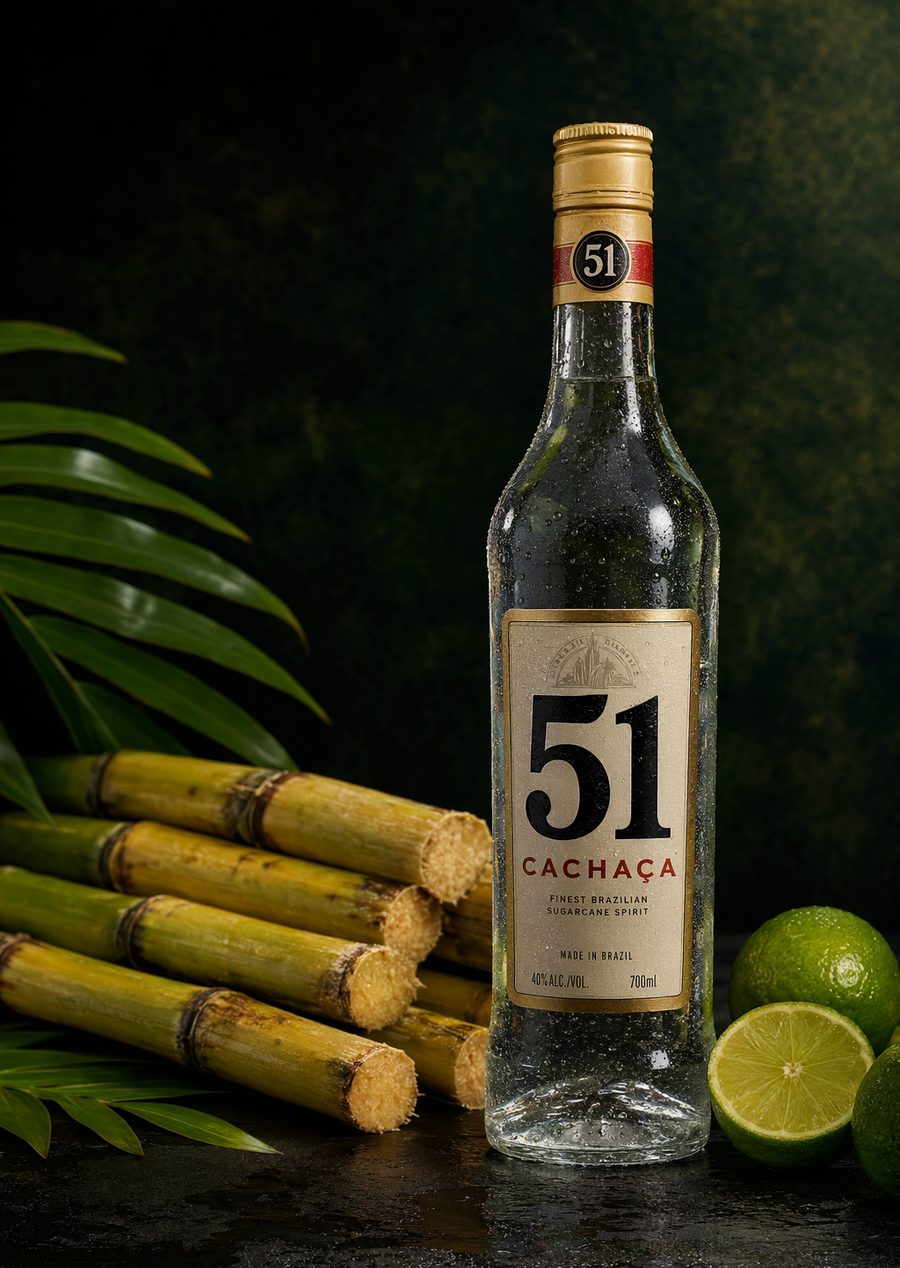
Everyday tier: 51 and Ypióca, Brazil's two biggest brands, inexpensive and clean — more than enough as the base of a Caipirinha or a cane-driven punch. Craft tier: Avuá (single-wood amburana and chestnut expressions) and Novo Fogo (organic single-estate silver and aged) are pushing cachaça into whisky-style sipping territory. Distribution is still limited; start with 51 or Ypióca, look for the 100% cane-juice statement (not a "mistura") at 38–40% ABV, and if budget allows, one bottle of amburana-aged gold shows what Brazilian wood alone can do.
Applications: From Caipirinha to the Sour Frame
A Caipirinha is only three things — lime chunks, sugar, cachaça — and the muddled peel oils and pulp acidity exist precisely to amplify cachaça's green sweetness, the root of its national-drink status. One step further is the sour frame: 60 ml cachaça, 30 ml lime, 20 ml syrup yields a Cachaça Sour greener and brighter than a bourbon sour; add condensed milk or coconut cream and you enter Bahia's Batida family. Tropical fruits (passion fruit, pineapple) and spices (cinnamon, allspice) are its comfort zone; for stirred drinks, try a Rabo de Galo — roughly 2:1 cachaça to red vermouth with bitters, São Paulo's end-of-shift pour. One bottle on the home bar brings the whole green-sweet spectrum of a Brazilian cane field home with it.
More tips
356 cocktail recipes, one tap away
Browse by base spirit, flavor and strength. Save your favorites.
Open MixMyth