The Complete Guide to Brandy as a Base Spirit: From Cognac to Armagnac
The Complete Guide to Brandy as a Base Spirit: From Cognac to Armagnac
Among the six base spirits, brandy is the most underrated. It lacks gin's edge and whisky's smoke, and is usually filed under "sip it neat after dinner." Yet open any pre-Prohibition recipe book and brandy is the backbone of the cocktail golden age: the Sidecar, the Sazerac, the Brandy Crusta and the Vieux Carré all carry its signature. To understand brandy, start with its classification logic.
1. Brandy: The Family of Distilled Fruit
Brandy comes from the Dutch brandewijn, "burnt wine" — wine or fermented fruit juice, distilled and aged in oak. Narrowly it means grape brandy; broadly, apple brandy (Calvados), pear and cherry brandies belong to the same family. Three variables set the style: the fruit, the distillation method, and the cask. Grape brandy is usually distilled to 60-70% ABV to keep the wine's fruit; oak then lends color, tannin, and oxidative notes of vanilla and dried fruit. The longer it ages, the more the spirit shifts from fruit toward wood — that is the logic behind the age statements. The same logic explains the stylistic spread of fruit brandies: Calvados' apple and oak, Kirsch's pure fruit — all born of the same three variables.
2. Cognac: Terroir, Grape, and the Age Ladder
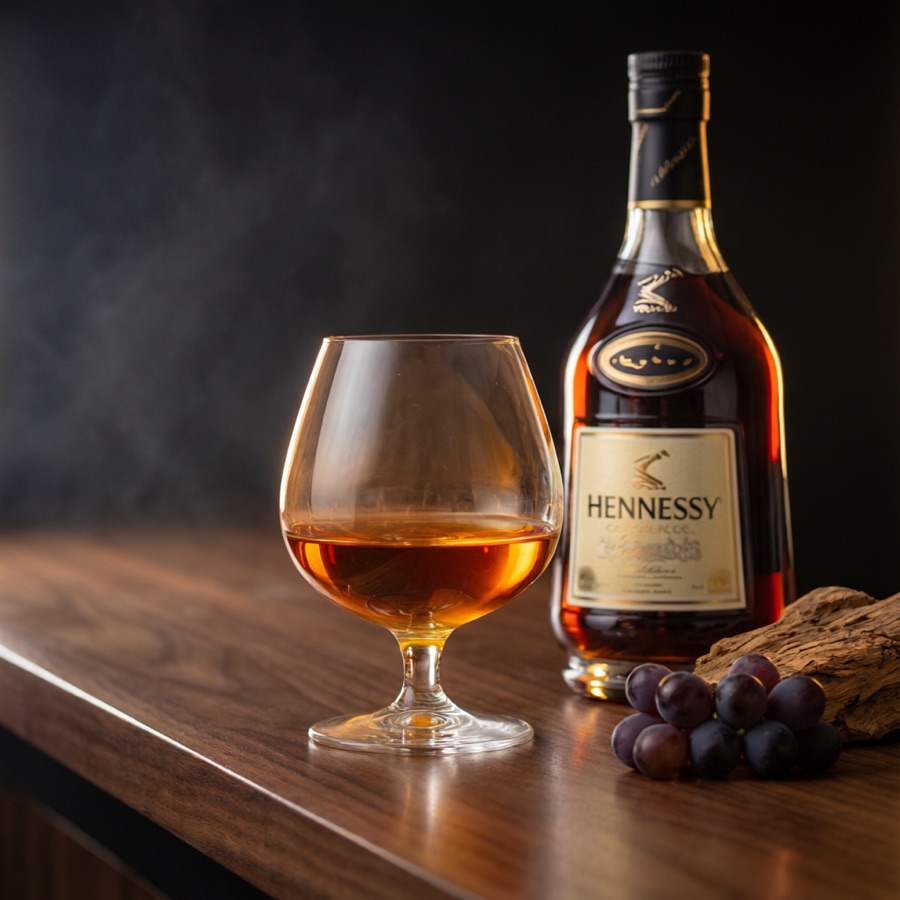
Cognac is brandy from France's Cognac region under the strictest rules: Ugni Blanc as the workhorse grape, double distillation in copper pot stills, aging in French oak. Six crus rank by soil: Grande and Petite Champagne bring florals and longevity — "Fine Champagne" on a label means a blend of the two with at least half from Grande Champagne; Borderies gives nutty roundness; the three Bois crus supply fruit and freshness. The ladder grades the youngest eau-de-vie in the blend: VS at least two years, VSOP at least four, XO at least ten. The grades are styles, not quality: VS is bright and fruity, built for mixing; VSOP balances oak and fruit for both bar and glass; XO belongs in the snifter, and shaking it into a cocktail wastes its most delicate layer. Above the ladder sit the house baselines: Hennessy leans structural and oaky, Rémy Martin leans on Grande Champagne florals, Martell's high Borderies share brings its signature roundness — at the same grade, switching houses is like switching spice blends.
3. Armagnac and the World Beyond Cognac
Armagnac is older than Cognac and more rustic: a single continuous column distillation at lower proof keeps more congeners, so young spirit is bolder, and vintage (millésime) bottlings are its signature — the harvest year printed straight on the label. Its profile leans to prune, leather, and earth, giving cocktails a wilder depth than Cognac. Beyond France: Spanish Brandy de Jerez ages in sherry casks through a solera, sweet and rounded; American brandy is lighter and great value; South American Pisco is mostly unaged, keeping raw grape perfume — the soul of the Pisco Sour.
4. Choosing Bottles for Cocktails: The Right Grade for the Right Job
The rule is one sentence: VS and VSOP for mixing, XO for the snifter. In a Sidecar, brandy must stand up to lemon's acid and Cointreau's orange — VSOP's oak is exactly enough to hold the frame. The Sazerac was originally a brandy cocktail before rye took over; the Brandy Crusta is the ancestor of the whole "sour plus liqueur plus bitters" family; the Vieux Carré stacks cognac, rye and sweet vermouth, a bridge between the brandy and whisky worlds. When swapping brandy for whisky, remember one principle: brandy is sweeter and fruitier, so cut the syrup by a fifth and add a drop more bitters. For value, an entry VSOP from a major house (Hennessy, Rémy Martin, Martell) is the home-bar baseline; for character, look to small Armagnac producers and Spanish solera brandies. One more practical detail: sweetness varies noticeably between producers, so when switching brands, taste it neat first and set the syrup after — more reliable than copying the recipe.
5. Common Mistakes and Practical Advice
Mistake one: older is better — a cocktail's citrus and sugar bury XO's delicate notes; VSOP is usually the right answer. Mistake two: Cognac equals brandy — Cognac is only a subset; an Armagnac labeled "brandy" is not inferior, just different. Mistake three: storing it on its side like wine — high-proof spirit attacks the cork; store upright, cool, and dark, and an open bottle keeps for years. Mistake four: warming a balloon glass in your palm — modern tasting favors a tulip glass at room temperature; heat only lets alcohol steal the show, so let the glass rest ten minutes and let the aromas open on their own. Three drills: build a Sidecar on VS to set your baseline; repeat it with VSOP and taste the structural shift; then sip an Armagnac neat to hear the other end of the family. Three glasses in, brandy finally makes sense. Want to go further? Fat-wash a cognac with cocoa butter, or stir an Old Fashioned with Armagnac — the fruity side of brandy is the most playful experimental field among the six base spirits.
More tips
274 cocktail recipes, one tap away
Browse by base spirit, flavor and strength. Save your favorites.
Open MixMyth