Aroma and Olfaction: The Invisible Driver of Cocktail Flavor
Aroma and Olfaction: The Invisible Driver of Cocktail Flavor
The Star of Flavor Is Not on the Tongue
People say they "taste" a drink, yet the tongue resolves only five basic tastes - sweet, sour, bitter, salty, umami - plus the burn of alcohol and the weight of texture. What truly separates one Negroni from another is the composite impression formed when hundreds of volatile aromatic molecules reach the olfactory receptors through the retronasal pathway. Pinch your nose, sip orange juice, then release: the moment flavor "suddenly appears" is direct proof of olfaction coming online. Human smell discriminates far more dimensions than taste, which means most of a bartender's control over flavor is in fact control over aroma. Spirits and liqueurs supply structure; aroma decides how a drink is remembered. Grasping this principle is the line between following a recipe and designing flavor on purpose.
The Three-Layer Time Structure of Aroma
Aromatic molecules stratify by volatility. Terpenes such as limonene are small and evaporate instantly, forming the top note in the first second; alcohols and aldehydes sit in the middle as the body; heavy molecules from oak, smoke and baking spices evaporate slowly and linger in the finish. Temperature rewrites this curve: the same drink, chilled, keeps its top note tucked and its finish clean, then opens layer by layer as it warms. This explains why a Martini must be drunk cold and fast, while a Hot Toddy or Tom and Jerry sends spice upward on steam - a hot drink's aroma channel is the vapor above the liquid, not the surface itself. When designing, decide first what is smelled in the opening second, the middle, and the close; the aromatic architecture then has a skeleton.
Citrus Peel Oil: The Most Direct Aroma Lever
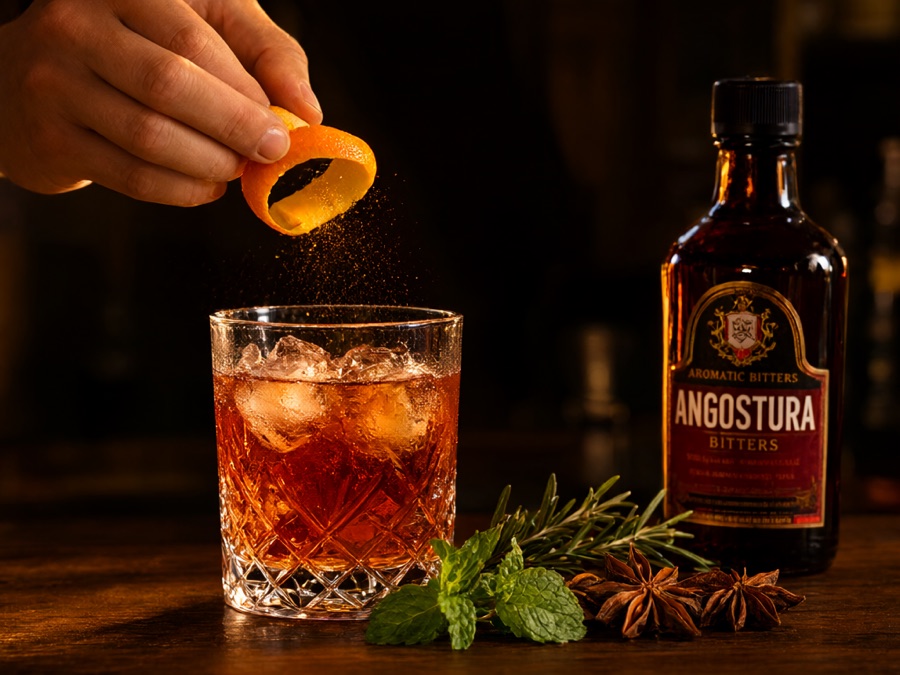
Expressing a citrus peel is the highest-leverage aroma move available. The oil glands in the outer zest burst on the fold, spraying a limonene-rich mist onto the liquid and the rim - exactly the first stop of the inhaled air. Parameters decide success: ten to fifteen centimetres above the surface, zest side down, one quick decisive twist so the oil spreads evenly; flaming the peel adds caramelised and faintly smoky layers but suits only high-proof short drinks, since flame wrecks the freshness of long drinks. Lemon is bright, orange is sweet, grapefruit carries a bitter edge - choosing the peel is choosing the key of the top note. It is the most overlooked line on a spec sheet and the one with the greatest impact on first impression.
Glassware Is an Aroma Focuser
The degree of rim convergence sets aromatic density. Coupes and Martini glasses have wide mouths: the top note spreads fast, giving a glamorous first impression that also dissipates quickly; a converging bowl gathers aromatic molecules at the nose, suiting spirit-forward short drinks meant for sipping. A highball has a wide mouth and a low liquid line, so its aroma is thin by nature and relies on carbonation to keep lifting aromatics to the surface - which is why a Gin and Tonic demands full ice and full fizz. Glassware is never mere decoration; it is the hardware of aroma delivery. The same liquid in a different glass changes the very first second of the smell. Treat "nose-to-rim distance" and "rim cross-section" as two adjustable parameters and you are closer to professional logic than chasing shapes.
Garnish and Temperature as Aroma Management
Mint should be "awakened", not crushed: a palm slap ruptures only some oil glands and releases clean menthol, while muddling pulls out the grassy bitterness of chlorophyll. Hot drinks deliver spice and cream on steam, so the mouth should not be too narrow or it scalds and over-concentrates; iced drinks must avoid garnish masking the body. The most common error is stacking garnish as visual props - rosemary, orange peel and cherry at once make the top notes fight and lose focus. The highest principle of aroma management is subtraction: one drink needs exactly one clear aromatic protagonist, and every other element should step aside. Only when you can state the drink's "first sentence of smell" is the aroma design truly finished.
More tips


320 cocktail recipes, one tap away
Browse by base spirit, flavor and strength. Save your favorites.
Open MixMyth