Aperitivo and Digestivo: The Two Hidden Threads of the Italian Table
Aperitivo and Digestivo: The Two Hidden Threads of the Italian Table
On the timeline of an Italian meal, two near-parallel threads run quietly: one wakes the appetite before dinner; the other gently closes the meal afterwards. They are the aperitivo and the digestivo. Understanding them is not just vocabulary — it directly changes how you reason about bitterness, sweetness and body in cocktails.
Aperitivo: The Goal Is to Awaken, Not to Intoxicate
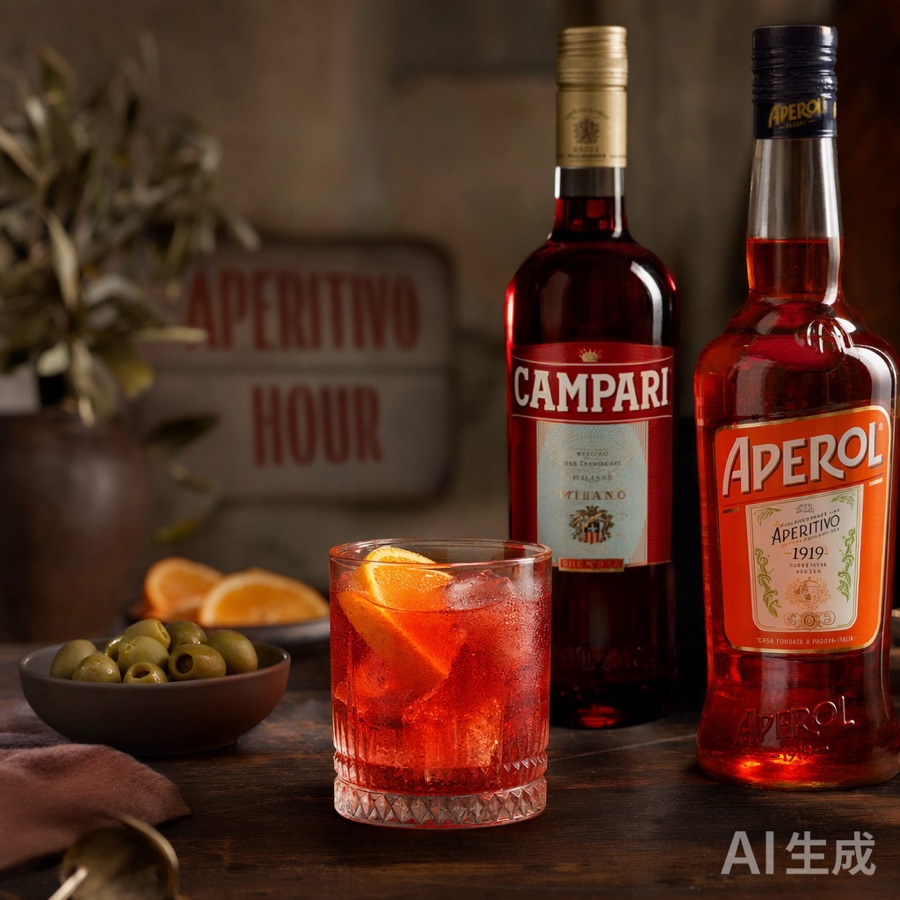
Aperitivo comes from the Latin aperire, "to open," and the intention is explicit: open the appetite. The logic of selection is therefore not "strong and fun" but "stimulate digestion and provoke hunger." This explains the three material signatures: low alcohol, pronounced bitterness, and usually bubbles. Bitterness physiologically promotes gastric acid and saliva — the reason Campari, Aperol and their red-bitter relatives exist — while sparkle keeps the palate alert. The ritual runs from early evening to dinner, with a small dish of olives: aperitivo hour. By bitterness, the benchmarks rank roughly Aperol (light, sweet) → Campari (bitter, herbal) → Cinar (orange peel) → Suze (gentian-forward). Cocktails built on them obey the same logic: the Americano, Campari Soda and the Negroni (the heaviest register) all pair a bitter skeleton with bubbles or vermouth.
Digestivo: The Goal Is to Soothe, Not to Sharpen
The digestivo runs the opposite material route: high proof (often 20%–40%), sweet-leaning, packed with herbs and spices, sipped slowly from small glasses. The intent is aiding digestion — alcohol and herbal formulas (fennel, chamomile, gentian, cinnamon) were traditionally believed to ease fullness. The mirror image is elegant: the aperitivo makes you brightly hungry, the digestivo makes you softly drowsy. Benchmarks include the amaro family (from light Aperol-scale to heavy Fernet and fiercely herbal Fernet Branca), anise-based Sambuca, grappa, and sweet wines like recioto. Other European cultures keep local variants of the same thread: post-prandial Cognac in France, herbal liqueurs in Germany.
How the Two Threads Enter the Modern Bar
Modern cocktail lists are largely a recombination of these threads. The low-ABV trend is aperitivo logic gone global: the spritz family, Campari & Tonic, sherry-and-soda highballs all follow the pre-dinner formula of bitter base + sparkling dilution + low proof. Amaro is the digestivo thread extended to the bar: the Garibaldi's bitter cousin with Fernet, the Paper Plane, and amaro-driven highballs all bring after-dinner bitters into the cocktail glass. For the home bartender the practical rule is: match structure to time — build-style sparkling lowballs before dinner (minutes to make), stirred amaro shorts after (slow, conversational).
Common Missteps
First, drinking aperitivo drinks as digestivi: Aperol on the rocks after a heavy meal amplifies the cloying feeling — the direction is wrong. Second, assuming digestivi must be neat: Sambuca floats on espresso as the classic corretto, and Fernet & Tonic is one of the most popular pre-dinner highballs of the decade. Third, ignoring temperature: aperitivo drinks demand chilled glass and chilled modifiers, while digestivi are served at room temperature, where cold would trap the herbal aromatics. Once the two threads are clear, any unfamiliar Italian bottle tells you instantly where it belongs on the meal timeline — and whether it should be shaken, stirred, or simply poured over ice and soda.
More tips
356 cocktail recipes, one tap away
Browse by base spirit, flavor and strength. Save your favorites.
Open MixMyth