The Complete Guide to Anise Spirits: The White Spirit Family of Anise, Star Anise and Liquorice
Anise Spirits: The White Tide of the Mediterranean
If the world's spirits were plotted on a flavour map, anise spirits would occupy one of the most unmistakable quadrants: the anise-and-liquorice bouquet announces itself the moment the bottle opens, and the sweet cooling finish polarises drinkers into devoted fans and firm avoiders. The family is larger than most people realise — French pastis, Greek ouzo, Turkish raki, Italian sambuca, Lebanese arak and Spanish anís are all regional variations on one formula: anise flavour, high proof, and the milky transformation on contact with water. Understanding their kinship is the key to Mediterranean drinking culture, and unlocks an underrated wall of flavour for the home bar.
Botanicals: A Quartet of Anise, Star Anise, Fennel and Liquorice
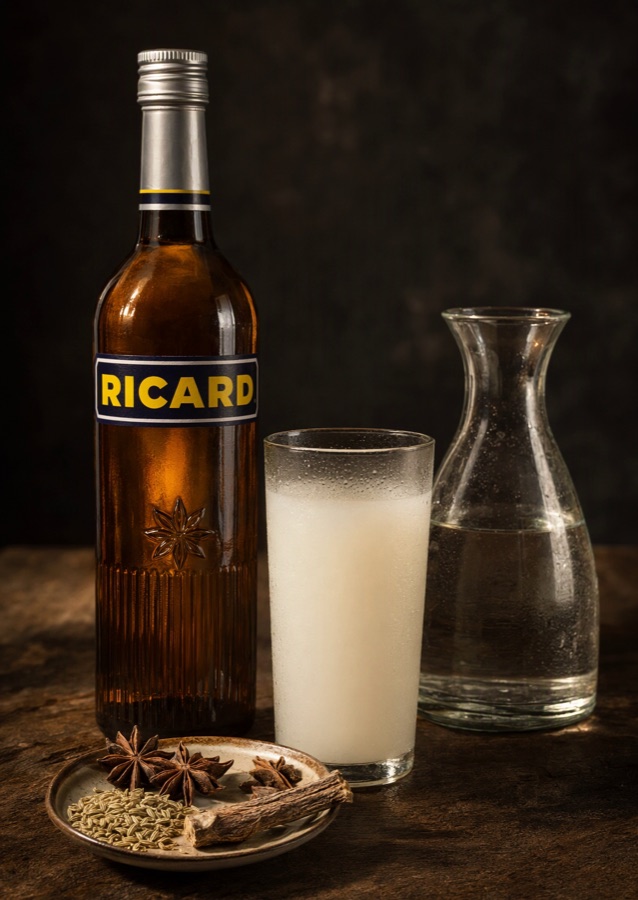
The flavour does not come from a single plant but from an alliance: anise (Pimpinella anisum) supplies the purest anise sweetness and anchors most recipes; star anise (Illicium verum) is sharper and more medicinal, often a budget substitute; fennel seed adds a green, herbal brightness; and liquorice root lays down heavy sweetness with a subtle saline edge that stretches the finish. French pastis typically balances anise against liquorice; Greek ouzo foregrounds anise's sharper edge; and Italian sambuca often adds elderflower (its very etymology), contributing a faint honeyed note. Reading the botanical list on the label forecasts the profile: anise-led means candy sweetness, liquorice-led means medicinal depth, fennel-led means herbal freshness.
Production and Proof: Distillation, Maceration and Sweetening
Craft differences define quality tiers. The finest method distills botanicals together with the base spirit, embedding flavour molecules directly in the distillate — Lebanese arak and premium ouzo follow this route. A second tier distills first, then macerates botanicals in the finished spirit, common in mid-range pastis. Sambuca is uniquely the family's liqueur member, carrying substantial sugar (often over 100 g/L) — the reason it can be sipped neat while pastis demands dilution. Proofs range widely: arak frequently hits 50-60%, ouzo must legally exceed 37.5%, pastis clusters at 40-45%, and sambuca sits at 38-42%. High alcohol is not bravado: anethole, the signature aromatic, needs sufficient ethanol to stay dissolved — the chemical precondition of the louche.
The Louche: A Physics Lesson in a Glass
The family's most seductive ritual is the instant transformation from crystal clear to milky white when water is added — the French call it the louche, the Greeks the ouzo effect. Anethole, shared by anise and star anise, is slightly soluble in water but highly soluble in ethanol. At proofs above 40% it stays locked in solution; once water drops the alcohol below the threshold, anethole precipitates into countless micro-droplets that scatter light into opacity. The effect doubles as a rough quality gauge: a silky, evenly clouded louche indicates high anethole content and careful craft; rapid layering or an oily sheen suggests crude maceration or added flavouring. The home test is simple — one part spirit to five parts iced water, and watch the milk unroll like fog.
Behind the Bar: Dilution Ratios and Classic Applications
Drinking these spirits neat is rare in the Mediterranean — the standard serve dilutes one part spirit with three to five parts iced water, dropping the proof toward 10% while amplifying sweetness and cooling. The same logic works in mixing: a small measure of anise spirit grafts a complex sweet-cool skeleton onto any sour structure. Classics start with pastis and soda and the French Tomate (pastis plus grenadine); the Sazerac's original absinthe rinse is today often replaced with Herbsaint or Pernod; Death in the Afternoon drips absinthe into champagne per Hemingway; and ouzo with lemon and mint is a natural summer table drink across the Aegean. Modern bars also deploy 5-10 ml as an invisible modifier over gin or rum, adding phantom length and coolness without announcing itself.
Pitfalls and Buying Advice
Three misconceptions deserve correction. First, confusing anise spirits with absinthe: absinthe is wormwood-centred and unsweetened, with anise as a supporting note — different proof, serve and legal status. Second, believing sambuca must be drunk neat: beyond the flaming coffee-bean ritual, chilling or diluting is usually kinder. Third, assuming the milky cloud means spoilage — it is precisely the proof of anethole purity. For a first bottle, a 40% pastis (Ricard or Pernod) is the balanced, versatile entry; then a Greek ouzo with the legal appellation mark and distilled-method label, or a Lebanese arak, often single-estate grape-distilled with the finest texture. Sambuca is best explored in small bottles of black-liquorice or elderflower variants. Store away from light once opened: anethole slowly oxidises, so aim to finish the bottle within a year.
Epilogue
One bottle of anise spirit hands you an aperitif, a digestif, a sour modifier and a physics demonstration all at once. It may never headline the cocktail revolution, but it distils centuries of Mediterranean drinking wisdom — and the next time you stir that milky cloud, you will know exactly what chemistry is settling in your glass.
More tips
334 cocktail recipes, one tap away
Browse by base spirit, flavor and strength. Save your favorites.
Open MixMyth